In many plants the intake filter is treated as passive: fit it and forget it until the pressure alarm sounds. A self-cleaning air filter changes that relationship because it can reverse its own dust load without a shutdown. The buyer question is whether that convenience becomes an electricity saving. It can, but not for the reason most people assume. The saving does not come from the filter using less power; it comes from keeping the fan's working point stable. This article explains where that energy saving appears, what limits it and how to verify it on your own system. No universal percentage is quoted, because intake duty differs widely between sites.
An intake system consumes energy mainly at the fan. As dust collects on a conventional filter, resistance rises and the fan works harder to move the same volume. A self-cleaning air filter interrupts that rise by triggering a reverse pulse that drops the accumulated cake. Resistance climbs between cleaning events and returns near baseline after each one. The result is a narrower operating band for the fan. In a compressor house or a turbine intake that stability matters, because the machine downstream expects a consistent inlet condition. Energy saving should be discussed as a consequence of stable resistance, not as a property of the media itself.
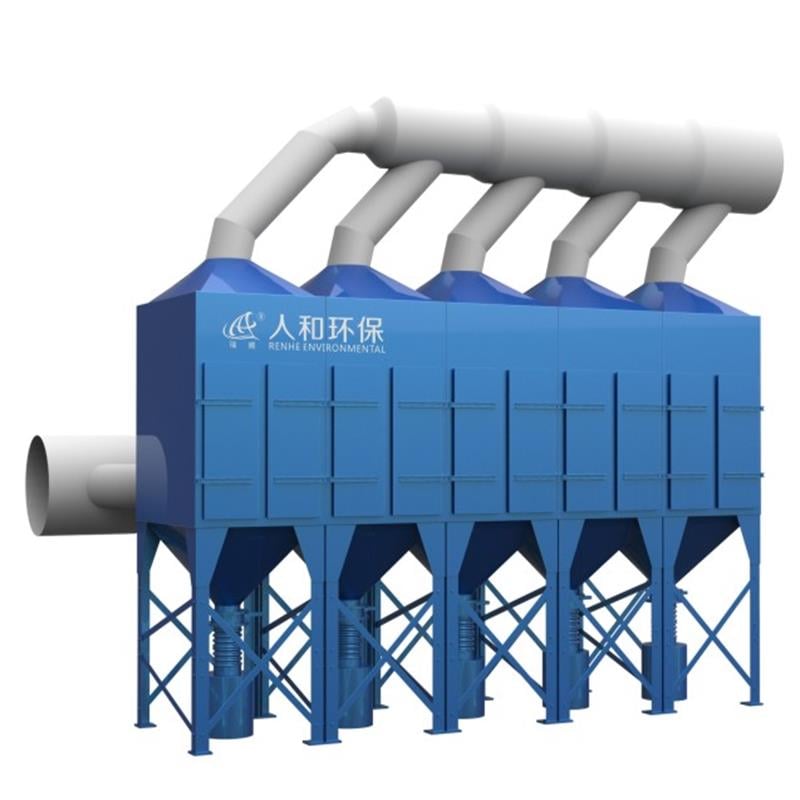
The cleaning cycle is the event that creates the saving, so its logic deserves scrutiny. If cycles follow a fixed timer, the system cleans whether or not it needs to and compressed air is spent for nothing. If they follow pressure drop, a self-cleaning air filter responds to real loading. The ideal cleaning cycle restores resistance without over-pulsing, because aggressive pulses can drive fine dust deeper into the media. Buyers should ask how the trigger is set and whether the threshold can be adjusted as ambient conditions change. A well designed cleaning cycle keeps pressure drop low on average, and that is where the energy saving is realised. Ask to see the control logic in writing.
Fan power and pressure drop must be assessed together. Fan power rises with the resistance the machine overcomes, so a lower average pressure drop reduces the load across the shift; that is the mechanical basis of the energy saving claim. The pulse system, however, uses compressed air with an energy cost of its own. A credible evaluation counts both the fan power saved and the air consumed by the cleaning cycle. In many installations the fan dominates, but that should be measured rather than assumed. A self-cleaning air filter may also allow a smaller fan to be specified, because the design no longer needs a large margin for end-of-life resistance.
To prove an energy saving, compare like with like. Record fan power, pressure drop and cleaning frequency over a period before and after the change, under the same ambient conditions and production pattern. A single meter reading cannot separate a filter effect from a demand effect. Log the pressure drop trace, because the shape of the curve shows whether a self-cleaning air filter is holding a narrow band. Count compressed air used by the cleaning cycle as a separate line. If a supplier offers a saving figure, ask for the measurement method rather than the number. Plants that track these variables can confirm whether the energy saving is real and sustained.
A practical sourcing scenario involves a compressor house drawing large volumes of ambient air. Renhe Filter self-cleaning air intake filters serve compressor inlets from one hundred to twelve hundred cubic metres per minute, so the scale is familiar. The plant had been changing passive elements on a fixed schedule, so resistance climbed between changes and the fans worked hardest just before shutdown. The review proposed a self-cleaning air filter with pressure-based triggers, and recorded fan power and compressed air use separately. The outcome was a steadier pressure drop through the week and lower average fan power, not a dramatic one-off figure. A knowledge-base foundry case, where cleaned air was returned to a controlled hall to avoid heating and cooling losses, supports the wider principle that a stable air path saves energy.
Ask how the cleaning cycle is triggered and whether the threshold is adjustable. Ask for a pressure drop trace from a comparable site. Ask how fan power was measured and how compressed air was counted. Ask what routine work the self-cleaning air filter still requires. Then request material guidance and review specifications if an energy saving is part of the business case.
Question one: Does a self-cleaning air filter use no energy at all?
Answer: No. The fan still consumes power and the pulses still use compressed air. The benefit is a steadier average load, not the absence of energy use.
Question two: What should trigger a cleaning cycle?
Answer: Prefer pressure drop over a fixed timer. On a self-cleaning air filter, a pressure-based trigger cleans when the element needs it. Review the threshold as ambient conditions change.
Question three: How do I verify an energy saving claim?
Answer: Compare fan power over matched periods and log the pressure drop trace. Count pulse air separately, and ask the supplier for the measurement method behind a self-cleaning air filter claim.
 Hot News
2026-11-21
2026-11-21
2026-11-21
2026-11-21
2026-11-21
2026-11-20
Renhe focuses on air filter cartridge, gas turbine air filter, Pleated Filter Media, industrial dust, Our main products have been recognized as high-tech products in Jiangsu Province, famous trademarks in Wuxi City, and CE certification.
NO. 31 Xingyuan Road, Jiefang Industrial Park, Gushan Town, Jiangyin City, Jiangsu Province, China (214414)
Copyright © 2024 Jiangsu Renhe Environmental Equipments Co., Ltd Privacy Policy
 EN