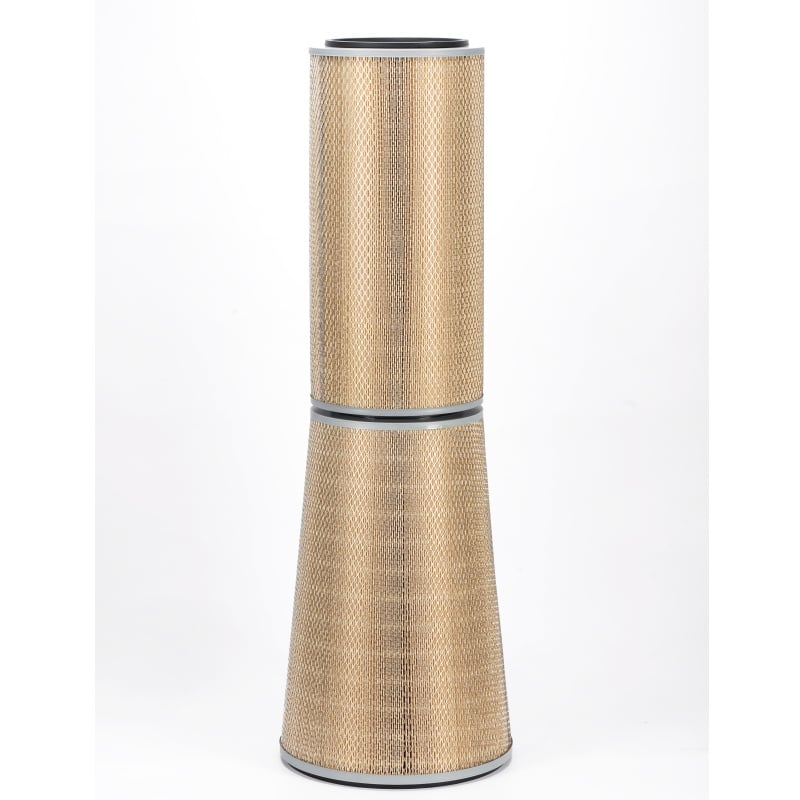
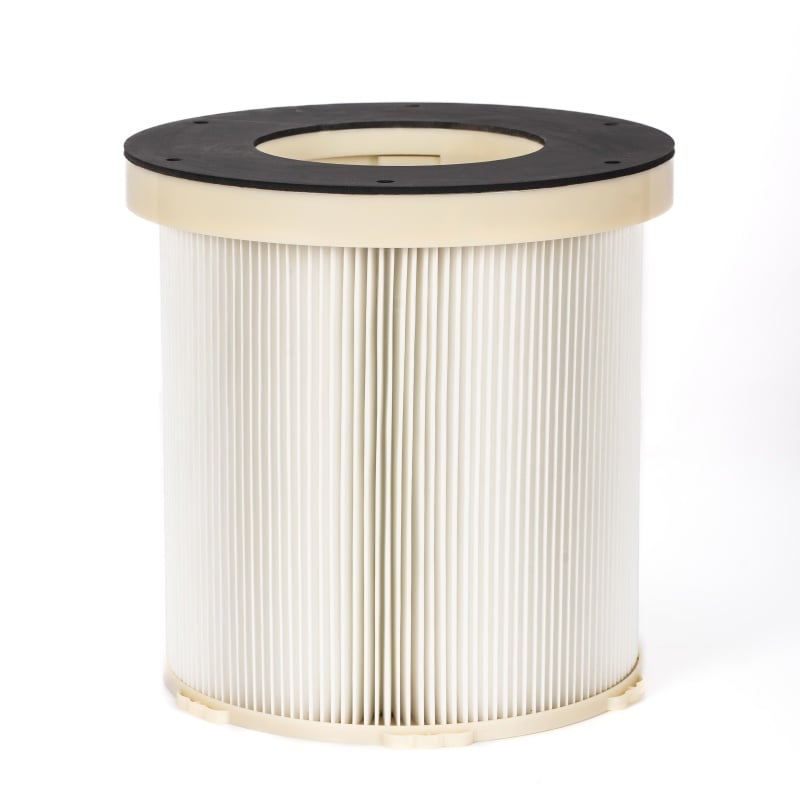
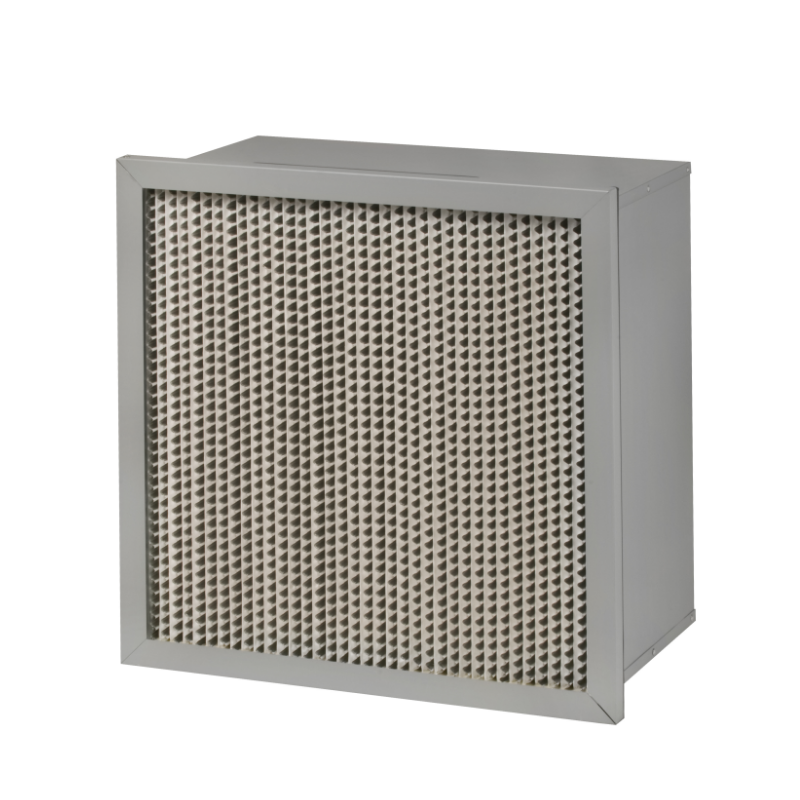
A PTFE coated filter cartridge is not just a standard cartridge with a slick finish. The coating forms a thin, porous membrane on the media surface, and that membrane changes how dust interacts with the filter. PTFE, or polytetrafluoroethylene, has very low surface energy, so dust and moisture struggle to stick to it. On a pleated cartridge, the coating sits on the upstream face and acts as a release layer. Dust cake forms on the surface instead of embedding in the depth of the media. When the cleaning pulse hits, the cake releases in larger, more coherent sheets. That surface release is the main reason coated cartridges hold up in sticky, oily, or hygroscopic dust streams where uncoated media would blind quickly. The coating does not add filtration efficiency by itself. It changes the surface behavior so the media underneath can do its job without getting plugged at the face.
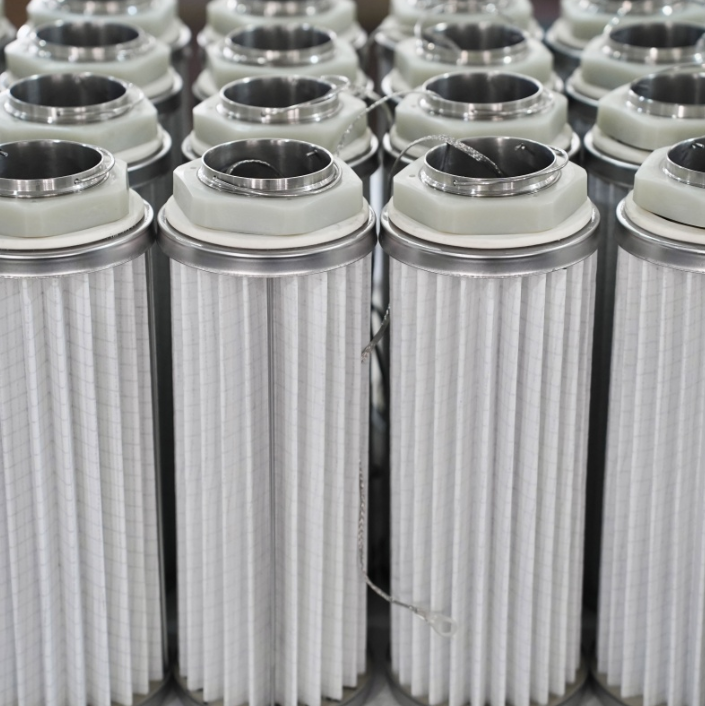
Membrane filtration on a PTFE coated filter cartridge relies on size exclusion at the surface. The membrane has a network of tiny pores, and particles larger than the pore openings are trapped on the surface. Smaller particles can pass or lodge in the pore channels, depending on the membrane rating. This is different from depth filtration, where particles travel into the media and get caught in fiber networks. Surface filtration has a key advantage: the dust stays where the cleaning pulse can reach it. The pressure drop rises as the cake builds, and the pulse removes the cake to restore flow. The membrane itself does not flex much, so the pleat pack stays stable under pressure. A PTFE membrane is often rated by bubble point or air permeability, and those ratings tell more about performance than a generic micron number. ASTM F316 covers bubble point testing for membrane filters, and that method gives a reproducible way to compare pore size across suppliers.
| Feature | Uncoated media | PTFE coated filter cartridge | Field note |
|---|---|---|---|
| Filtration mechanism | Depth loading | Surface loading | Coated media releases cake easier |
| Dust release | Cake clings to fibers | Cake releases in sheets | Better for sticky dust |
| Pressure drop trend | Rises as depth fills | Rises with surface cake | Cleaning restores flow faster |
| Chemical resistance | Depends on base media | High, PTFE is inert | Good for corrosive streams |
| Moisture handling | Can wick and blind | Repels water | Useful in humid conditions |
| Cleaning energy needed | Often higher | Lower for same dust load | Check pulse pressure |
These cartridges earn their cost in applications with sticky, oily, or moisture-laden dust. Food processing, chemical handling, and metal finishing often see dust that coats uncoated media and refuses to release. A PTFE coated filter cartridge handles those streams well because the surface does not hold onto the cake. The coating also helps in processes with condensation risk, since water beads on the membrane instead of wicking into the media. But the coating is not a universal upgrade. In dry, granular dust with low adhesion, an uncoated cartridge may perform just as well at a lower cost. In high-temperature streams above the PTFE service limit, the coating can degrade. In applications with sharp, abrasive particles, the membrane can be punctured if the pleat pack lacks support. Honest sizing means matching the coating to the dust, not buying it by default.
At a food ingredient plant in the Midwest, a cartridge dust collector was pulling dust from a spray drying operation. The dust was hygroscopic, and the uncoated cartridges blinded within weeks. Pressure drop climbed until the system could not hold airflow, and changeouts became a monthly chore. The plant switched to a PTFE coated filter cartridge with a supported pleat pack. The first change was visible at the cleaning pulse. The dust cake released in sheets and fell cleanly into the hopper. Pressure drop after cleaning dropped from about 1.8 kPa to 1.1 kPa, and the changeout interval stretched out. The membrane was not magic. The surface release matched the dust behavior, and the supported pleats kept the membrane from flexing. That combination made the difference.
A PTFE membrane is thin, and thin things need care. During installation, avoid dragging the cartridge across the tube sheet or banging the pleat pack against the housing. A nick in the membrane becomes a leak path, and a leak path defeats the coating. Seat the cartridge square and compress the gasket evenly. Overcompression can bow the pleat pack and stress the membrane at the fold lines. On the cleaning side, use the pulse pressure recommended for the membrane, not the maximum the valve can deliver. Excessive pulse energy flexes the pleats and can fatigue the membrane over time. Check the pulse air for oil and moisture, since contaminated air can coat the membrane and change its release behavior. During service, inspect the pleat tips for shiny wear marks. Those marks mean the pleats are rubbing, and the membrane is at risk.
Coated cartridges reward consistent manufacturing. Renhe supports this product line through manufacturing control, incoming material checks, and supply chain planning that keeps membrane lot properties, pleat geometry, and gasket fit consistent from batch to batch. A PTFE coated filter cartridge still depends on the installer and the maintenance routine, but consistent parts make the membrane behavior predictable and the changeout interval easier to plan.
 Hot News
2026-11-13
2026-11-13
2026-11-13
2026-11-13
2026-11-13
2026-11-12
Renhe focuses on air filter cartridge, gas turbine air filter, Pleated Filter Media, industrial dust, Our main products have been recognized as high-tech products in Jiangsu Province, famous trademarks in Wuxi City, and CE certification.
NO. 31 Xingyuan Road, Jiefang Industrial Park, Gushan Town, Jiangyin City, Jiangsu Province, China (214414)
Copyright © 2024 Jiangsu Renhe Environmental Equipments Co., Ltd Privacy Policy
 EN