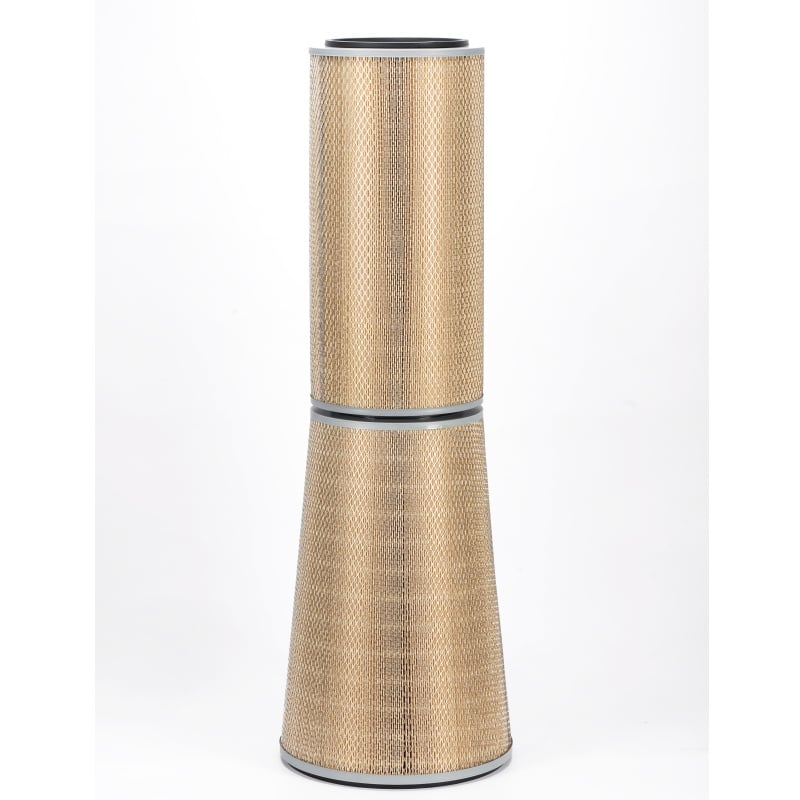
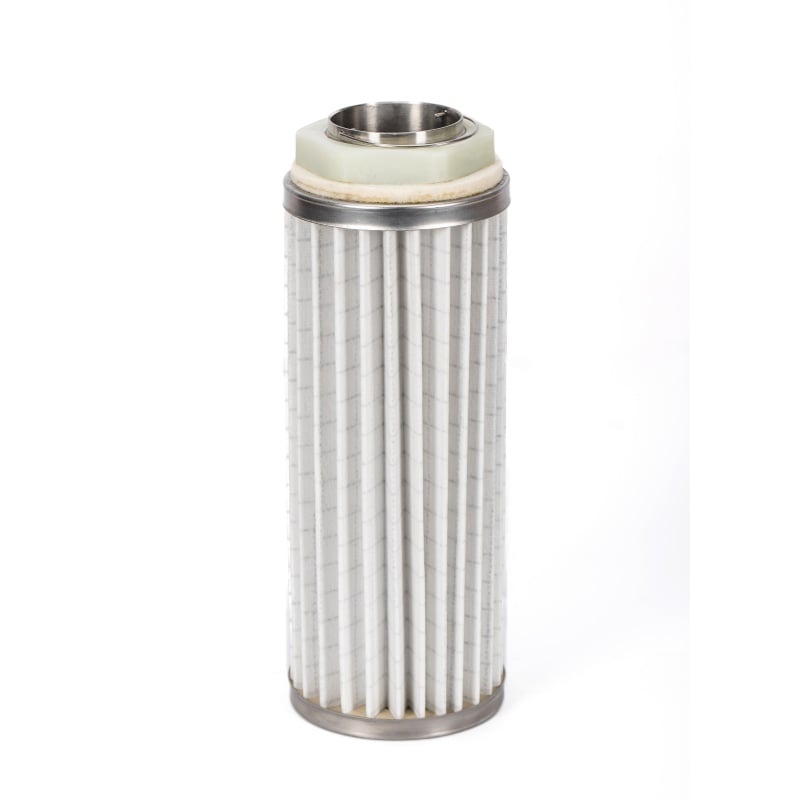
An anti-static filter cartridge is built to do something ordinary filter media cannot do well: move static charge off the filter surface before it builds into a spark. In a dust collector handling combustible powder, the filter is not a passive part. Dry particles rub against the media, the pleats, and the cage during pulse cleaning. That rubbing transfers charge. If the media is an insulator, the charge has nowhere to go. It sits on the surface, on the dust cake, or on the pleat tips. When the charge finds a path to ground through a metal component, it can discharge as a spark. If that spark lands in a dust cloud at the right concentration and energy, the result can be an explosion. The anti-static cartridge changes that chain by giving the charge a controlled, low-energy path to earth.
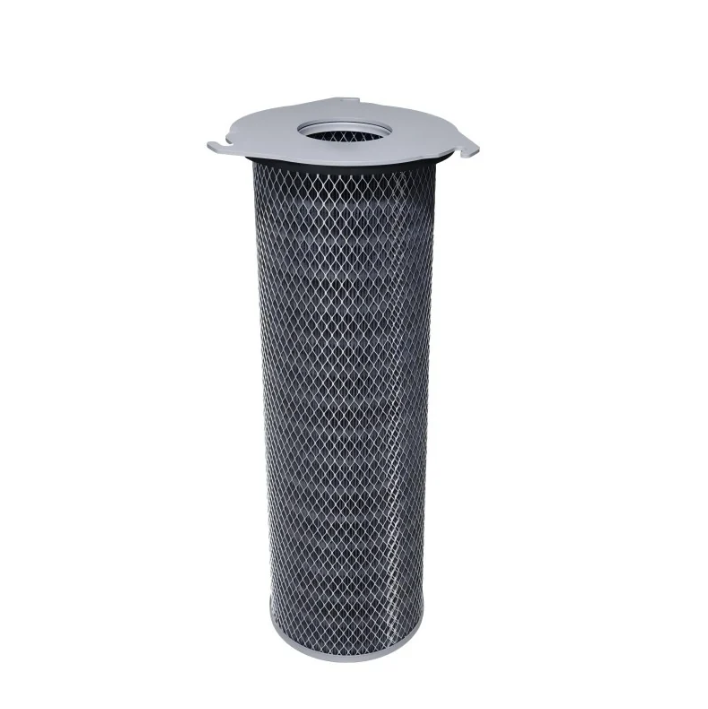
The anti-static property comes from the materials and the construction, not from a label. The filter media usually contains conductive fibers, a carbon-loaded layer, or a dissipative coating. The cage and end caps are conductive or dissipative. The cartridge has a bonding point, such as a drain wire, a conductive gasket, or a metal end cap that lands on the housing. The housing then bonds to plant earth. Each part matters. A dissipative media in a plastic cage with no bond point is not an anti-static cartridge in practice. The surface resistance of the media is typically in the dissipative range, about 10^4 to 10^9 ohm, which is low enough to bleed charge but high enough not to create a direct short. Conductive parts sit below that range. NFPA 77 treats bonding and grounding as a system of conductive paths, and the cartridge is one link in that system.
| Feature | Standard cartridge | Anti-static filter cartridge | Field check |
|---|---|---|---|
| Media surface resistance | Insulative, often above 10^12 ohm | Dissipative, about 10^4 to 10^9 ohm | Meter reading per supplier data |
| Cage and end caps | Often coated steel or plastic | Conductive or dissipative | Continuity from cage to bond point |
| Bond path | None or incidental | Drain wire or conductive gasket | Tug test and resistance check |
| Static buildup during pulse | Can reach kilovolts | Charge bleeds to earth | Surface voltage check after pulse |
| Housing bond | Sometimes overlooked | Required for the path to work | Bond to verified earth point |
| Spark risk in combustible dust | Higher if charge accumulates | Lower when bonded and grounded | Confirm with site risk assessment |
A dust explosion needs fuel, oxygen, dispersion, confinement, and an ignition source. The filter cartridge cannot remove fuel or oxygen. It cannot guarantee dispersion or confinement. What it can do is reduce one ignition source: static discharge. The chain usually starts with charge generation, then charge accumulation, then a discharge event. The anti-static cartridge interrupts accumulation. Charge moves from the media to the cage, from the cage to the housing, and from the housing to earth. The discharge, if it happens, is a low-energy bleed rather than a concentrated spark. That is why the cartridge has to be installed as part of a bonded system. A cartridge with a drain wire that is folded under a gasket, or a cage that sits on a painted ledge, can leave the media isolated. The explosion chain stays intact.
At a starch processing plant in the South, a cartridge collector had a history of static shocks from the housing during pulse cleaning. The cartridges were standard, and the cage coating had worn in spots. Surface voltage readings after a pulse reached several kilovolts. The plant replaced the cartridges with an anti-static filter cartridge that had a conductive cage, a dissipative media, and a drain wire bonded to the tube sheet. The housing bond was cleaned and rechecked. Surface voltage after pulse dropped to a low range, and the shocks stopped. The site also revised its bond check routine, because the cartridge alone would not have fixed the problem if the housing bond had stayed loose. The case shows the cartridge is necessary but not sufficient.
The static path depends on installation. The drain wire or conductive gasket has to land on bare metal. Powder coating, rust, and dust block the path. The cartridge has to sit square so the bond point stays in contact. A gasket that is too thick can lift the end cap off the bond pad. The housing bond has to run to a verified earth point, not to a nearby pipe. After service, the path has to be checked again, because a new gasket or a different cartridge lot can change contact. A meter reading from the media to earth is the only proof the path works. Visual checks are not enough.
An anti-static filter cartridge lowers static ignition risk, but it does not make a dust collector explosion-proof. The collector still needs proper explosion venting, isolation, or suppression where the risk assessment calls for it. The cartridge does not fix a housing that leaks dust, a fan that overheats, or a process that generates sparks upstream. It also depends on a clean, dry pulse air supply and a maintenance routine that keeps bonds tight. Used well, it closes one ignition path. Used as a substitute for a full protection plan, it gives false confidence.
Renhe supports anti-static cartridge supply through manufacturing control, incoming material checks, and supply chain planning that keeps conductive cage dimensions, bond point details, and media properties consistent from lot to lot. Consistent parts make the static path easier to verify and easier to maintain.
 Hot News
2026-11-13
2026-11-13
2026-11-13
2026-11-13
2026-11-13
2026-11-12
Renhe focuses on air filter cartridge, gas turbine air filter, Pleated Filter Media, industrial dust, Our main products have been recognized as high-tech products in Jiangsu Province, famous trademarks in Wuxi City, and CE certification.
NO. 31 Xingyuan Road, Jiefang Industrial Park, Gushan Town, Jiangyin City, Jiangsu Province, China (214414)
Copyright © 2024 Jiangsu Renhe Environmental Equipments Co., Ltd Privacy Policy
 EN