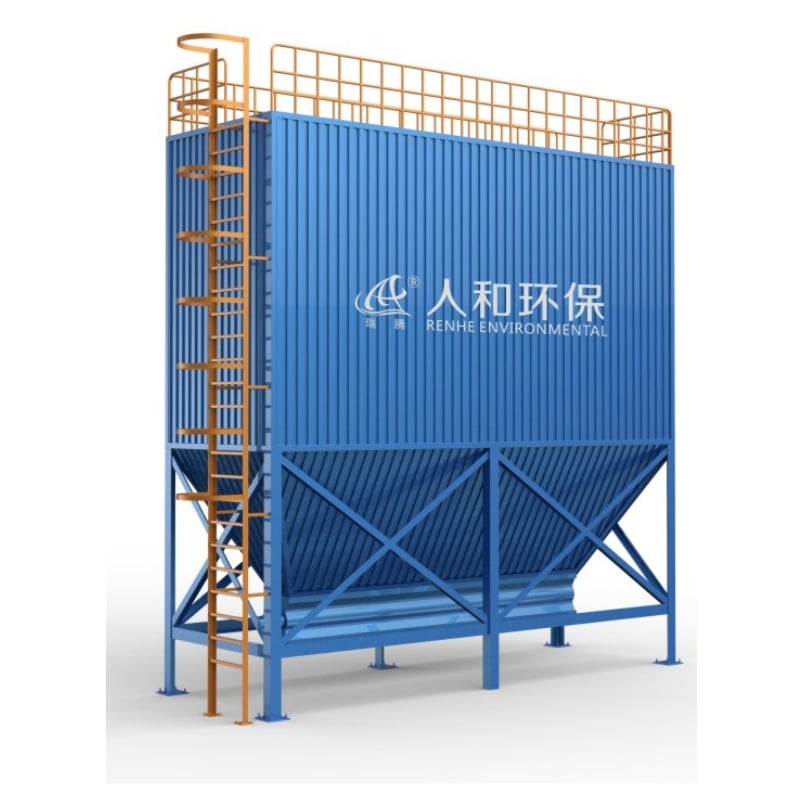
A flange-mounted bin vent is only as good as the flange it sits on. The silo top is often the least flat surface on the site. It may have weld distortion, old gasket residue, or a raised lip from a previous unit. The installation should begin with a survey of the flange face, the bolt pattern, and the clearance around the opening. The survey should record flatness, bolt hole condition, and the distance to the handrail or the roof edge. A bin vent that lands on a warped flange can pass a visual check and still leak in the rain. The first hour on the roof is better spent with a straightedge and a wire brush than with a crane.
The gasket is the part that decides whether the unit stays dry and dust-tight. A compressed fiber gasket, a rubber gasket, and a PTFE-faced gasket behave differently under a cement or grain dust load. The gasket should match the flange surface and the operating temperature. A reused gasket is a false economy. The bolt pattern should be checked against the unit's flange, and any damaged threads should be chased before the lift. Flatness should be checked with a straightedge and a feeler gauge. A gap under a straightedge that exceeds the gasket's compression range will not close with bolt torque alone. The table below shows the checks that matter before the crane is called.
| Check | Target | Common mistake |
|---|---|---|
| Flange flatness | Within gasket compression range | Pitted or warped face left as is |
| Gasket condition | New, correct material | Reusing old gasket |
| Bolt holes | Clean, undamaged threads | Forcing a damaged bolt |
| Clearance | Enough for removal and service | Unit too close to handrail |
| Lifting points | On the unit, not the flange | Sling around the housing |
The table is a pre-lift checklist. Each row is cheaper to fix on the ground than on the roof.
The lift should use the lifting points on the unit, not a sling around the housing. A sling can distort the housing and put the fan or the pulse pipes out of alignment. The unit should be landed squarely, with the gasket centered on the flange. A guide pin or a temporary stud can help alignment. The unit should not be dragged across the flange to line up the bolt holes. Dragging can roll the gasket and create a leak path that is hard to find later. Once the unit is seated, a few bolts should be hand-tightened to hold position before the crane is released. A field case from a grain silo installation in the north China plain showed the cost of a rushed landing. The gasket was rolled during alignment, and the unit leaked dust at the flange during filling. The fix required a second lift and a new gasket. The lesson was simple: align first, land once.
Bolt torque should follow a cross pattern, in stages, until the specified value is reached. Tightening one side first can cock the flange and leave a gap on the opposite side. A torque wrench is useful, but the pattern matters as much as the number. After tightening, the flange gap should be checked at several points. A feeler gauge can show whether the gasket is compressed evenly. A soap bubble test or a light smoke test can confirm the seal before the silo is filled. The pulse air line should be connected and tested before the unit is put into service. Moisture in the pulse air line can blind the filter and raise the pressure drop. A coalescing filter and a drain leg are cheap insurance.
The pulse air supply should be dry, filtered, and sized for the pulse valves. A moisture trap at the unit is worth the space. The control timer should be set for the dust load, not for a default value. A cement dust load and a grain dust load release differently, and the pulse interval should match the dust. The weather protection should include a rain hood or a weather cover that does not block the exhaust. A bird screen is useful, but it should be sized so it does not restrict airflow. The unit should also be grounded, especially on silos that handle combustible dust. NFPA 652 requires a dust hazard analysis for combustible dust, and the bin vent belongs in that review. The analysis should cover the vent location, the exhaust path, and the ignition risk.
A flange-mounted bin vent is not a substitute for a pressure relief vent or an explosion vent. It handles displaced air during filling, not a deflagration. The silo should have separate pressure relief sized for the filling rate and the air supply. Access for filter change and pulse valve service should be planned before the unit is lifted. A unit that is safe to install but impossible to service will be neglected. ATEX 2014/34/EU and local electrical codes apply to the controls and the motor, and the installation should be checked against those requirements. For projects that need consistent fabrication, batch level material control, and a supply chain that can match silo flange interfaces, Renhe's production base and quality control process can support the drawing review and delivery side of the work. A good bin vent installation is boring on the day it is done and quiet for years after.
 Hot News
2026-11-13
2026-11-13
2026-11-13
2026-11-13
2026-11-13
2026-11-12
Renhe focuses on air filter cartridge, gas turbine air filter, Pleated Filter Media, industrial dust, Our main products have been recognized as high-tech products in Jiangsu Province, famous trademarks in Wuxi City, and CE certification.
NO. 31 Xingyuan Road, Jiefang Industrial Park, Gushan Town, Jiangyin City, Jiangsu Province, China (214414)
Copyright © 2024 Jiangsu Renhe Environmental Equipments Co., Ltd Privacy Policy
 EN