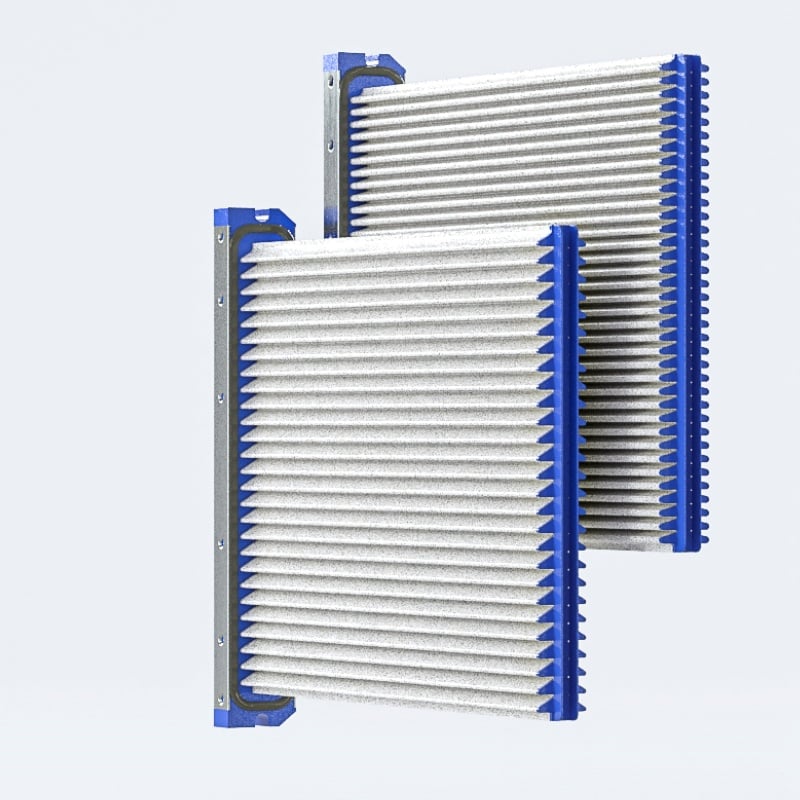
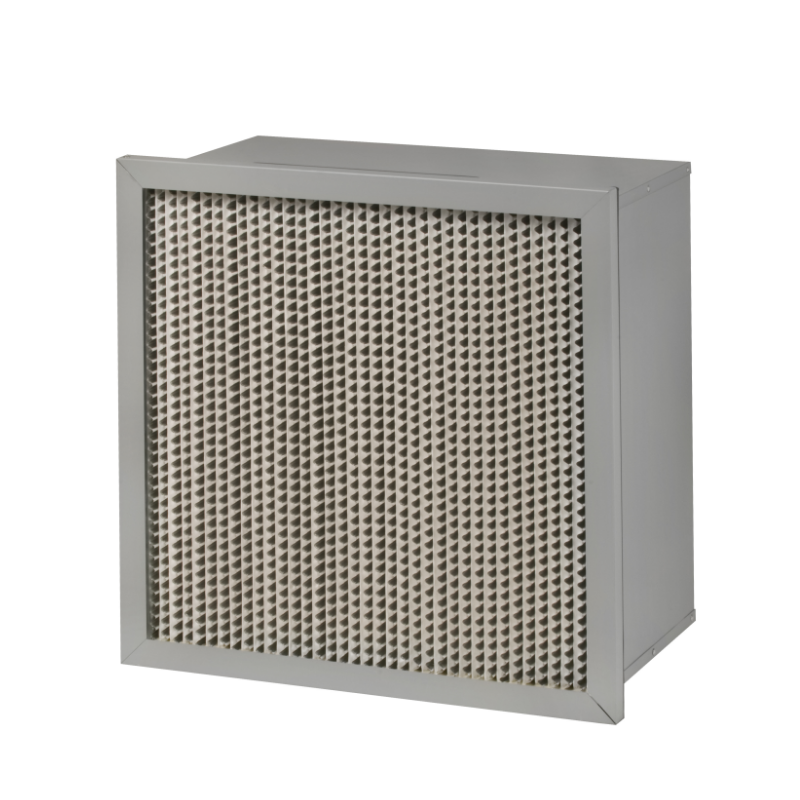
A standard V-cell mini-pleat filter can look simple from the outside, but the waste stream sees every layer. Aluminum separators, galvanized wire mesh, plastic frame, glass-fiber media, polyurethane foam gasket, and hot-melt glue all behave differently in a landfill or an incinerator. That mix is why many filters become expensive scrap. A plastic-framed V-cell mini-pleat filter is different when the bill of materials is built for one end-of-life path. The frame, media, separators, and adhesives are selected as combustible thermoplastics or synthetic fibers, with no metal stiffeners and no glass-fiber mat. In a permitted incineration facility, the filter can burn as a single item, reduce to ash, and avoid the manual cutting and sorting that mixed-material filters often require. The key word is "designed." Incinerability is not a property of the V-cell shape. It comes from material choices and verified incoming inspection.
Polypropylene is the usual frame material for this type of filter. Published polymer data put its calorific value near 43 MJ/kg, with ash content typically below 1 percent. That matters in a rotary kiln or grate incinerator because the frame contributes fuel value instead of inert mass. The frame also melts and burns without the metal edges that can jam shredders or leave wire residue in ash. The claim only holds when the frame is a polyolefin or another approved thermoplastic, not PVC. PVC can raise hydrogen chloride emissions and change the air pollution control demand. A clean incinerable design uses halogen-free resin, labels the polymer, and keeps the gasket and glue in the same combustion family. The goal is not a spectacular flame. The goal is predictable combustion, low ash, and no metal contamination in the ash stream.
The media and separators decide whether the filter is truly incinerable. Glass-fiber media is common in high-temperature filters, but glass fiber melts and leaves a residue. A filter marketed as completely incinerable should use a synthetic media, such as polypropylene or another qualified thermoplastic fiber, and hot-melt separators that burn with the media. The table below shows the material logic.
| Component | Material in an incinerable design | Behavior in controlled incineration | Point to verify |
|---|---|---|---|
| Frame | Polypropylene, halogen-free | Melts, burns, low ash | Polymer label and ash data |
| Media | Synthetic thermoplastic fiber | Combusts with low residue | No glass-fiber mat |
| Separators | Polyolefin hot melt | Burns with media | No aluminum or wire |
| Gasket | EPDM or compatible elastomer | Burns with normal ash | Halogen content |
| Adhesive | Polyurethane or hot melt | Burns in permitted unit | Feed acceptance limits |
That table is also a purchasing checklist. A single aluminum separator or a glass-fiber media roll can turn a clean waste stream into a mixed waste problem.
A retrofit at a chemical plant in southern China showed the operational difference. The maintenance team had been breaking down metal-framed V-cell filters with hand tools before landfill disposal. The site moved to a plastic-framed mini-pleat filter with synthetic media, hot-melt separators, and no metal mesh. The filters went into the plant's permitted rotary kiln incinerator as part of an existing waste stream. The labor for filter breakdown dropped, and landfill volume fell. The change also exposed a hidden risk. One incoming pallet contained glass-fiber media, which would have left ash and altered the waste code. The lesson was simple: incineration acceptance depends on batch-level material control, not just a product brochure.
"Completely incinerable" does not mean open burning, backyard disposal, or a free pass at any incinerator. It means the filter can be accepted by a permitted thermal treatment facility under its waste acceptance criteria. Local permits, feed size, chlorine and sulfur limits, ash handling, and energy recovery rules still apply. A facility may reject plastic-rich waste if the feed mix is out of balance. Glass fiber, metal mesh, PVC gaskets, and some high-temperature elastomers can break the claim. There is also a carbon accounting tradeoff. Incineration removes landfill volume and can recover energy, but it still produces flue gas and ash. The honest position is that incineration is one disposal route with real controls, not a zero-impact outcome. EN 1822 and ISO 16890 are useful for filter performance, while EU Directive 2010/75/EU and local permits set the incineration side. Those are different questions and should be checked separately.
The specification should list every component, not just the frame. Ask for polymer identification, halogen content, ash residue, calorific value, and confirmation that no metal or glass-fiber media is present. A small sample burn test at the receiving facility is worth more than a generic statement. The filter should also match the air-handling duty. Incinerability does not excuse poor fit, bypass leakage, or a weak gasket. For projects that need a single waste route, Renhe's manufacturing and supply chain setup can support batch-level material declarations and consistent component control, which is often the hard part in real procurement. The practical takeaway is straightforward: a plastic-framed V-cell mini-pleat filter can be completely incinerable when the entire bill of materials is chosen for that path, and when the receiving facility agrees.
 Hot News
2026-11-13
2026-11-13
2026-11-13
2026-11-13
2026-11-13
2026-11-12
Renhe focuses on air filter cartridge, gas turbine air filter, Pleated Filter Media, industrial dust, Our main products have been recognized as high-tech products in Jiangsu Province, famous trademarks in Wuxi City, and CE certification.
NO. 31 Xingyuan Road, Jiefang Industrial Park, Gushan Town, Jiangyin City, Jiangsu Province, China (214414)
Copyright © 2024 Jiangsu Renhe Environmental Equipments Co., Ltd Privacy Policy
 EN