Many operators assume that a cleaner filter bag is always a better one, so they set the pulse system to strip the media as bare as possible. In a baghouse that instinct can be counterproductive. A thin, stable layer of collected dust does much of the fine filtration, and removing it completely forces the fabric to do work it was not optimized for. Pressure drop then climbs again quickly and emissions can rise as the media tries to catch particles on its own. The goal is not the lowest possible resistance at a single moment, but a stable working range across the whole cleaning cycle. Understanding the role of the dust cake changes the way a baghouse is operated.
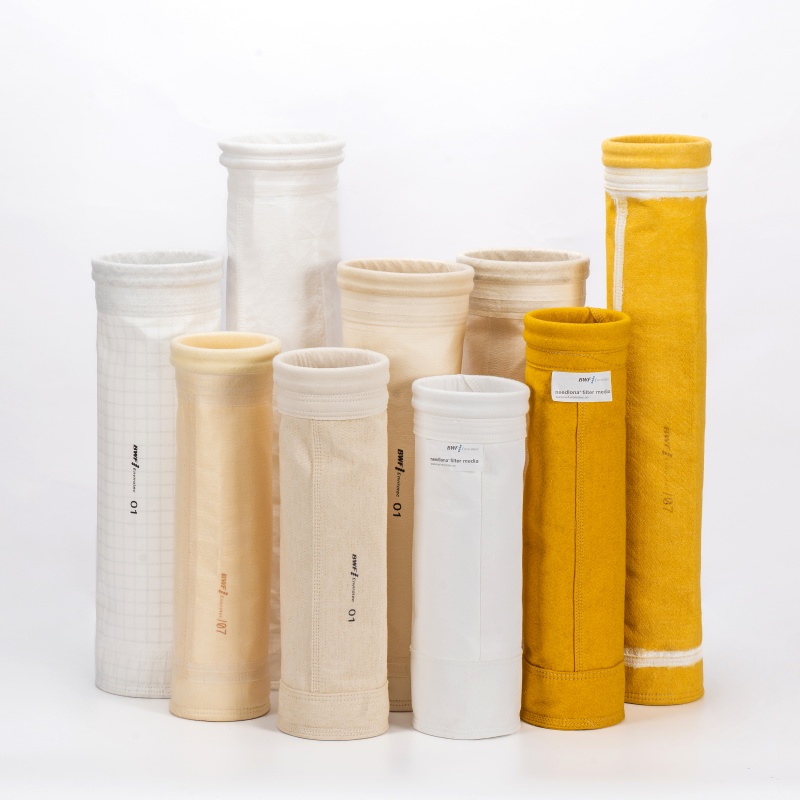
When dust first collects on filter bags, a layer forms on the surface and in the near-surface region of the fabric. That layer becomes the primary filtering medium, capturing finer particles than the fabric alone could hold. In a baghouse this is why a new unit often behaves differently from one that has been in service for a short time. A well developed dust cake improves capture while keeping resistance predictable, because the layer stays porous enough for air to pass. The fabric underneath mainly supports the cake and supplies mechanical strength. Stripping the layer away completely discards the very thing that makes fine filtration efficient.
A low pressure drop reading is attractive, but it is meaningful only if it can be held. A baghouse that is cleaned too aggressively shows a sharp fall after each pulse followed by a rapid climb as the dust cake rebuilds. That cycling stresses the filter bags and makes emissions less consistent. A more moderate approach leaves a residual dust layer and holds pressure drop within a narrower band. Operators typically judge the system by the residual value after cleaning and by how far the pressure rises before the next pulse. Stability in the baghouse is a sign that cleaning and dust load are in balance, not that the media is working too hard.
Cleaning is adjusted according to the dust, the airflow and the media, not according to a fixed rule. Operators typically tune the pulse interval and intensity so that enough cake is removed to control resistance while enough remains to support filtration. If cleaning is too gentle, the dust cake thickens and pressure drop rises steadily; if it is too aggressive, the layer is stripped and capture suffers. The right point depends on the operating conditions and should be confirmed by watching both pressure drop and outlet appearance. Request material guidance and compare product options when tuning a baghouse for a new dust.
An application example comes from a casting workshop with constant temperature and humidity, where an automatic sand drenching process generated fine dust. The dust was captured by hoods, drawn through ductwork and passed through a filtration stage before the cleaned air was returned to the workshop. The operating team learned that the baghouse worked best when a modest residual layer was left on the filter bags after each cleaning, rather than stripping them completely. Pressure drop settled into a narrow band and the returned air stayed clean. A supplier such as Jiangsu Renhe could document the media and the cleaning approach. Review specifications before committing.
A dust cake stops being helpful when it grows too dense or when the dust changes character. Moist or sticky particles can compact the layer so that pulses no longer pass through it, and resistance climbs even though the cleaning sequence is unchanged. In a baghouse handling variable dust, the operator may need a different media finish rather than a different pulse setting. Temperature swings that cause condensation can turn a manageable dust cake into a blind layer. Watch for a residual pressure that keeps rising pulse after pulse, because that is the clearest sign that the layer has moved from useful to troublesome.
Question one: Why leave dust on filter bags instead of cleaning them completely?
Answer: A thin residual dust cake does much of the fine filtration in a baghouse. Stripping it bare makes the fabric catch fine particles on its own, which raises emissions and can push pressure drop back up quickly.
Question two: How do I know the dust cake is the right thickness?
Answer: Watch the pressure drop after each pulse and before the next one. A stable residual value and a moderate rise indicate a healthy dust cake; a steadily climbing residual suggests cleaning is too gentle or the dust is blinding the media.
Question three: Does a lower pressure drop always mean better baghouse performance?
Answer: Not always. A very low reading just after aggressive cleaning may be followed by a rapid climb and weaker capture. Stable pressure drop across the cycle matters more than a single low number.
 Hot News
2026-11-22
2026-11-22
2026-11-22
2026-11-22
2026-11-22
2026-11-22
Renhe focuses on air filter cartridge, gas turbine air filter, Pleated Filter Media, industrial dust, Our main products have been recognized as high-tech products in Jiangsu Province, famous trademarks in Wuxi City, and CE certification.
NO. 31 Xingyuan Road, Jiefang Industrial Park, Gushan Town, Jiangyin City, Jiangsu Province, China (214414)
Copyright © 2024 Jiangsu Renhe Environmental Equipments Co., Ltd Privacy Policy
 EN