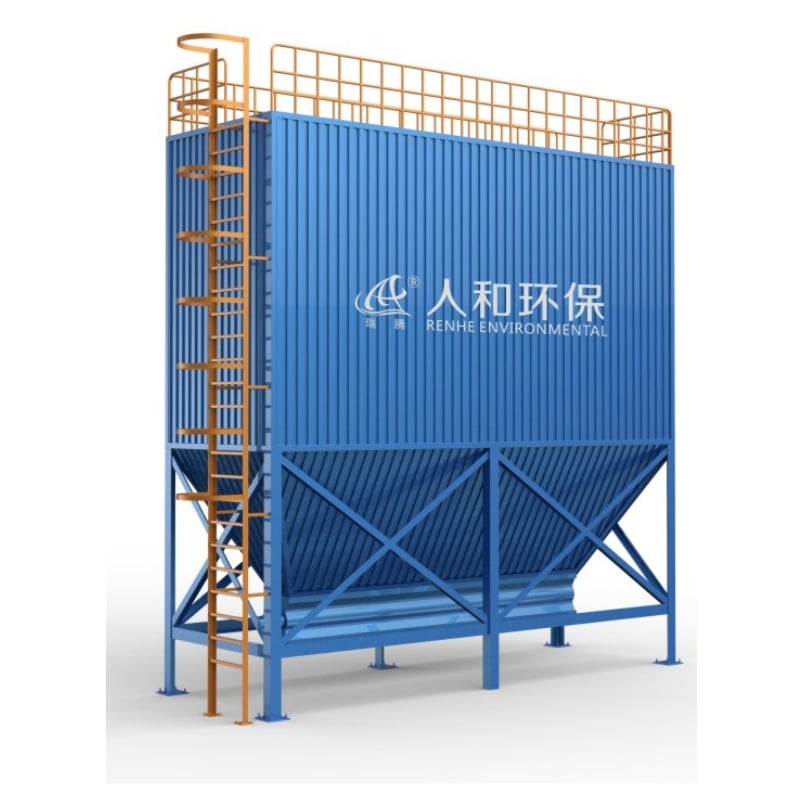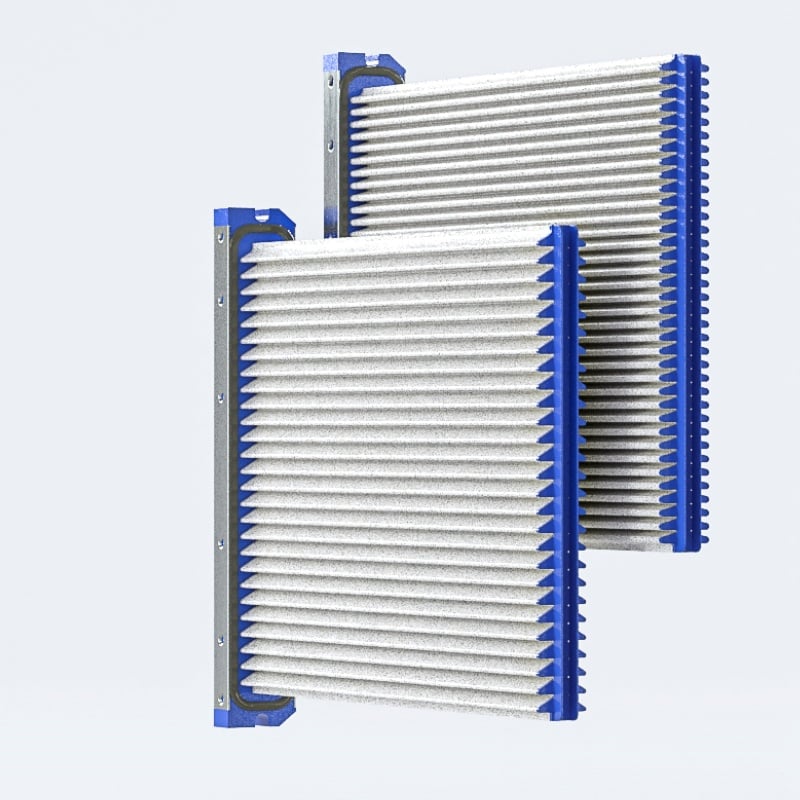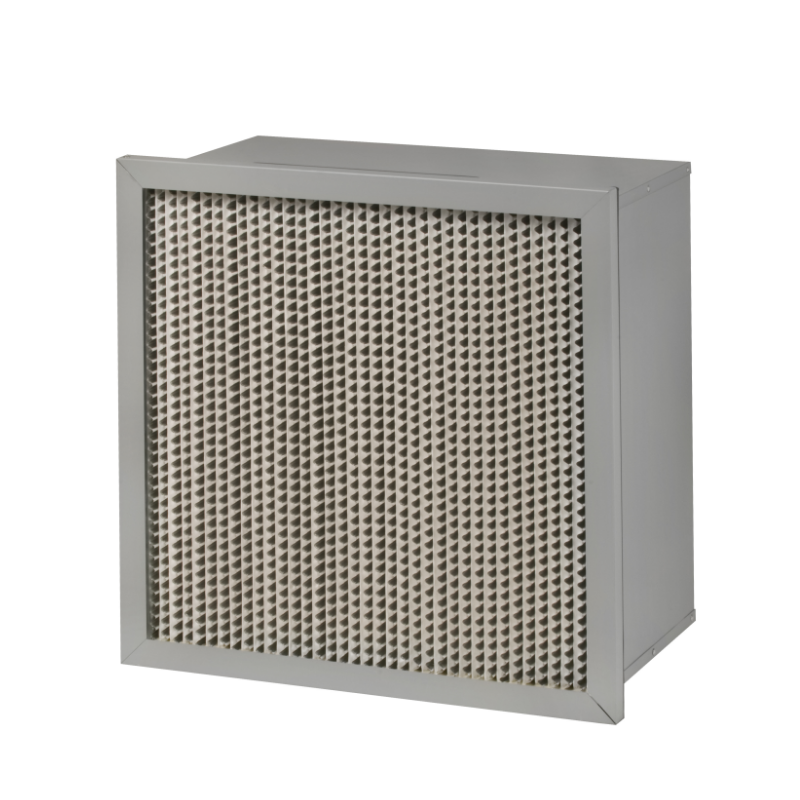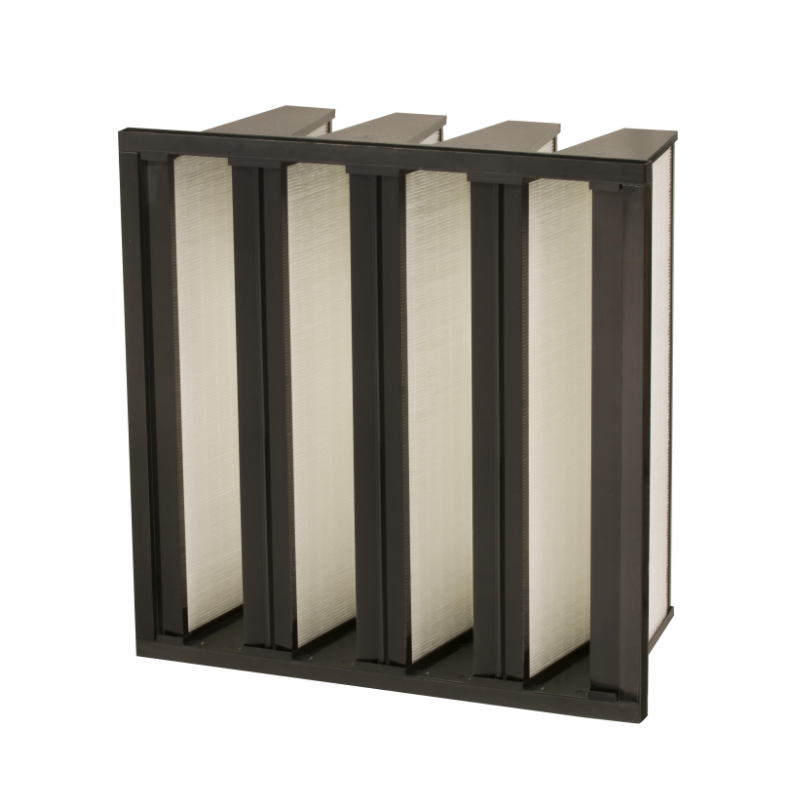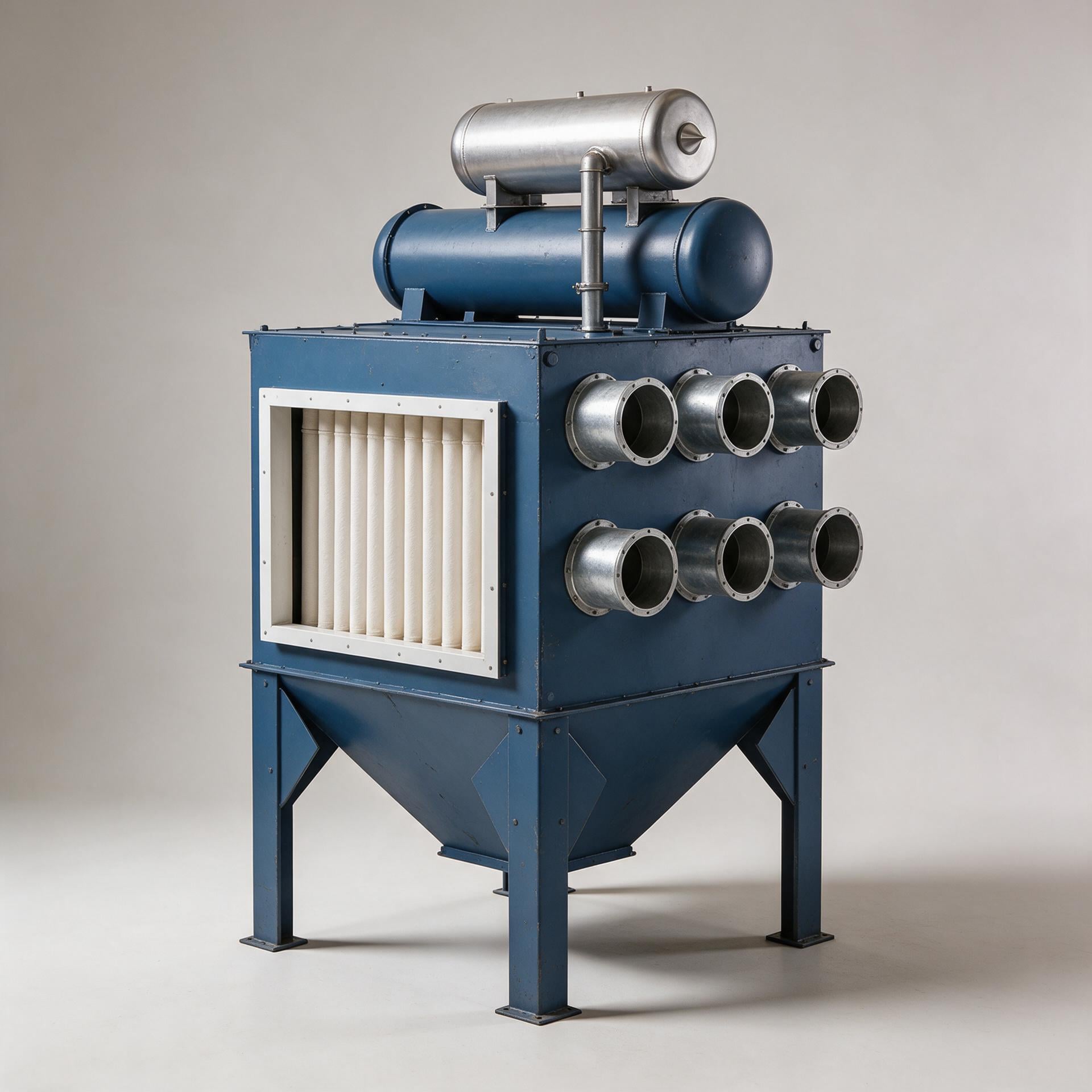
A baghouse can clean its bags either while the unit stays online or by taking one section out of service at a time. An offline pulse jet baghouse follows the second approach: a compartment is isolated, cleaned, and then returned to the stream while the others continue filtering. This single design choice shapes much of the operational behaviour. Online cleaning is simple and keeps full airflow available, but the pulse must fight the working airflow and some dislodged dust is immediately swept back onto the bags. Offline cleaning removes that conflict, and the advantage shows up in cleaning quality and in the stability of downstream dust.
In an offline design, dampers close the flow path to one compartment while the fan draught continues through the rest of the housing. The pulse is then injected into a quiet chamber, so the jet energy goes into flexing the bag rather than into accelerating a stream of inlet dust. Once cleaning finishes, the dampers reopen and the compartment returns to duty. Because the sequence is controlled, operators can schedule cleaning by pressure drop rather than by a rigid clock. This is a general engineering principle rather than a proprietary scheme, and it is why an offline pulse jet baghouse is often chosen where consistent outlet air matters.
The clearest benefit of the offline cycle is that dust has time to fall. With the compartment isolated, there is no inlet stream to re-entrain the cake as it releases from the fabric, so particles drop into the hopper instead of redepositing. That reduces dust re-entrainment, a common cause of rising emissions and stubborn residual pressure drop. Over many cleaning cycles, the difference accumulates: bags stay more open, the cleaning cycle achieves a lower residual resistance, and the collector holds its duty between cleanings. For fine or sticky dust, less dust re-entrainment can be the deciding factor in whether a baghouse meets its outlet target.
Because only one compartment is cleaned at a time, the overall pressure drop of the baghouse stays comparatively steady. The remaining compartments continue to carry the flow while one is being pulsed, so the fan does not see a large swing in system resistance. This stability helps downstream processes that are sensitive to airflow variation and reduces the mechanical stress that comes from repeated load changes. Each cleaning cycle is also easier to interpret: the pressure trace reflects one isolated section rather than a whole house responding at once. Operators can spot a failing row or a bad valve by watching how a single compartment recovers.
Consider an anonymous cement handling line that had struggled with emissions after each cleaning event. The original arrangement cleaned online, and the team noticed a short surge of dust at the stack every time a pulse fired. After switching to an offline pulse jet baghouse arrangement, the surges disappeared because each compartment was cleaned without an inlet stream passing through it. Dust re-entrainment was reduced and the pressure drop between cycles settled at a lower level. No change was made to the process itself. The case illustrates the operational advantage in plain terms: isolating a compartment turns cleaning from a disturbance into a controlled maintenance step.
An offline pulse jet baghouse suits duties where outlet air quality is tightly specified, where the dust is fine or difficult to release, or where airflow stability matters to the process. It is also useful when the plant wants to inspect or change a compartment without stopping the whole collector. The trade off is added damper hardware and a control sequence that must be maintained, so a simpler online baghouse may still be adequate for coarse dust and relaxed emission limits. Buyers should weigh the value of lower dust re-entrainment against the extra complexity before choosing the offline configuration for their baghouse.
Ask how compartments are isolated and what happens if a damper fails part way through a cleaning cycle. Confirm that each cleaning cycle can be triggered by pressure drop and that the sequence allows manual intervention during commissioning. Review how the hopper is drained, since cleaning is only effective if released dust can leave the housing. Request test documents showing emissions during and after cleaning, not only at steady state. If the supplier can explain how the offline pulse jet baghouse limits dust re-entrainment in your specific dust, the proposal is grounded in your duty rather than in a generic claim.
Question one: What is the main advantage of an offline pulse jet baghouse?
Answer: It cleans a compartment without an inlet airflow passing through it, so dust falls into the hopper instead of being swept back. That reduces dust re-entrainment and keeps emissions steadier.
Question two: Does offline cleaning stop the whole baghouse?
Answer: No. Only one compartment is isolated at a time while the rest keep filtering. The fan continues to serve the process, so overall airflow is largely maintained.
Question three: Is a cleaning cycle triggered by time or pressure drop?
Answer: It can be either, but pressure drop triggering is generally more responsive to real dust load. Confirm that the baghouse control allows thresholds and manual operation for commissioning.
 Hot News
2026-11-22
2026-11-22
2026-11-22
2026-11-22
2026-11-22
2026-11-22
Renhe focuses on air filter cartridge, gas turbine air filter, Pleated Filter Media, industrial dust, Our main products have been recognized as high-tech products in Jiangsu Province, famous trademarks in Wuxi City, and CE certification.
NO. 31 Xingyuan Road, Jiefang Industrial Park, Gushan Town, Jiangyin City, Jiangsu Province, China (214414)
Copyright © 2024 Jiangsu Renhe Environmental Equipments Co., Ltd Privacy Policy
 EN