A grinding line that looks clean from the door can still push fine metal dust past the operators. Metal particles from cutting and welding stay suspended, travel with shop air, and settle on machines and lungs. Choosing a cartridge dust collector from habit rather than measurement ends in one of two failures: stations that cannot capture dust, or filters replaced far too often. Reliable metalworking dust collection starts with three questions: how much air must reach the hood, how much media area is installed, and how the dust behaves on the pleats. This guide answers them using the RH XLC II specification as the reference point.
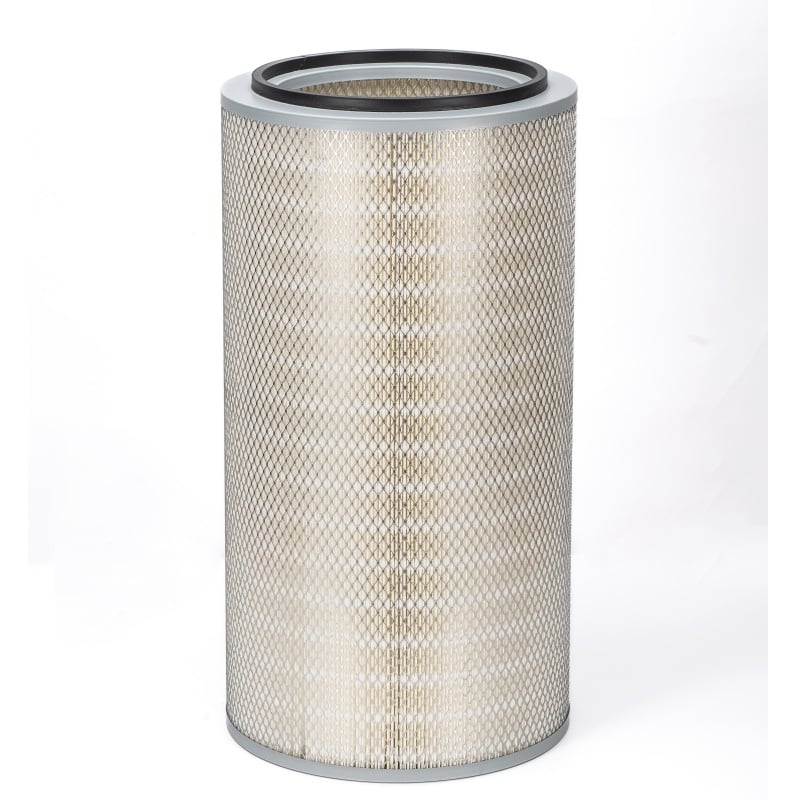
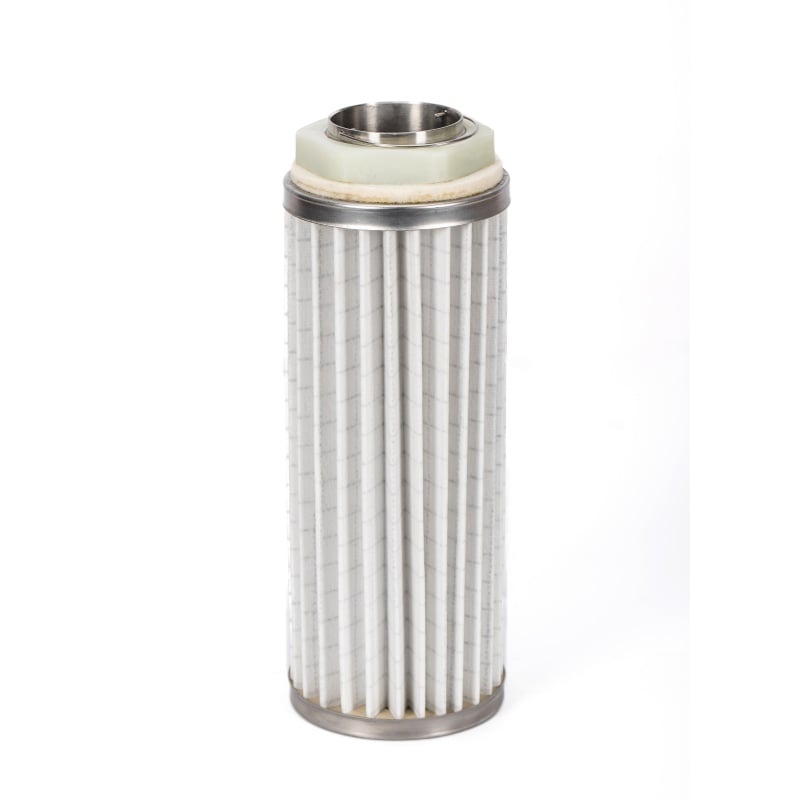
Fine metal dust is the reason the cartridge dust collector exists in fabrication. Pleated media packs a large filtering surface into a compact cabinet, which suits a shop with limited floor space. Against a baghouse built for high volume cement or foundry duty, a cartridge dust collector handles fine particulates at lower face velocity and smaller footprint. That is why a welding fume collector built on pleated media is common at fabrication bays. Media and housing must suit the dust, which can be abrasive and, in some alloys, combustible. Reliable metalworking dust collection begins with a sample: note whether the dust is dry and free flowing or sticky from cutting fluids, and whether the process sparks.
Dust collector airflow is the figure that decides whether dust leaves the station or drifts across the shop. Estimate the capture velocity each hood or arm needs, then add the pressure loss of the ducting. A higher rated cartridge dust collector only helps if the air actually arrives at the hood. Oversizing wastes fan power and drives particles back onto the media. Filter area calculation is the companion step: divide the airflow by an appropriate air to cloth ratio, and use a lower ratio for fine metal dust so pressure drop stays stable. The same logic applies when a welding fume collector is selected for mixed stations. Ask for installed media area, not cabinet dimensions, and check it against the dust collector airflow you plan to move.
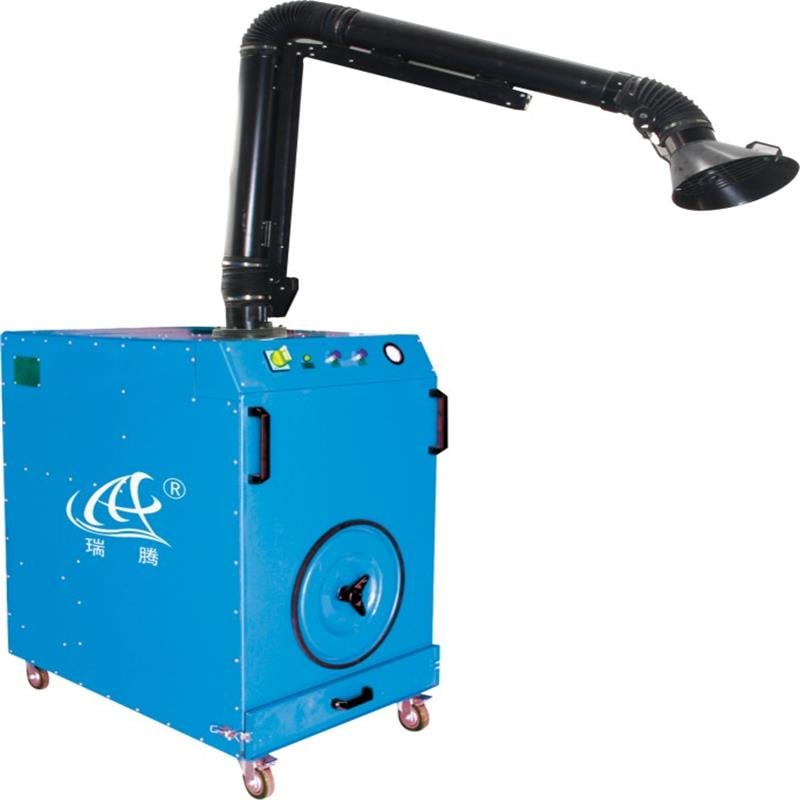
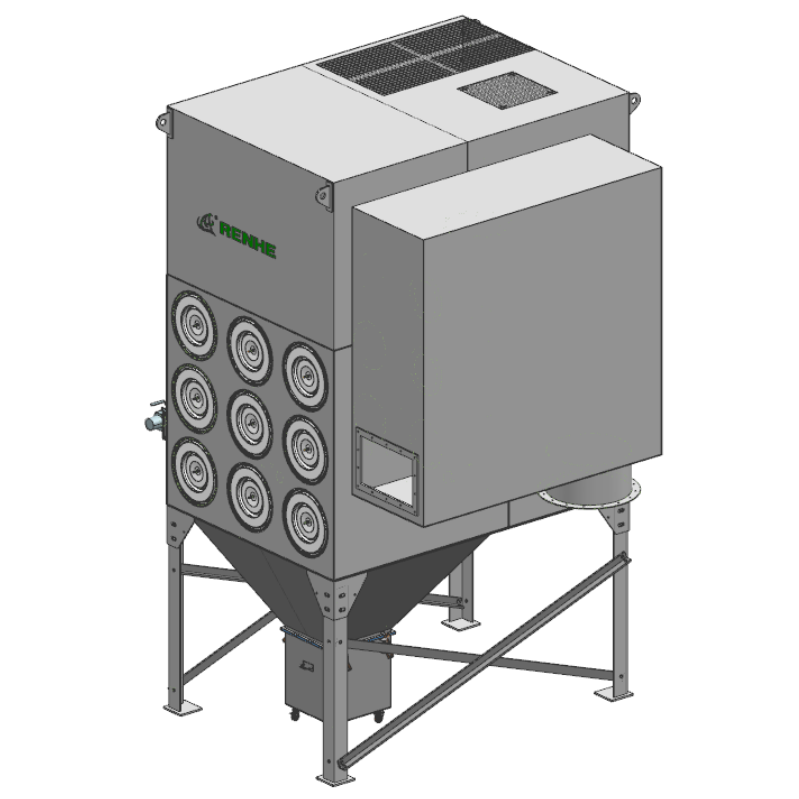
The RH XLC II horizontal cartridge collector is a useful benchmark because its range covers small and large stations. Airflow spans 3300 to 45000 m3/h across the models, while filter area runs from 184 to 1472 square metres. Filtration efficiency is stated at 99.99 percent. Resistance is given in three stages: initial 120 to 250 Pa, working 500 to 700 Pa, and terminal 1000 to 1250 Pa, which tells you when cleaning and replacement are due. This cartridge dust collector range is modular, so capacity can grow without a full redesign. Every cartridge dust collector in this range follows the same three stage resistance guidance. Verify test documents and confirm which model matches your dust collector airflow and filter area calculation before shortlisting.
Maintenance access is where a cartridge dust collector earns its reputation. The RH XLC II uses a 15 degree inclined drawer installation, so cartridges slide out from the clean side and the floor stays cleaner during changeout. A baffle at the dirty air inlet protects the media from impact, and few internal parts reduce what can fail. For metalworking dust collection, that combination means fewer unplanned stops and more consistent dust removal. A welding fume collector must be checked against the same dust collector airflow before it is paired with a grinding station. When you evaluate a cartridge dust collector, look at how the media is reached and how the inlet treats dust before it touches the pleats.
A multinational heavy industry enterprise building tower and crawler cranes faced moving weld points on large carbon steel components, using MAG gas shielded and argon arc processes. A fixed hood could not follow the arc, so the team used a distributed blow and suck arrangement: supply openings around four metres high and suction openings around nine metres, facing each other to create a controlled air curtain and a local downward recirculation zone. The welding fume collector arrangement captured the plume near the source and fed it to filtration instead of letting it spread through the bay. For metalworking dust collection the lesson is direct: match capture to the motion, then size the cartridge dust collector for what was actually captured. That cartridge dust collector handled moving sources by matching capture to the work.
One error is treating filter area calculation as an afterthought, which raises pressure drop and shortens media life. Oily or sticky particles blind pleats faster than dry dust. In metalworking dust collection, the filter area calculation should be checked before the cabinet size. No cartridge dust collector should be bought on footprint alone. Compare product options on measured airflow and installed area rather than a single headline number.
Question one: How often should a cartridge dust collector media be replaced?
Answer: There is no fixed interval. Replace when the clean pressure drop stays high after pulsing or when dust appears downstream. Tracking pressure drop over time is more reliable than counting months, and a sound filter area calculation helps plan spares.
Question two: Can one unit handle both fume and grinding dust?
Answer: Usually yes if the dust is dry and the media matches the finer fraction. Mixed oily and dry streams are harder; a welding fume collector on the same media is often adequate when the load is light, but confirm whether a pre separator or different media is needed for your metalworking dust collection.
Question three: What should be checked about dust collector airflow before ordering?
Answer: Request measured airflow and pressure drop data, media efficiency details, and credentials relevant to your market. Review specifications and verify test documents rather than accepting a verbal promise.
 Hot News
2026-11-22
2026-11-22
2026-11-22
2026-11-22
2026-11-22
2026-11-22
Renhe focuses on air filter cartridge, gas turbine air filter, Pleated Filter Media, industrial dust, Our main products have been recognized as high-tech products in Jiangsu Province, famous trademarks in Wuxi City, and CE certification.
NO. 31 Xingyuan Road, Jiefang Industrial Park, Gushan Town, Jiangyin City, Jiangsu Province, China (214414)
Copyright © 2024 Jiangsu Renhe Environmental Equipments Co., Ltd Privacy Policy
 EN