Ask a plant manager what an industrial dust collector is for and the first answer is rarely about efficiency ratings. It is about walking into a bay where the air is clear, where surfaces stay clean enough to read a label, and where the night shift does not sweep the same aisle twice. Visible dust settling on beams and floors is the symptom everyone notices, but it is only the outer layer of the problem. A properly sized industrial dust collector captures material at the point where it becomes airborne, before it spreads into the general workshop atmosphere. That single shift, from cleanup after the fact to capture at the source, turns dust control into a safety measure rather than a housekeeping expense. Where the material is combustible dust, it also reduces the chance that a dispersed cloud will ever form.
The health argument starts with particle size. Large particles settle quickly and are mostly a nuisance; the finer fraction stays suspended and can reach deep into the lungs. Respirable dust is not always visible, which is why a workshop can look acceptable while air monitoring tells a different story. The respirable dust fraction is what an exposure assessment is really about. An industrial dust collector addresses this by maintaining inward airflow at the hood and filtering the captured stream before returning air to the room. The goal is workplace air quality that stays consistent through the shift, not just at the moment the system is switched on. Plants that treat respirable dust as a design input rather than an afterthought choose finer media and better seals from the start.
Dust accumulation is more than untidy. On floors it becomes a slip hazard, and in corners it can migrate into electrical cabinets and bearings. For certain materials, a layered deposit is also a combustible dust concern: a dispersed cloud in the presence of an ignition source is a very different risk from a settled pile, yet both begin with the same failure to capture material at source. An industrial dust collector that removes dust continuously improves workplace air quality and limits dust accumulation, reducing the inventory available to become either problem. It does not replace the need for housekeeping, spark detection or grounding, but it makes those measures far easier to sustain. Workers around an industrial dust collector notice the difference in visibility and in how often they must clean around equipment.
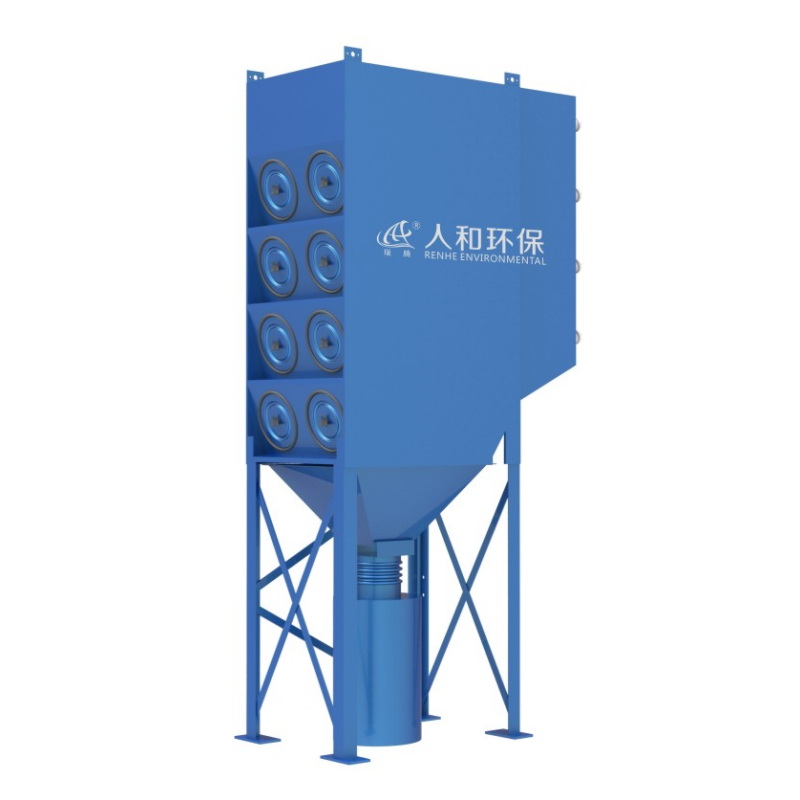
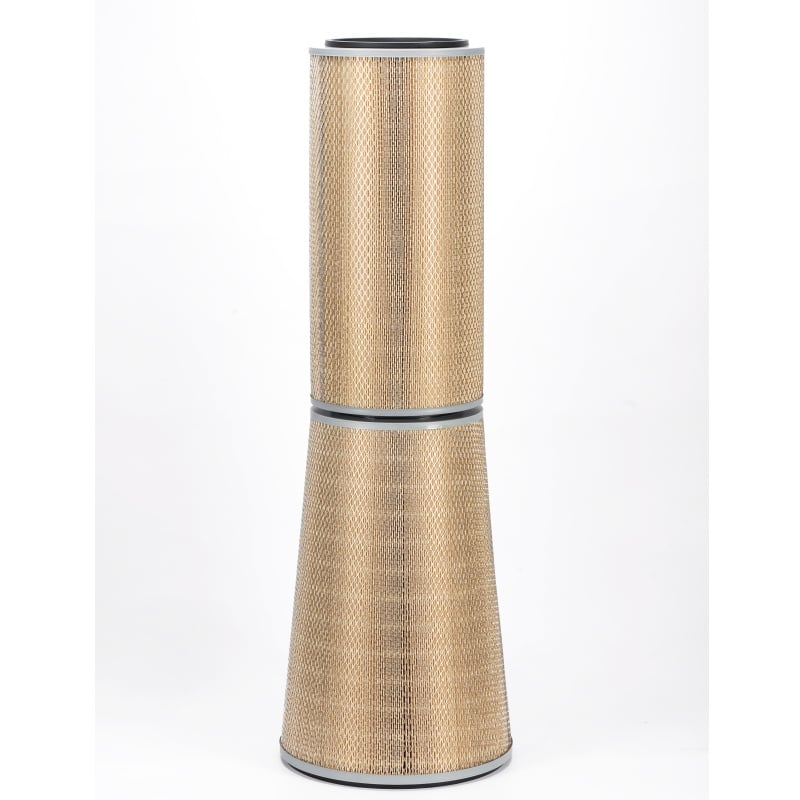
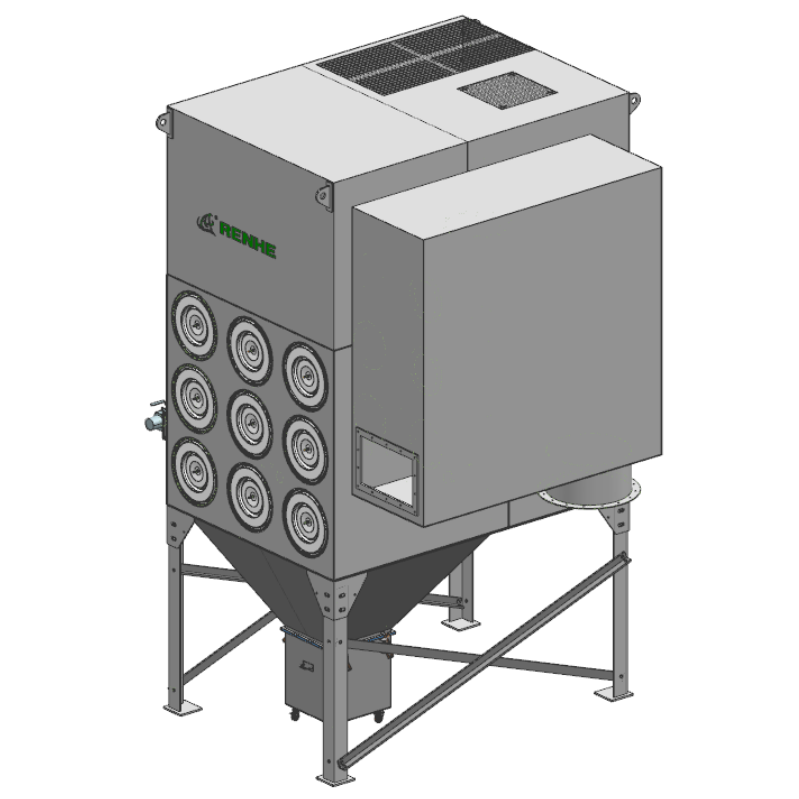
Buyers evaluating an industrial dust collector should look past nominal airflow and ask what happens at the hood. Capture velocity at the point of release, duct transport without settling, and a filter that holds its efficiency as it loads all matter. Supplier data for certain horizontal cartridge models cites collection efficiency around 99.99 percent under stated test conditions, with air volumes and filter areas selected to match the duty. Those numbers are useful only when the application matches the test basis, so request the operating envelope rather than a single headline figure. An industrial dust collector that delivers clean air at the start of the shift but loses capture as the filter loads protects neither workplace air quality nor the respirable dust objective.
An e-waste dismantling enterprise handling discarded electrical and electronic products illustrates the stakes. The work generated particles from screen and panel breaking, dust from cutting and separation, and vapour from refrigerants and residual fluids; some of these fractions behave as combustible dust. An industrial dust collector was configured to draw these streams to enclosed hoods and pass them through staged filtration before discharge, keeping the general workshop atmosphere far clearer than local extraction alone could. Because the processes varied along the line, capture points were reviewed as the layout changed, and the maintenance team tracked the industrial dust collector filter condition during routine rounds. A supplier such as Jiangsu Renhe could provide media guidance and documentation while the plant retained control of the safety programme. Review specifications and verify test documents before committing.
Measuring success is straightforward when the indicators are chosen well. Look at workplace air quality trends rather than a single reading; look at how often dust accumulation reappears on surfaces; and look at whether the industrial dust collector maintains capture through the full loading cycle. Check that ductwork does not encourage dust accumulation and that combustible dust controls are kept in place. Involve the people working closest to the process, since they notice changes in visibility and odour before instruments do. Request material guidance and compare product options against the real dust, the real airflow and the real shift pattern.
Question one: Does a dust collector remove the need for respiratory protection?
Answer: No. An industrial dust collector reduces general dust levels, but respiratory protection and exposure assessment still depend on the task and the measured workplace air quality. Treat them as complementary layers.
Question two: How does dust control improve safety beyond worker health?
Answer: Cleaner floors mean fewer slips, less dust in electrical gear and a smaller inventory of combustible dust. An industrial dust collector that captures at source makes dust accumulation easier to manage than sweeping after the fact.
Question three: What should I verify before buying an industrial dust collector?
Answer: Confirm capture at the hood, the stated efficiency under defined conditions and how the filter behaves as it loads. Ask the supplier to explain the operating envelope for the respirable dust in your process.
 Hot News
2026-11-25
2026-11-25
2026-11-25
2026-11-25
2026-11-25
2026-11-25
Renhe focuses on air filter cartridge, gas turbine air filter, Pleated Filter Media, industrial dust, Our main products have been recognized as high-tech products in Jiangsu Province, famous trademarks in Wuxi City, and CE certification.
NO. 31 Xingyuan Road, Jiefang Industrial Park, Gushan Town, Jiangyin City, Jiangsu Province, China (214414)
Copyright © 2024 Jiangsu Renhe Environmental Equipments Co., Ltd Privacy Policy
 EN