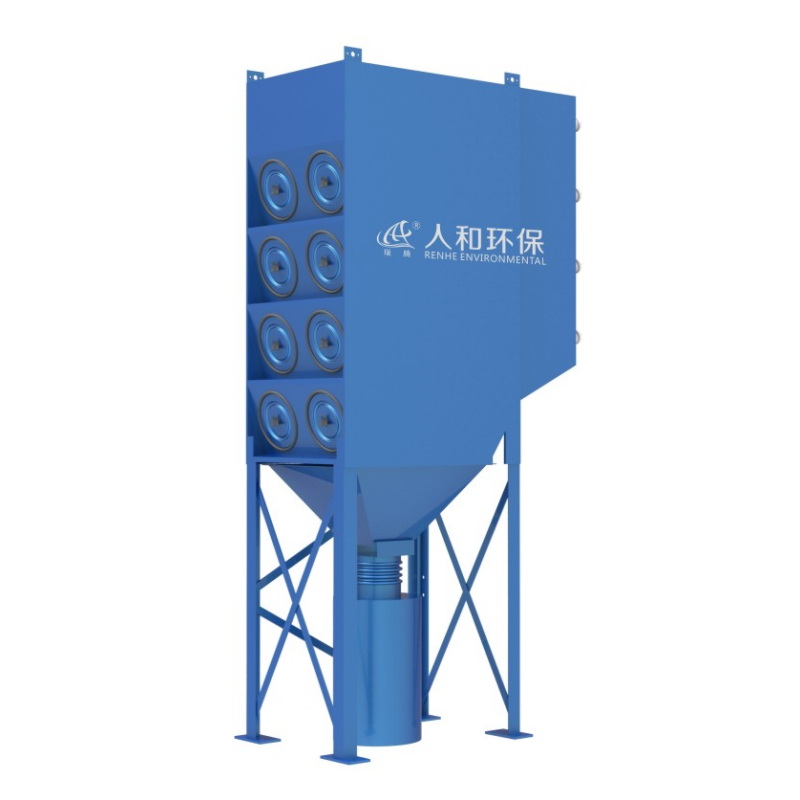
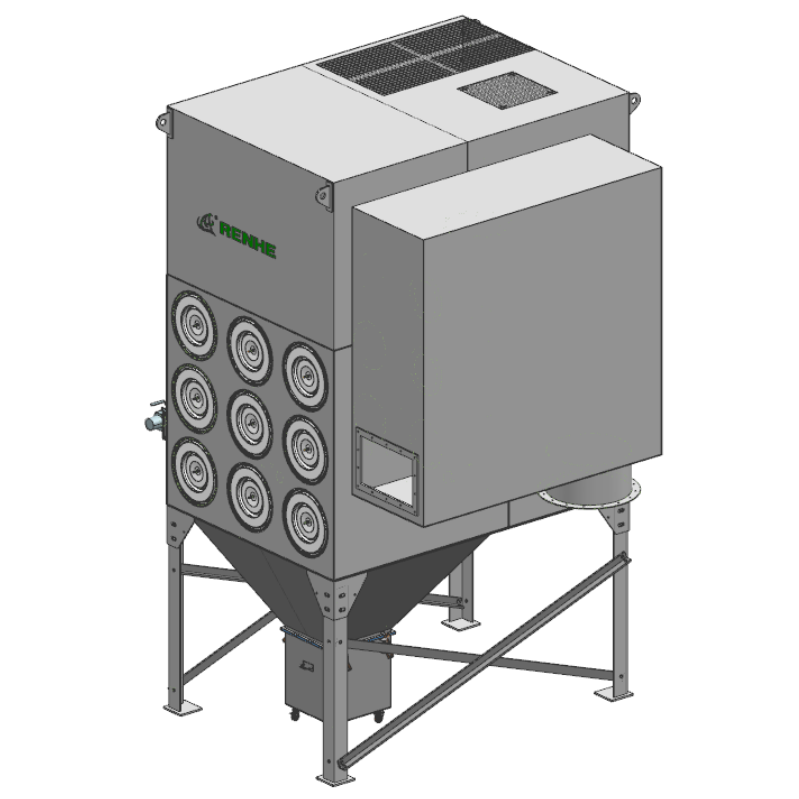
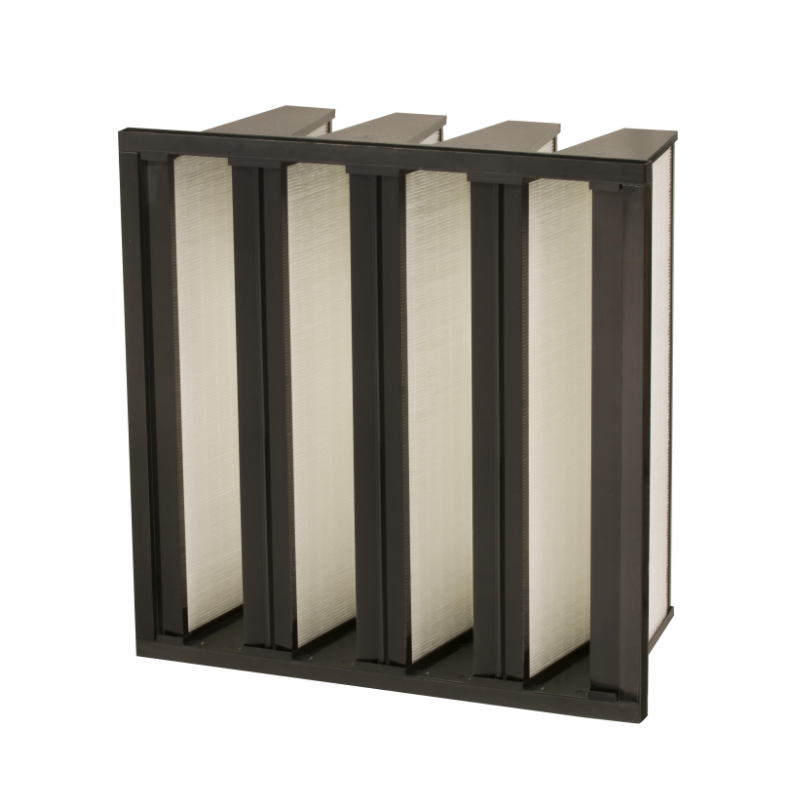
A powder coating booth produces overspray that must be captured continuously, and the collector chosen for the job shapes both cleanliness and operating cost. Buyers often ask what makes a pleated cartridge dust collector a good fit for this application. The answer is not one feature but a combination of geometry and recovery behaviour. A pleated cartridge dust collector packs a large filtering surface into a compact housing, which matters where booth space is limited, and it separates the powder from the air in a form that can often return to the process. This article explains the reasons in practical terms: filtration area, powder recovery, footprint and how the medium handles a fine, dry powder.
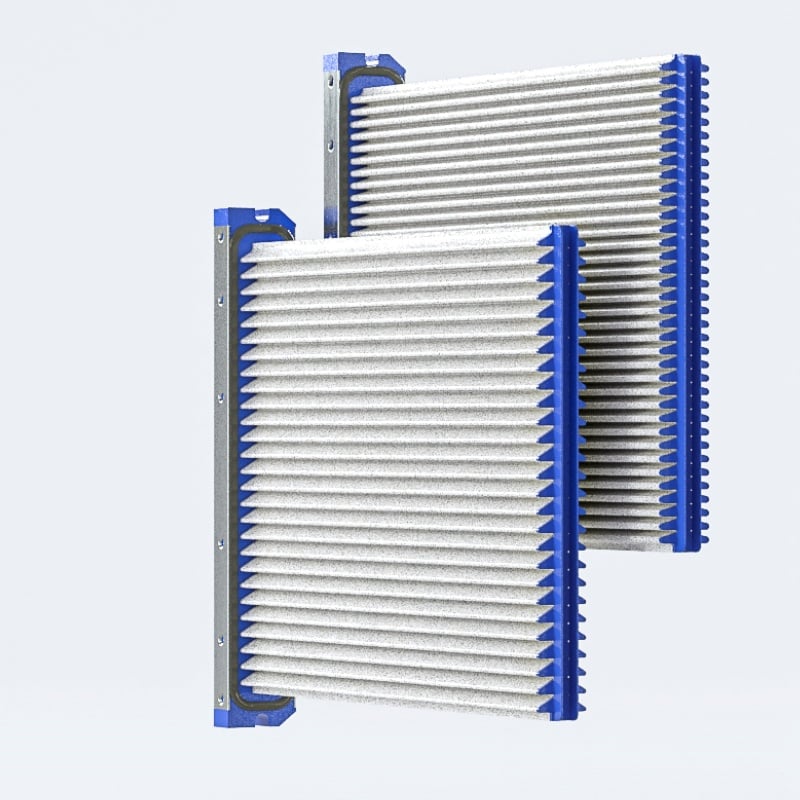
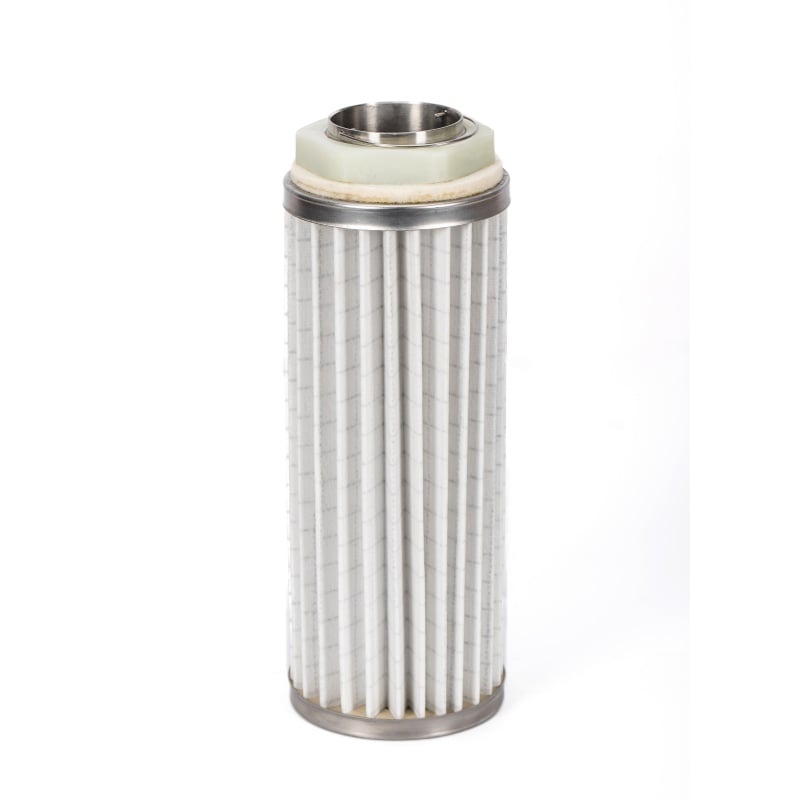
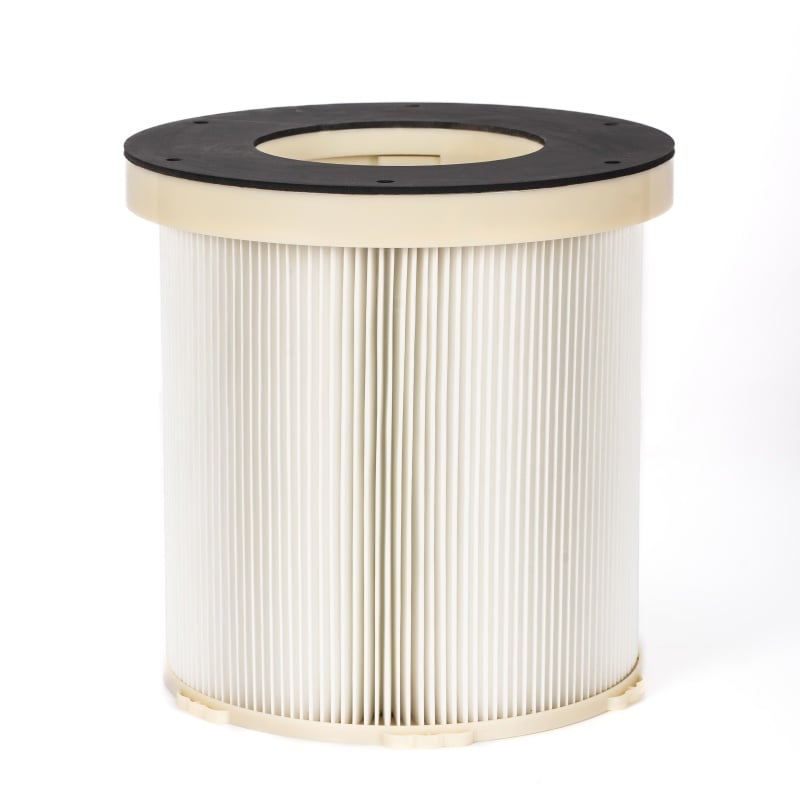
A pleated cartridge dust collector uses elements whose surface is folded into many pleats, so a large filtration area fits inside a short cartridge. More area means the air moving through the cloth faces a lower velocity at a given airflow. Lower face velocity helps the powder form an even surface layer and reduces the force driving particles into the fabric. In a powder coating booth the overspray is fine and dry, and this supports steady capture through the shift. The pleated design also gives pulse cleaning something to work with: the layer releases in sheets from the pleat faces and falls to the collection point. That is the basic reason a pleated cartridge dust collector is associated with booths.
In powder coating, the overspray is the same material as the coating itself, so capturing it cleanly can let it be screened and reused. A pleated cartridge dust collector separates the dry powder from the air without wetting or chemically changing it, which keeps the material suitable for reclamation where the process allows. Powder recovery works because the collected powder gathers in a hopper or drawer and can return to the feed system after screening for contaminants. The economic value depends on the powder, how often colours change and the purity required, so the benefit should be evaluated per line rather than assumed. Keeping the powder dry and separate is a real advantage of this collector type.
The booth, the conveyor and the operator stations already occupy the floor, leaving little room for a large collector. A pleated cartridge dust collector has a small footprint relative to its filtering capacity, because the pleats multiply the area within a compact element. That allows the unit to sit close to the booth, shortening ductwork and reducing the fan power needed to move the air. A shorter duct also means less chance of powder settling inside the run before it reaches the collector. Where several booths share a system, the compact footprint makes it easier to place the collector centrally without taking production space. Footprint is therefore a design input, not an afterthought.
Powder loading in a booth is fairly steady while spraying, and a pleated cartridge dust collector responds by building a thin surface layer that does much of the fine capture. Differential pressure rises as that layer thickens, and a pulse cleaning cycle releases the excess powder into the hopper. Because the pleats provide many surfaces, the cleaning pulse distributes across the element and the powder falls freely. The medium should be selected for a dry, fine powder, and the cleaning settings should match how quickly the booth loads the filter. Watching the pressure trend over a shift confirms that the collector is cleaning effectively rather than overloading or over-pulsing.
Consider an anonymous appliance powder coating line where overspray had been captured by a fabric collector that required frequent bag changes and created a dusty maintenance job. The team evaluated a pleated cartridge dust collector, asking the supplier to document two points: the filtration area available at the booth's airflow, and how the captured powder would be removed for reuse. The compact footprint allowed the unit to sit beside the booth, shortening the duct and freeing space on the line. Collected powder was screened and returned where purity allowed, reducing both waste and handling. The outcome depended on matching the collector to the booth's actual airflow and powder type, not on the assumption that any cartridge unit would suit the process.
When comparing options, ask the supplier to state the airflow, the filtration area and the recommended cleaning approach for your powder. Confirm how the captured powder is removed and what screening is needed before reuse, since that decides whether powder recovery is practical on your line. Check the footprint against the space beside the booth and verify that duct runs can be kept short. Review specifications and request material guidance before committing. A pleated cartridge dust collector suits powder coating because it combines area, recovery and compact size, but those benefits appear only when the unit is matched to the booth. Verify the figures for your own duty rather than relying on the application label.
Question one: Why use a pleated cartridge dust collector in a powder coating booth?
Answer: It packs a large filtration area into a compact housing, keeps the overspray dry and separate, and lets captured powder be screened and reused where purity allows. The small footprint also suits crowded booth areas.
Question two: Can the captured powder really be reused?
Answer: Often yes, if it is kept dry and screened free of contaminants. Suitability depends on the powder, colour changes and the quality required on your parts, so evaluate powder recovery per line.
Question three: What should I check before selecting a collector?
Answer: Confirm the airflow and filtration area, how powder leaves the hopper, the screening needed for reuse and whether the footprint fits beside the booth. These decide real performance.
 Hot News
2026-11-25
2026-11-25
2026-11-25
2026-11-25
2026-11-25
2026-11-25
Renhe focuses on air filter cartridge, gas turbine air filter, Pleated Filter Media, industrial dust, Our main products have been recognized as high-tech products in Jiangsu Province, famous trademarks in Wuxi City, and CE certification.
NO. 31 Xingyuan Road, Jiefang Industrial Park, Gushan Town, Jiangyin City, Jiangsu Province, China (214414)
Copyright © 2024 Jiangsu Renhe Environmental Equipments Co., Ltd Privacy Policy
 EN