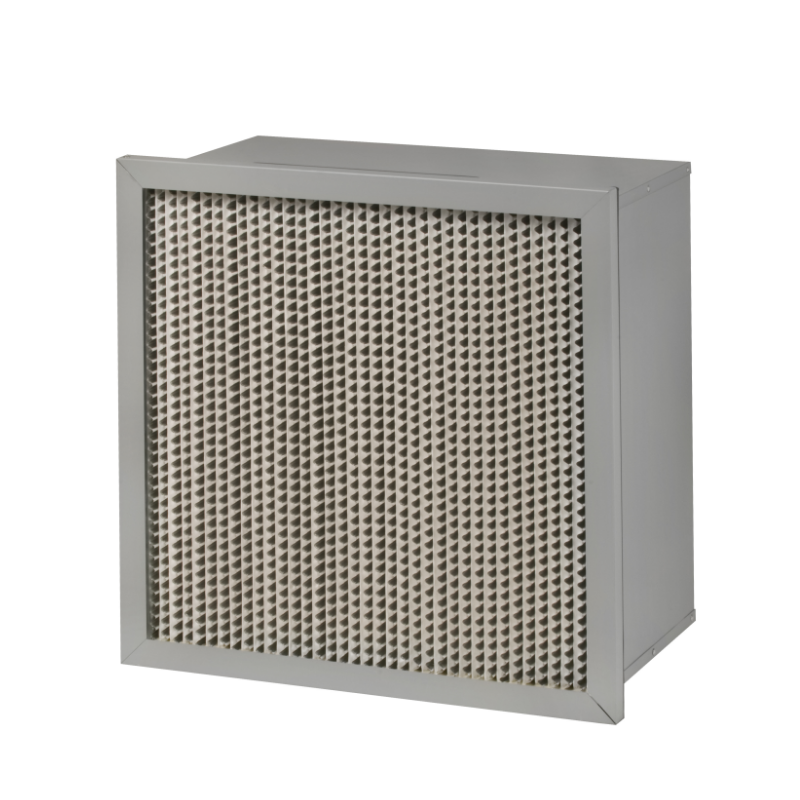
A pocket bag filter that is correctly specified can still perform poorly if installed in the wrong orientation. Buyers often focus on the filter itself and give little thought to how it sits in the frame, yet the direction of the pockets governs how air moves through the media and how dust behaves between them. With a pocket bag filter fitted with pockets aligned vertically, the bag filter hangs as its geometry intends and airflow develops evenly across the full face. This article walks through the steps: reading the frame, setting the orientation, sealing the edges and checking the result. The goal is a correct first fit that holds through service.
A pocket bag filter is built from fabric pockets that stand out from a framing edge. The design assumes they hang downward under gravity, so spaces between them stay open and airflow passes along the pockets rather than a collapsed mass. When the unit is tilted or laid on its side, pockets can sag into one another, narrowing channels and forcing air through a smaller effective area. That raises resistance and reduces the airflow the system was designed to move. Vertical alignment also helps released dust fall out instead of settling inside. For a bag filter handling dusty air, keeping pockets hanging freely preserves both area and pressure drop.
Installation starts before the filter is unpacked. Inspect the holding frame for bent edges, missing clips or debris that would stop the pocket bag filter seating flat. Confirm the opening matches the filter size and that the airflow direction marked on the housing agrees with the direction the pockets should face. Most filters carry an arrow or a marked upstream face; fitting a bag filter backwards puts pockets into the airstream the wrong way. Check that the duct is clean and no loose material could be drawn onto the media at startup. A few minutes of inspection prevents a correct filter going into a frame that cannot hold it.
With the frame ready, position the pocket bag filter so pockets hang vertically and the marked face points into the incoming air. Insert the framing edge evenly around its channel, working from one side rather than forcing one corner in first. A twisted filter will hang with some pockets lower than others, disturbing the even airflow the design relies on. Once seated, check every pocket hangs free and none is folded back or caught on a clip. Where a bag filter uses a gasket, confirm it sits in its groove without gaps. The aim is a filter square in the frame, hanging naturally; confirm vertical alignment before fastening.
A bag filter only cleans air that passes through its media, so any frame gap lets unfiltered air bypass it. Sealing is central to installation, not a finishing touch. Compress the gasket evenly as the filter is clamped, and check the corners where leaks start. An uneven clamp can pinch one edge while leaving the opposite edge loose, easy to miss once the housing is closed. If the frame is warped, a filter that looks seated may still leak along one side. For a pocket bag filter, a small edge bypass carries dust past the media onto the clean side. After closing, verify the access door seals against its own gasket.
Consider an anonymous air handling installation where a pocket bag filter was replaced repeatedly on a short cycle. The filter itself was suitable, but the team found a slight twist in the frame and that recent replacements had some pockets folded over. Air took the path of least resistance through unfiltered gaps, so differential pressure looked acceptable while downstream air stayed dirty. They corrected the frame, retrained technicians to hang each pocket bag filter with pockets aligned vertically, and added a gasket check before closing the door. The bag filter was unchanged, but its airflow path was restored. The case shows a correct product in a careless installation still underperforms; the fix is often in handling.
After fitting, do not assume success because the housing is closed. Observe differential pressure at startup and over the first hours; a reading far lower than expected can indicate bypass, while a rapid rise can mean pockets collapsed or the face is blocked. Confirm the system delivers its intended airflow and no dust appears downstream. Recheck that the door and filter gasket are seated, since a filter can shift during closing. Record the baseline pressure for the new bag filter so later readings show when to change it. Review specifications and request guidance if the frame is uncertain. A pocket bag filter with pockets aligned vertically, correctly sealed and verified, gives the promised airflow.
Question one: Why must the pockets be aligned vertically?
Answer: Vertical alignment matters because the design assumes the pockets hang downward, keeping the channels between them open. When they sag sideways the effective area shrinks, resistance rises and airflow falls. Hanging freely also lets dust fall out of the pockets.
Question two: How do I know the filter is facing the right way?
Answer: Look for the arrow or marked upstream face on the filter and match it to the airflow direction in the housing. A pocket bag filter fitted backwards puts its pockets into the airstream the wrong way.
Question three: What is the most common installation fault?
Answer: Poor sealing. A twisted frame, a displaced gasket or an uneven clamp leaves gaps that let air bypass the media, so the bag filter looks fitted while unfiltered air passes around it.
 Hot News
2026-11-25
2026-11-25
2026-11-25
2026-11-25
2026-11-25
2026-11-25
Renhe focuses on air filter cartridge, gas turbine air filter, Pleated Filter Media, industrial dust, Our main products have been recognized as high-tech products in Jiangsu Province, famous trademarks in Wuxi City, and CE certification.
NO. 31 Xingyuan Road, Jiefang Industrial Park, Gushan Town, Jiangyin City, Jiangsu Province, China (214414)
Copyright © 2024 Jiangsu Renhe Environmental Equipments Co., Ltd Privacy Policy
 EN