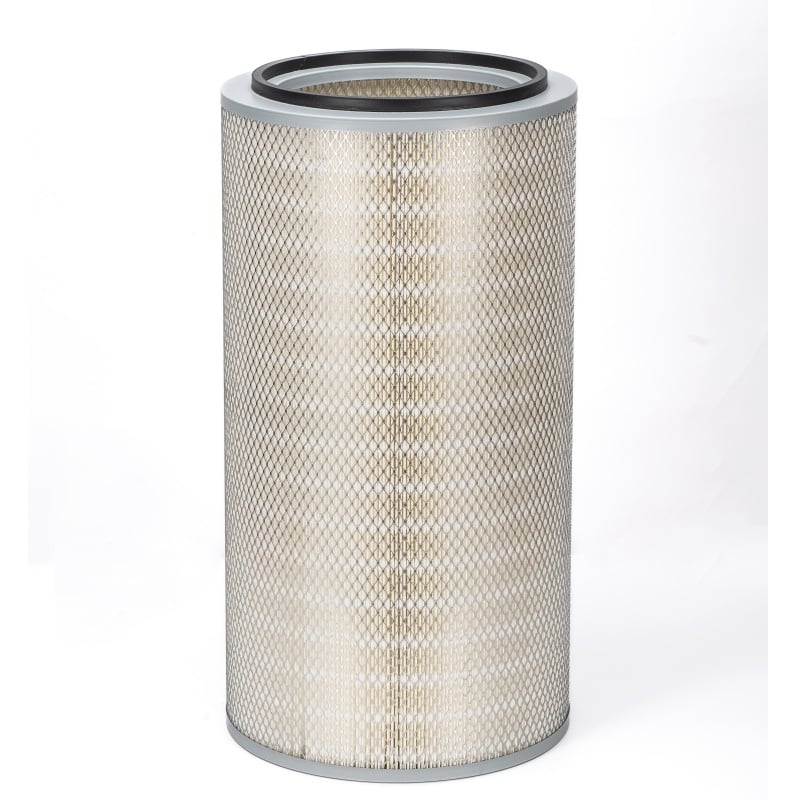
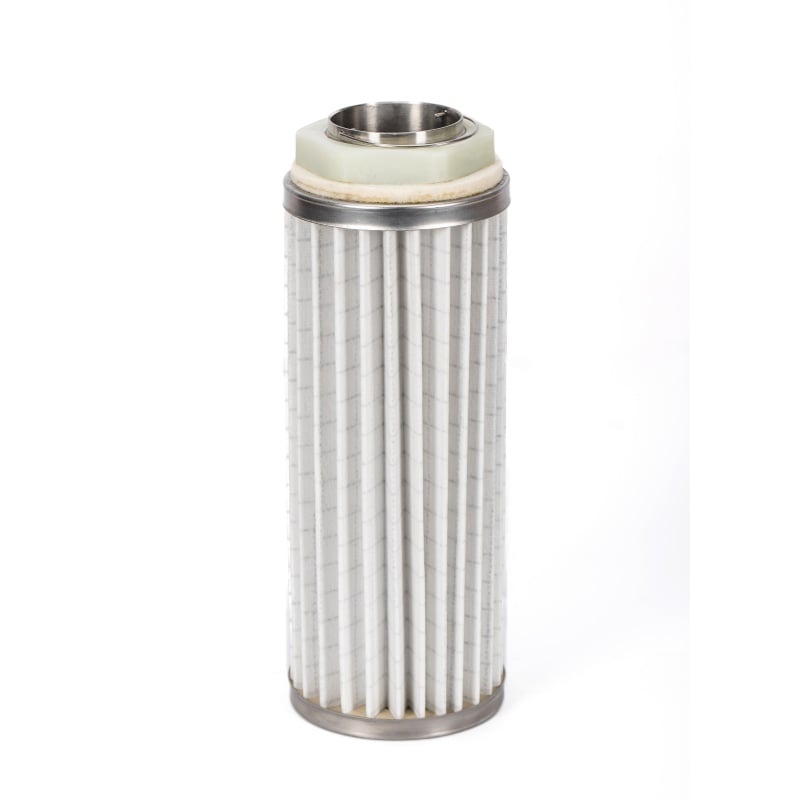
Maintenance teams sometimes treat a dust collector filter cartridge like a filter they can rinse at the end of a shift. A wet, caked element looks obviously dirty, and a hose seems like the obvious answer, so compressed air cleaning is skipped in favour of a wash. In practice, high pressure water is one of the quickest ways to shorten the service life of that element. The damage is rarely visible on the day it happens: the cartridge goes back into the housing, appears to work, and then shows declining performance over the following weeks. Understanding why helps teams choose a method that removes dust without attacking the structure that holds it.
The filter media in a dust collector filter cartridge is engineered as a controlled structure of fibres and, in many cases, a fine surface layer. high pressure water does not simply lift dust from that structure. It drives particles deeper into the fibres, disturbs pleat spacing and the bonding that gives the media its strength, and can leave wet spots that never fully clear. Even where the surface looks clean afterwards, filter media damage may already have reduced the efficiency the element was selected for. A cartridge that passes a visual check can still allow fine dust to pass because the surface layer has been worn away or packed shut.
Pleats are spaced to keep the media open so air can pass and dust can fall away during a pulse. A forceful jet does not respect that geometry: it can push adjacent pleats together, crease the media at the fold and collapse pleat spacing where the support cage is weakest. Once pleat spacing is lost locally, that area stops cleaning properly and becomes a permanent high-resistance patch, which in turn makes compressed air cleaning less effective across the element. The inner and outer liners that protect a dust collector filter cartridge help, but they are not a licence to blast at close range. Technicians should look for crushed folds and torn liners after any wet cleaning attempt.
Many elements rely on a membrane coating to control release. high pressure water can strip or blind that layer, turning a surface-filtering element into one that behaves unpredictably with fine or sticky dust and accelerating filter media damage. Drying creates a second problem: a cartridge that looks dry on the outside may hold moisture deep in the pleats, where it attracts dust and can support microbial growth in a humid plant. Reinstalling a damp element into a dust collector filter cartridge housing can carry that moisture into the clean-air side. If wet cleaning is unavoidable for a particular dust, the element must be dried completely and checked before it returns to service.
For most dry process dust, compressed air cleaning is the intended route. A controlled pulse, delivered from the inside through the venturi, lifts the cake while leaving the media structure intact. A dust collector filter cartridge designed for dry dust should be cleaned this way, with the plant relying on correct filtration velocity and timely maintenance rather than manual washing. Where a cartridge is genuinely washable, follow the supplier's written method: low force, correct orientation, thorough rinsing and full drying before reinstallation. Request material guidance and verify test documents so that the method matches the media rather than fighting it, and so that filter media damage is avoided.
An automatic sand drenching dust control project at a foundry workshop operating under constant temperature and humidity illustrates the constraint. The dust collector filter cartridge chamber handled fine silica sand, and cleaned air was returned to the room to reduce heating and cooling losses. Because ambient moisture was controlled for the casting process, the maintenance team was especially careful about water near the filter room. They used pulse cleaning as the primary method and reserved wet wiping for the housing, not the elements. After one trial with high pressure water, the affected dust collector filter cartridge elements showed slower pressure recovery and were replaced sooner than expected. A supplier such as Jiangsu Renhe could explain which media tolerate moisture and which do not. Review specifications and compare product options before choosing a method.
Question one: Can I ever rinse a dust collector filter cartridge?
Answer: Only if the supplier states the media is washable and provides a method. Even then, use low force and dry completely. For most dry dust, compressed air cleaning is safer than any hose.
Question two: How can I tell if high pressure water has damaged a cartridge?
Answer: Look for crushed pleat spacing, torn liners, a surface that has lost its coating, and pressure that no longer recovers after a pulse on a dust collector filter cartridge. Filter media damage is often internal, so verify by performance rather than appearance.
Question three: Does wet cleaning save money on replacement elements?
Answer: It can appear to, but a shortened service life for a dust collector filter cartridge usually costs more. Compare the replacement interval before and after, and include the risk of filter media damage in the calculation.
 Hot News
2026-11-25
2026-11-25
2026-11-25
2026-11-25
2026-11-25
2026-11-25
Renhe focuses on air filter cartridge, gas turbine air filter, Pleated Filter Media, industrial dust, Our main products have been recognized as high-tech products in Jiangsu Province, famous trademarks in Wuxi City, and CE certification.
NO. 31 Xingyuan Road, Jiefang Industrial Park, Gushan Town, Jiangyin City, Jiangsu Province, China (214414)
Copyright © 2024 Jiangsu Renhe Environmental Equipments Co., Ltd Privacy Policy
 EN