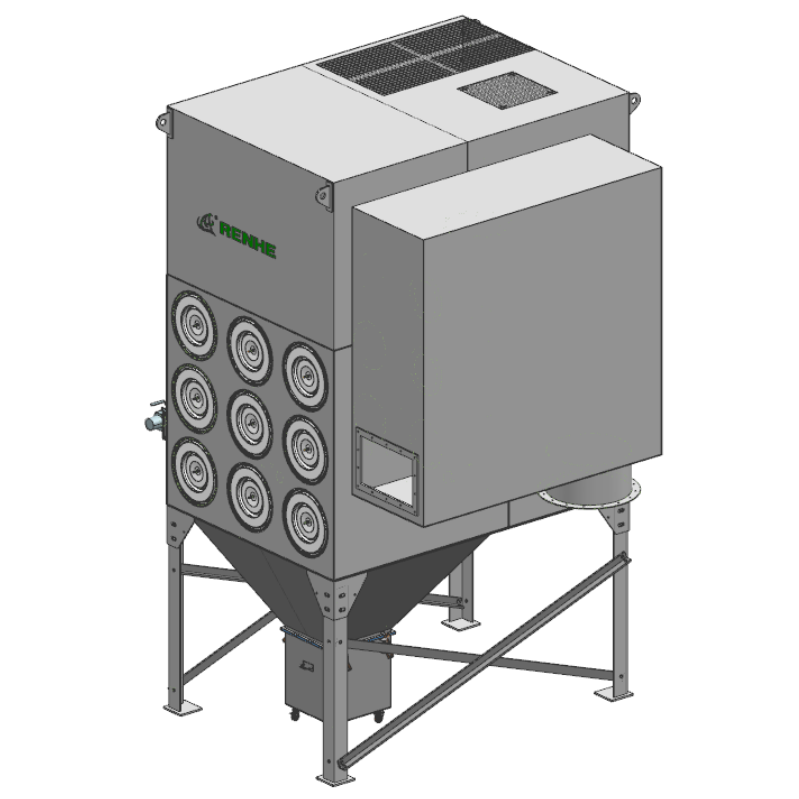
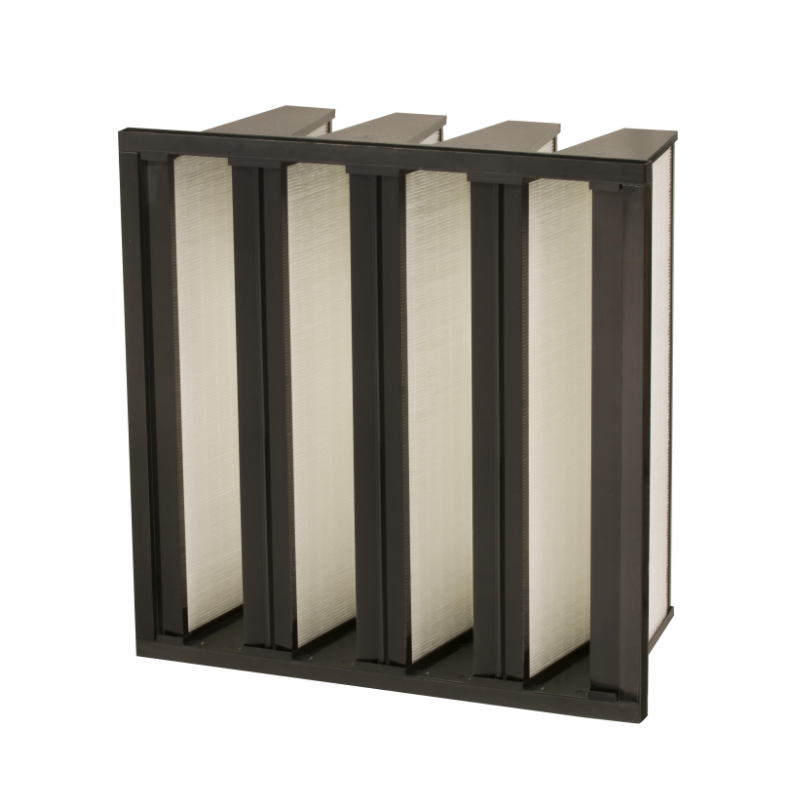
Buyers frequently ask for one compressed air pressure figure that will suit every cartridge dust collector, but experienced plant engineers know the honest answer depends on the application. The compressed air is not there to blast the media clean in a brute-force sense. It is there to release a short, sharp pulse that flexes the pleats and shakes loose the collected dust cake. Set the compressed air pressure too low and the pulse never reaches the far end of the deepest pleats. Set it too high and you spend energy for no extra cleaning while accelerating media fatigue. The right setting is therefore a band that is commissioned on site and then verified against differential pressure behaviour during the first weeks of running. Any fixed recommendation that ignores your dust, your media and your pipework should be treated as a starting point rather than a specification.
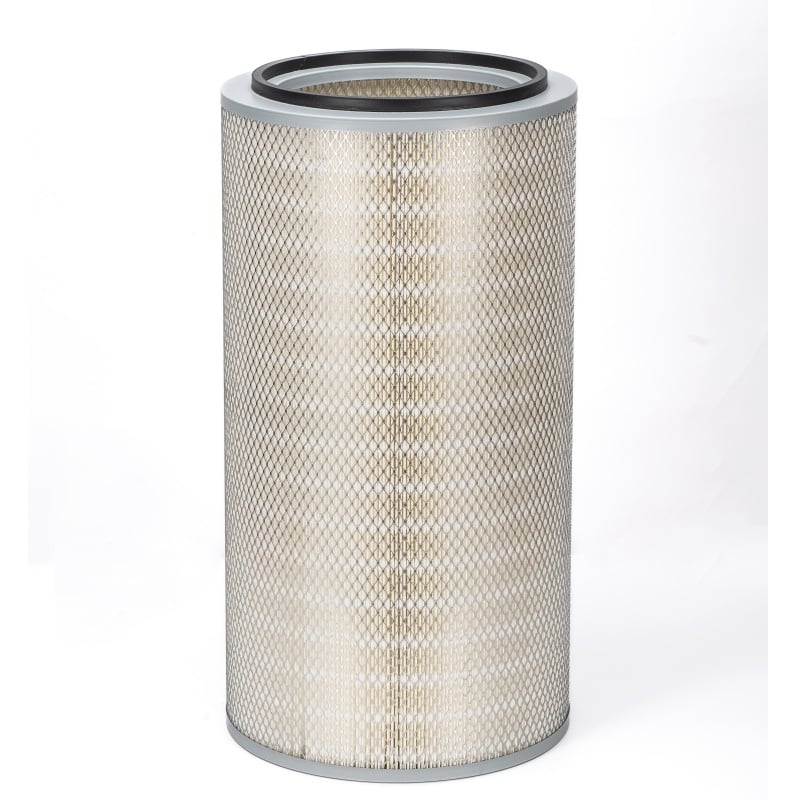
Understanding the mechanism makes the setting easier to justify to maintenance teams. In pulse jet cleaning, a reservoir of compressed air is released for a brief moment through a diaphragm valve into a blowpipe mounted above the cartridge array. The jet enters the venturi at the mouth of each element and induces a much larger secondary flow of already-cleaned air moving in the reverse direction. It is this reverse flow, not the compressed air alone, that performs most of the cleaning. A cartridge dust collector therefore depends on a pressure wave that travels evenly down the full length of every pleat. Anything that weakens or distorts that wave reduces cleaning quality, whatever the gauge reads at the inlet.
Several factors move the working band, and each deserves a check before the final value is chosen. Media resistance comes first: a fresh element and a loaded element present very differently to an air pulse. The length and internal condition of the blowpipe affect how uniformly the wave is delivered along the row. The response of the diaphragm valve, including its opening speed and seating condition, governs how much of the stored air actually reaches the media. A diaphragm valve that opens sluggishly can starve the far pleats even when the header reads correctly, so its condition is worth confirming during pulse jet cleaning trials. Dust characteristics matter too, because a fine, cohesive cake releases less readily than a coarse, free-flowing one. In a cartridge dust collector serving a high-temperature or humid stream, operators often lean toward a gentler approach to protect the media.
An aggressive compressed air pressure shows up in recognizable ways. Fines can be driven deeper into the media rather than released, so the baseline differential pressure never fully recovers after a clean. Pleat pinch, seal stress and accelerated fabric fatigue shorten element life, and the maintenance team sees more replacement cartridges than the duty warrants. A weak setting produces a different pattern: the cake thickens, the differential pressure climbs steadily, and cleaning cycles become more frequent without restoring the reading. Both extremes cost money, just on different lines of the budget. Watching how the differential pressure recovers after each pulse jet cleaning event in the cartridge dust collector is often more informative than watching the supply gauge itself.
Operators typically begin from a conservative mid-range recommended for the media family, then adjust in small increments while observing the cleaning result. The practical sequence is to establish a clean baseline, run the cartridge dust collector under representative load, trigger a pulse jet cleaning cycle and measure how far the differential pressure falls back. If recovery is sluggish, the setting or the pulse distribution is examined; if the media shows distress, the approach is softened. Record the chosen setting together with the dust type, media specification and ambient conditions, because those notes become the reference when the line is restarted or the media supplier changes. Check the diaphragm valve and review specifications and verify test documents before treating any single figure for the cartridge dust collector as permanent.
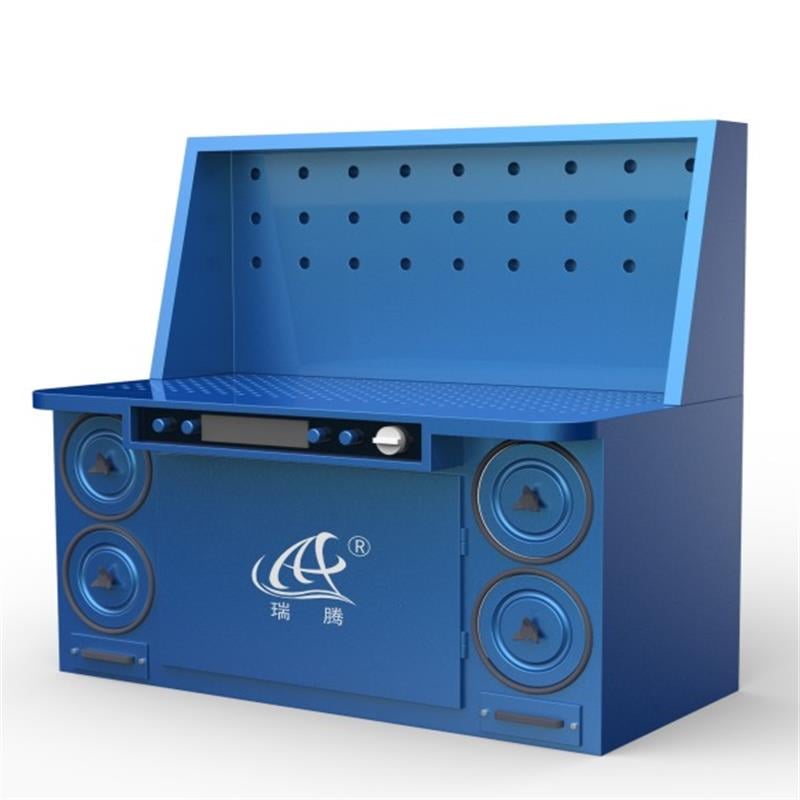
Consider a welding fume comprehensive control project at a multinational heavy-industry enterprise producing tower and crawler cranes. Large carbon-steel boom sections were welded at points that moved along the line, using gas-shielded and tungsten-arc processes that generate fine metal oxide fume. The distributed blow-and-suction arrangement captured the plume close to the work and routed it to a cartridge dust collector for final filtration. Because the fume was fine and slightly cohesive, the team commissioned the pulse jet cleaning at a moderate compressed air pressure and used the differential pressure recovery curve as the acceptance criterion rather than chasing a maximum number. A supplier with documented media guidance, such as Jiangsu Renhe, could support that judgement without dictating an arbitrary setting. Request material guidance and compare product options before locking the specification.
Question one: Can I set the pressure once and forget it?
Answer: Not quite. Media ageing, dust changes and seasonal humidity all shift the ideal band. Revisit the setting during planned stops and whenever the differential pressure recovery pattern of the cartridge dust collector changes noticeably.
Question two: Does a higher pressure always clean better?
Answer: No. Beyond the point where the cake releases cleanly, extra pressure mostly adds energy use, noise and stress on the pleats and seals. The useful measure in a cartridge dust collector is how completely the differential pressure returns, not the gauge maximum.
Question three: What should I record during commissioning?
Answer: Note the dust type, media specification, ambient conditions, chosen setting, diaphragm valve condition and the differential pressure before and after each pulse. Those entries turn a one-off adjustment into a repeatable procedure for the cartridge dust collector.
 Hot News
2026-11-25
2026-11-25
2026-11-25
2026-11-25
2026-11-25
2026-11-25
Renhe focuses on air filter cartridge, gas turbine air filter, Pleated Filter Media, industrial dust, Our main products have been recognized as high-tech products in Jiangsu Province, famous trademarks in Wuxi City, and CE certification.
NO. 31 Xingyuan Road, Jiefang Industrial Park, Gushan Town, Jiangyin City, Jiangsu Province, China (214414)
Copyright © 2024 Jiangsu Renhe Environmental Equipments Co., Ltd Privacy Policy
 EN