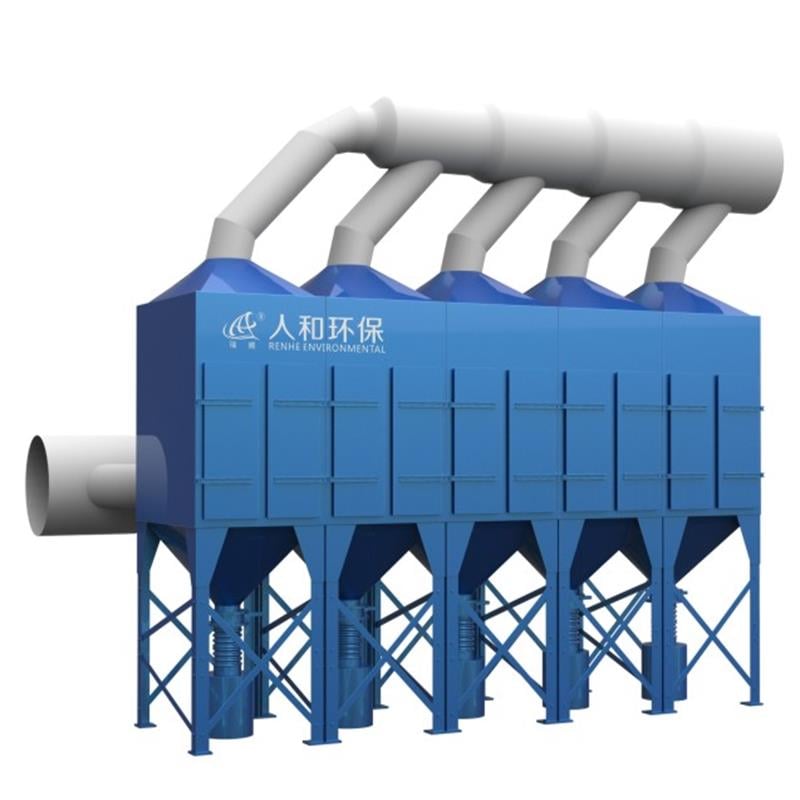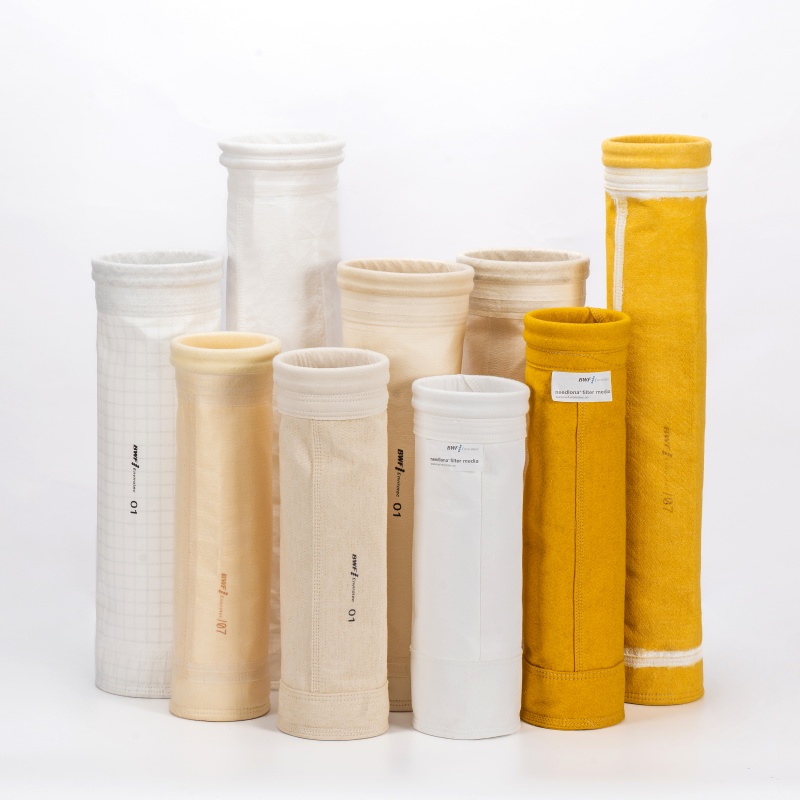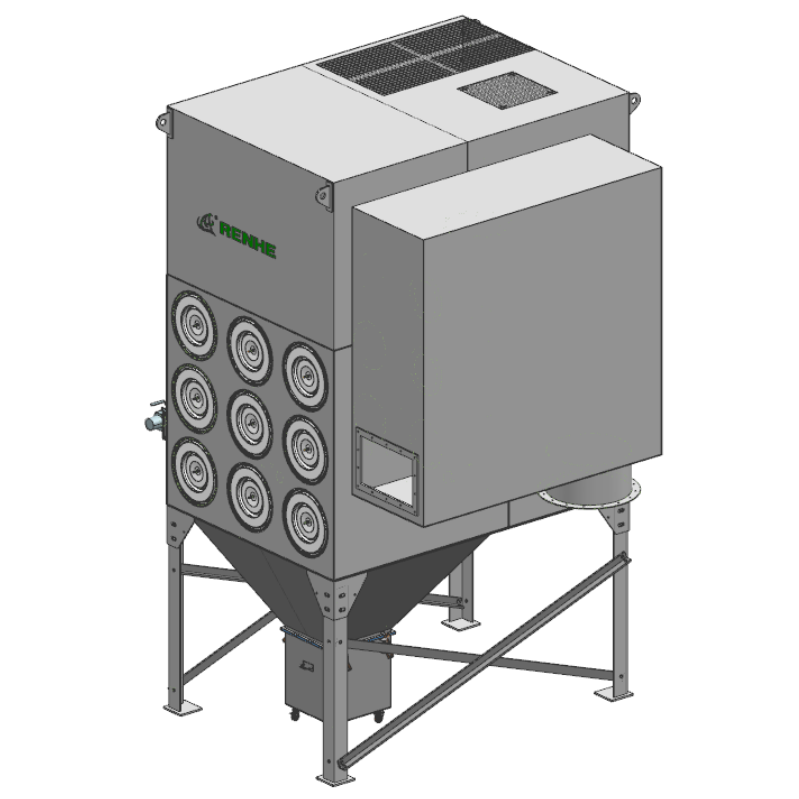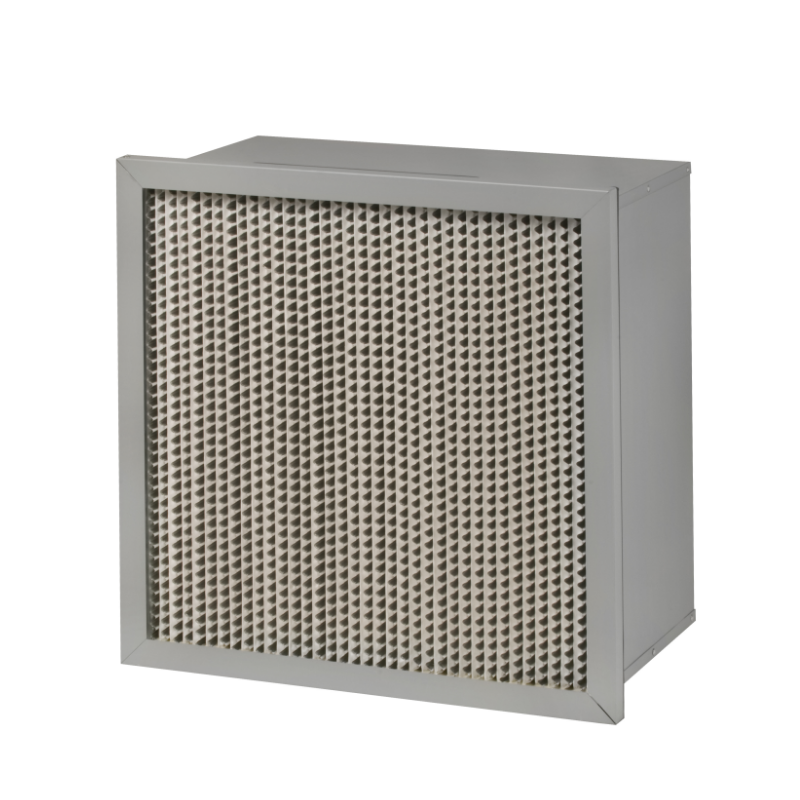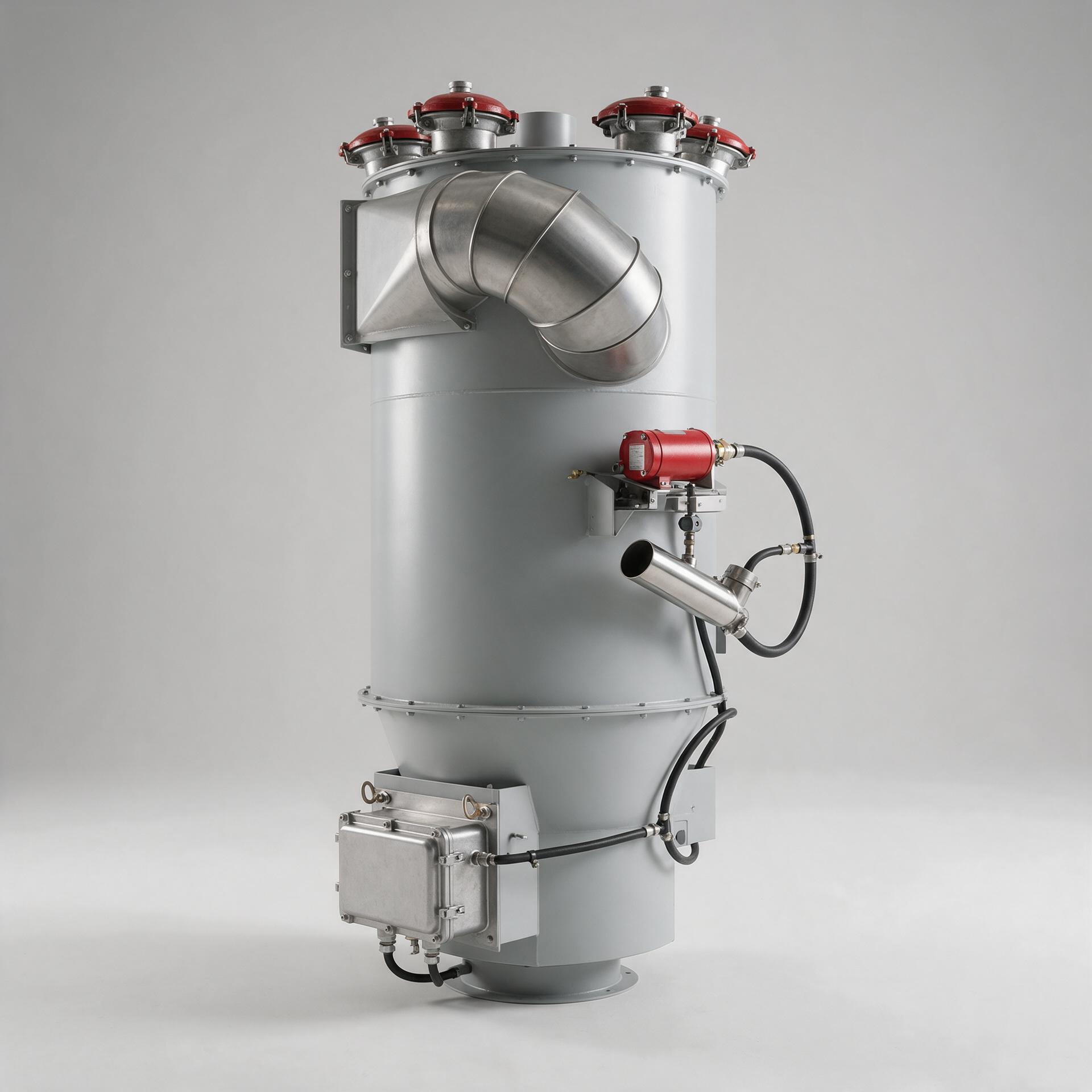
Ask a buyer what makes an industrial dust collector explosion safe and the answer is often a single device: a vent panel, a sensor, a special filter. That answer is incomplete. Safety is a chain of controls that starts before dust reaches the collector and continues through the way the equipment is grounded, cleaned and maintained. No single component can compensate for a missing link. For an industrial dust collector handling combustible particulate, the practical question is not whether one feature is present but whether the whole system has been assessed as a chain. This article explains the features buyers should be able to discuss with a supplier, using general engineering principles rather than invented ratings, and shows how an application review turns those features into a specification.
Three ingredients are normally needed for a dust explosion: combustible dust suspended in air, a confined space, and an ignition source. An industrial dust collector can contain all three at certain moments, which is why it is treated as part of the process safety boundary rather than a simple air cleaning box. Dust layers on a hopper floor or inside ducting can be lifted back into suspension by a pulse, so housekeeping is part of the safety case. Ignition sources include mechanical sparks, overheated bearings, static discharge and an open flame entering through the inlet. A supplier who understands this will ask about your dust and your upstream process before quoting an industrial dust collector.
Grounding and bonding are basic electrical controls and among the easiest to verify. Grounding gives static charge a defined path to earth so it cannot accumulate on the housing or ducting. Bonding connects separate metal parts across joints, flanges and flexible connections, because a painted flange can break continuity even when the main body is earthed. On an industrial dust collector, check continuity across the door, the hopper and every duct section before commissioning and after maintenance. Ask the supplier to identify the specified grounding points and include them in the maintenance instructions. Grounding does not remove every ignition source, but it eliminates one that is otherwise easy to overlook.
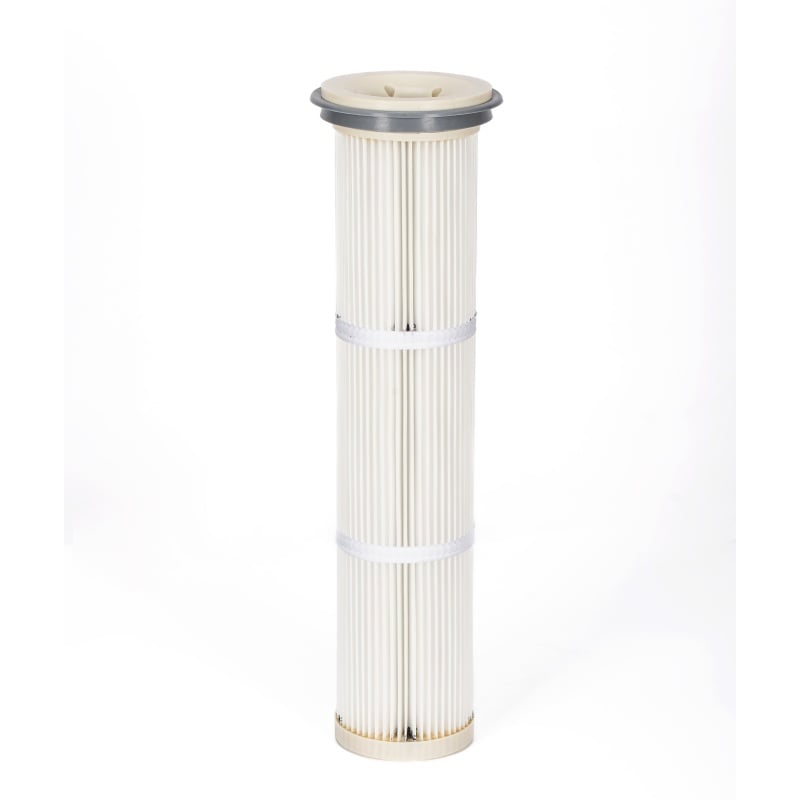
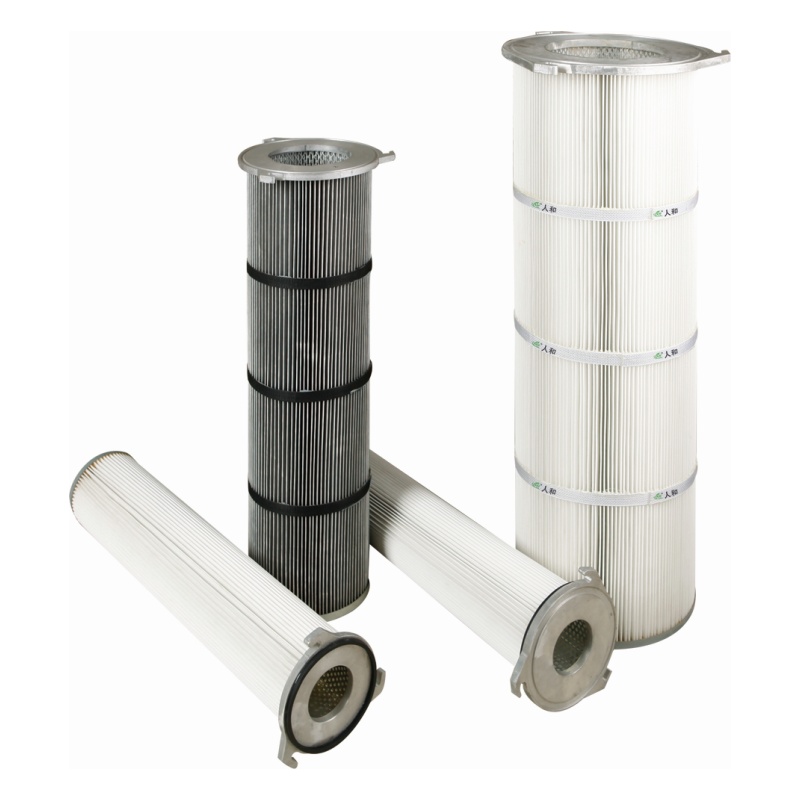
An anti-static filter cartridge addresses charge that builds up on the media itself as dust passes through. Standard pleated media can hold a static charge; an anti-static filter cartridge includes a conductive element that bleeds that charge to the grounded cage or frame. The feature matters wherever an industrial dust collector handles fine, dry particulate with low conductivity. During evaluation, ask how the anti-static filter cartridge connects to the cage and how continuity is confirmed after installation. A conductive layer that is not tied to ground does little good. Inspect the anti-static filter cartridge on the same schedule as the rest of the element, and replace it if delamination appears.
When prevention cannot remove every risk, explosion venting and explosion isolation limit the consequence. Explosion venting provides a weak panel that opens in a controlled direction, relieving pressure away from personnel and adjacent equipment. Explosion isolation stops a pressure wave and flame travelling back through ducting into the building or another vessel. An industrial dust collector installed indoors needs this discussion even when the dust is only moderately hazardous, because ductwork can connect the collector to many rooms. The design of explosion venting and explosion isolation belongs to a competent engineer who knows the layout; buyers should be able to request the assessment rather than choose a panel from a catalogue. Confirm that access around vent outlets stays clear.
A practical sourcing scenario shows how these features are weighed. An enterprise dismantling waste electrical and electronic equipment, with an annual throughput of about one hundred seventy thousand tonnes, handled a mixed waste stream. The gas stream included particulate from CRT and LCD breaking, phosphor and lead-bearing dust from screen separation, general dismantling dust, and refrigerant vapours including cyclopentane. Because the stream combined combustible dust with flammable vapour, the plant treated the industrial dust collector as part of a broader safety design. The review focused on grounding continuity across ducting, the selection of anti-static filter cartridge media, controlled cleaning, and keeping vent paths free of stored material.
A short list helps compare proposals. Ask for the dust test basis behind the stated hazard classification. Confirm that grounding and bonding points are drawn and inspectable. Confirm how the anti-static filter cartridge ties to the cage. Ask who designed the explosion venting and explosion isolation and which assumptions were used. Finally, check the housekeeping instructions, because dust layers can undo well designed hardware. An industrial dust collector is safer when these answers are written down. Request material guidance and verify documentation before you approve a specification.
Question one: Does an anti-static filter cartridge remove the need for grounding?
Answer: No. On an industrial dust collector, the anti-static filter cartridge manages charge on the media, while grounding and bonding handle the housing and ductwork. Both are needed; one is not a substitute for the other.
Question two: Can explosion venting be fitted to any collector?
Answer: Not by catalogue selection alone. Explosion venting has to be engineered for the enclosure, the dust and the location of the outlets. Ask for the assessment and the assumptions before accepting a proposal.
Question three: Which maintenance habit matters most for safety?
Answer: Housekeeping and grounding checks. On an industrial dust collector, a layer of dust or a missing bonding strap can defeat hardware that looked correct on paper. Record both checks in the routine.
 Hot News
2026-11-22
2026-11-22
2026-11-22
2026-11-22
2026-11-22
2026-11-22
Renhe focuses on air filter cartridge, gas turbine air filter, Pleated Filter Media, industrial dust, Our main products have been recognized as high-tech products in Jiangsu Province, famous trademarks in Wuxi City, and CE certification.
NO. 31 Xingyuan Road, Jiefang Industrial Park, Gushan Town, Jiangyin City, Jiangsu Province, China (214414)
Copyright © 2024 Jiangsu Renhe Environmental Equipments Co., Ltd Privacy Policy
 EN