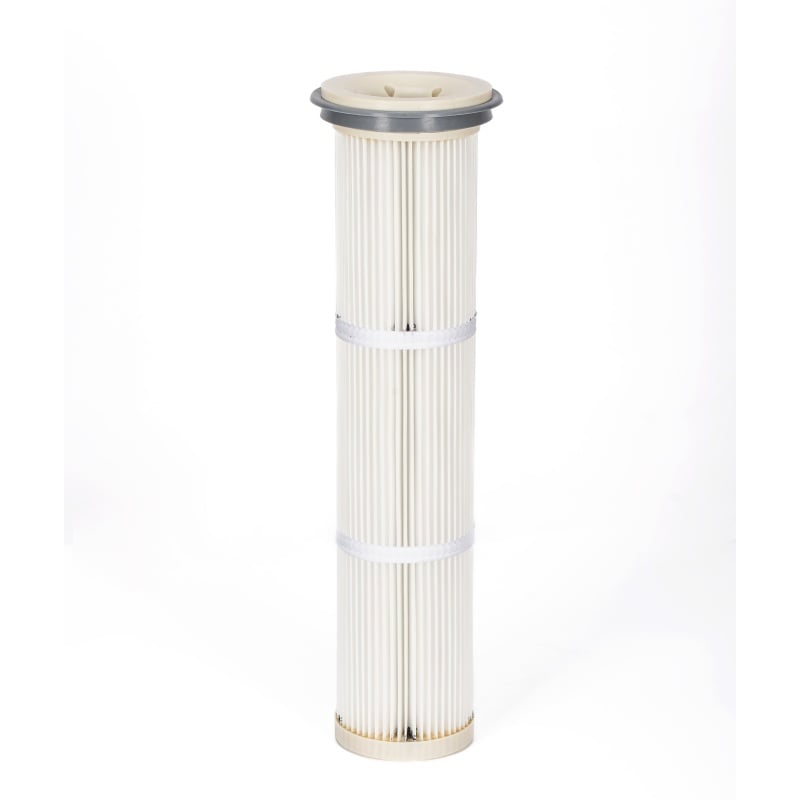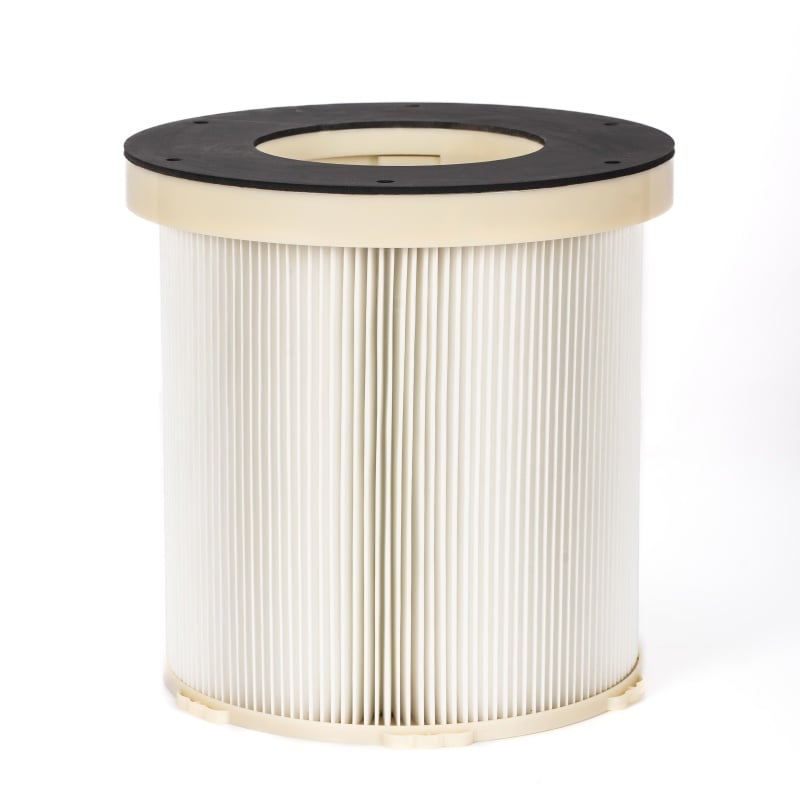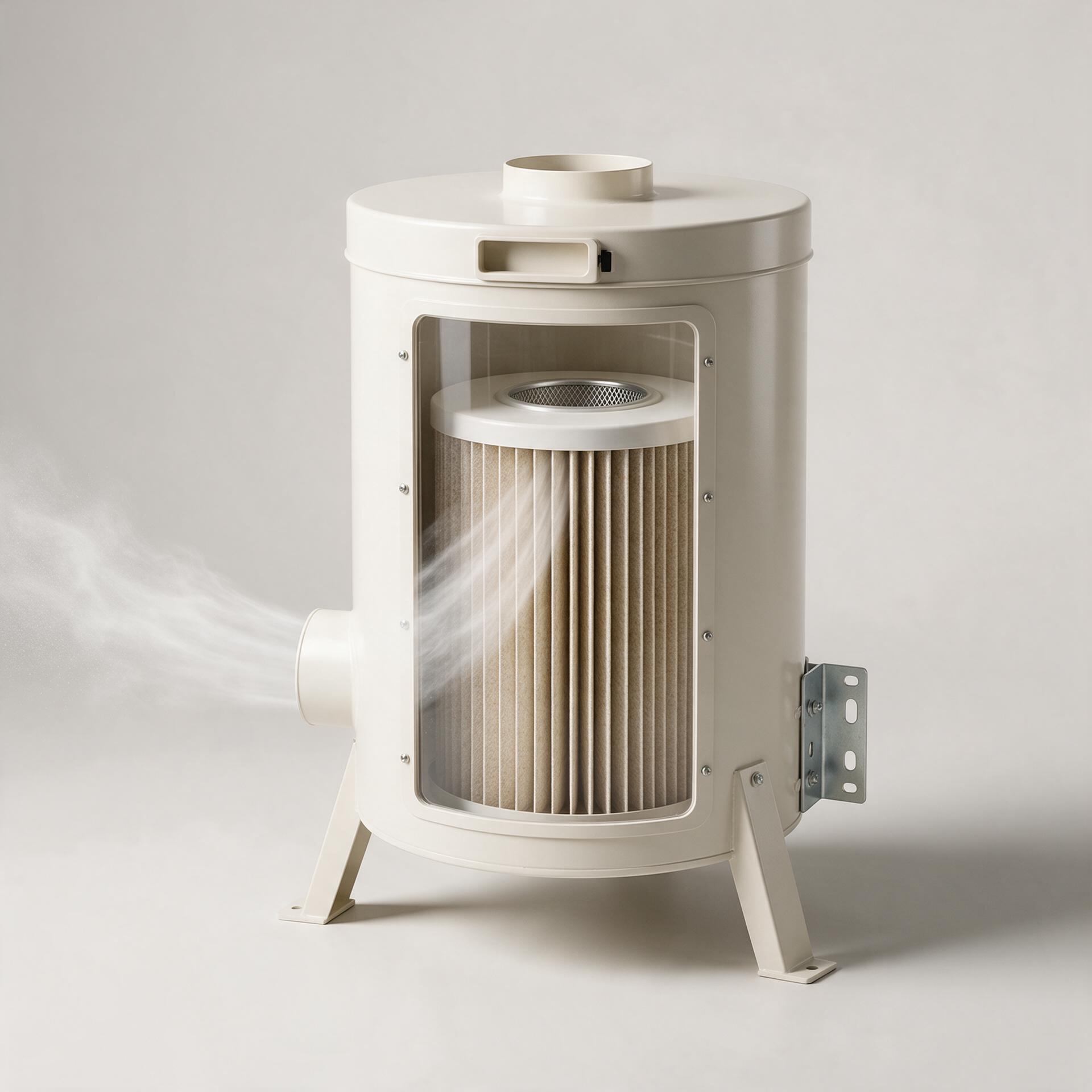
Buyers often assume that capturing submicron particulates is simply a matter of choosing a finer-looking fabric. In a pleated cartridge dust collector, that shortcut misses the point. Fine particles are not caught by one obvious mechanism, and the media grade, pleat geometry, sealing, and cleaning method all influence the result you measure at the outlet. A dense-looking cartridge can still leak at the end cap, while an open-looking element with the right surface treatment can hold a stable dust cake. The useful question is not how fine the fabric appears, but whether the complete element has been specified for the particle size distribution in your process. Start from the dust you actually have, and work back to the media in a pleated cartridge dust collector.
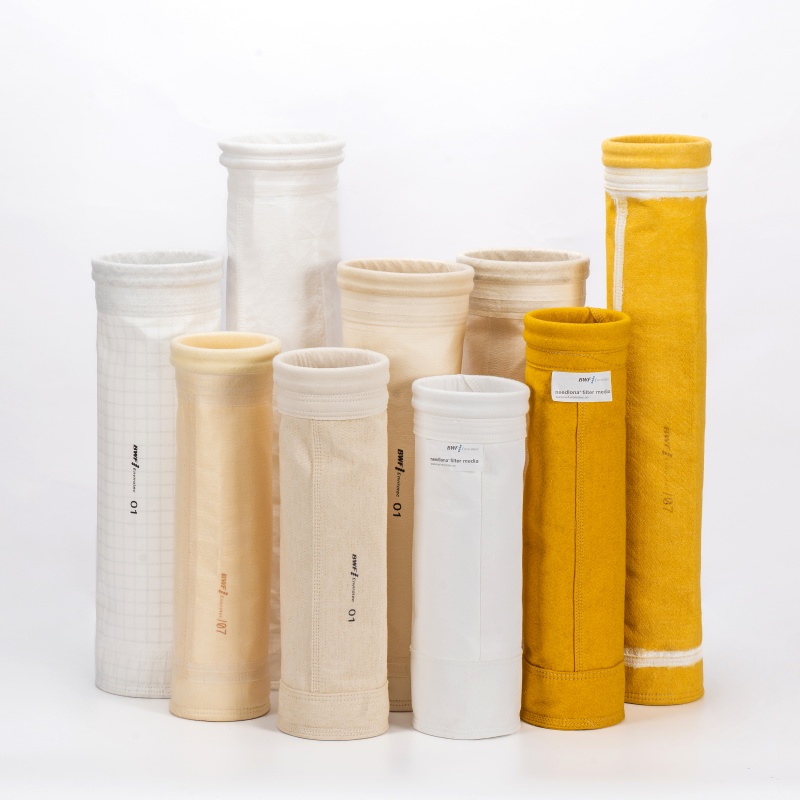
High grade filter media is a phrase that deserves a definition. In cartridge manufacturing it refers to fibre selection, the way fibres are bonded, and any surface treatment applied to control dust release. High grade filter media should hold its structure under pulse cleaning, resist blinding from fine dust, and keep a predictable pressure drop through the service interval. When comparing options, ask what the grade actually changes: fibre fineness, basis weight, or a surface layer. A supplier answering in those terms is discussing engineering; one who only says better is not. High grade filter media and pleated filter media together define the element. In a pleated cartridge dust collector, the grade also determines how much of the surface stays active after each cleaning pulse, so cartridge dust collector efficiency should be judged over the service interval rather than at a single instant.
Pleated filter media is the reason a compact pleated cartridge dust collector can handle a large airflow. Folding the media into pleats packs far more surface into the same housing diameter, and that extra area lowers face velocity for a given flow. Lower face velocity is useful with submicron particulates because it reduces the tendency of fine particles to be driven deep into the fibre structure. Pleated filter media also changes how cleaning behaves: the dust cake forms over a larger area and releases more controllably, provided pleats are spaced correctly and held apart by the support structure. If pleats pinch under pulse pressure, the available area disappears. Ask how pleat spacing is maintained and treat that detail as part of the media specification, not a manufacturing footnote.
Submicron particulates behave differently from the coarse dust you can see settling on a bench. Very small particles follow the airstream around obstacles, so capture relies on interception, impaction, and diffusion rather than simple sieving. That is why the dust cake itself becomes part of the filter: once a stable layer forms, it does much of the fine capture while the media provides the structure. A pleated cartridge dust collector designed around this behaviour aims to establish that layer quickly and keep it thin through regular cleaning. Treat single efficiency figures carefully, because performance depends on particle size, dust load, and conditions. Ask for test conditions alongside any number, and compare cartridge dust collector efficiency under conditions close to your own.
A multinational heavy-industry enterprise manufacturing tower and crawler cranes offers a useful fine-particle example for anyone specifying a pleated cartridge dust collector. Its boom line handles large carbon steel parts with welding points that move along the workpiece, using MAG and argon arc welding. The resulting metal welding fume is exactly the fine aerosol that challenges a filter, and the plant adopted distributed blow-and-suction collection with blow outlets around four metres and suction inlets around nine metres. For a buyer studying this layout, the relevant question is how high grade filter media performs when the fume load shifts across the bay and cleaning cycles repeat all shift. A pleated cartridge dust collector serving such stations must keep pleat spacing stable and seals tight, or submicron particulates will bypass the media. The case shows that media grade and capture arrangement cannot be specified independently.
A short routine keeps the claim honest. Confirm the particle size distribution of your dust, or at least the process that generates it. Ask which high grade filter media family is proposed and what surface treatment it carries. Check pleat geometry and the spacers that keep pleated filter media open under pressure. Review the seal design at the end cap, because fine particles exploit bypass paths more readily than coarse ones. Review how cartridge dust collector efficiency was documented and under which test conditions. A pleated cartridge dust collector is a mature technology, but the difference between a good and a poor result usually sits in these details. Request material guidance and verify test documents before finalising the selection.
Question one: Does a finer fabric always capture more submicron particulates?
Answer: Not necessarily. Fine capture depends on the stable dust cake, face velocity, and seals. In a pleated cartridge dust collector, a leak at the end cap can undo any apparent advantage of a denser-looking fabric.
Question two: How does pleated filter media work inside a pleated cartridge dust collector compared with a flat panel?
Answer: Folding multiplies the surface inside the same housing, which lowers face velocity and gives the dust cake a larger, more even area to form on. The support structure must keep the pleats apart during cleaning for that benefit to hold.
Question three: What should I ask about cartridge dust collector efficiency before buying a pleated cartridge dust collector?
Answer: Ask for the particle size and test conditions behind any figure, the pressure drop baseline, and how performance is expected to hold through the service interval. Compare several suppliers on the same basis.
 Hot News
2026-11-22
2026-11-22
2026-11-22
2026-11-22
2026-11-22
2026-11-22
Renhe focuses on air filter cartridge, gas turbine air filter, Pleated Filter Media, industrial dust, Our main products have been recognized as high-tech products in Jiangsu Province, famous trademarks in Wuxi City, and CE certification.
NO. 31 Xingyuan Road, Jiefang Industrial Park, Gushan Town, Jiangyin City, Jiangsu Province, China (214414)
Copyright © 2024 Jiangsu Renhe Environmental Equipments Co., Ltd Privacy Policy
 EN