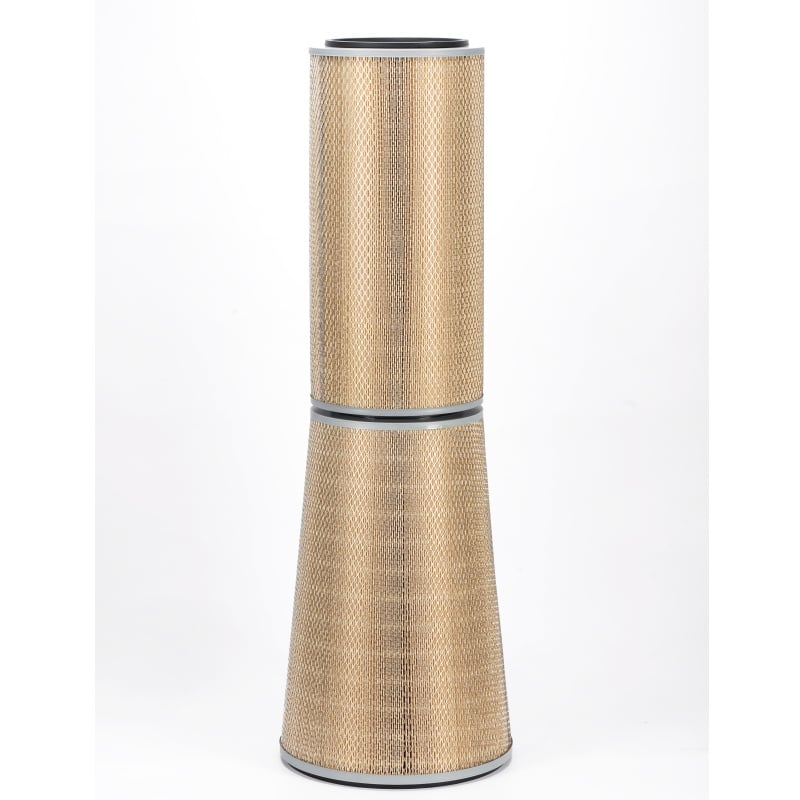
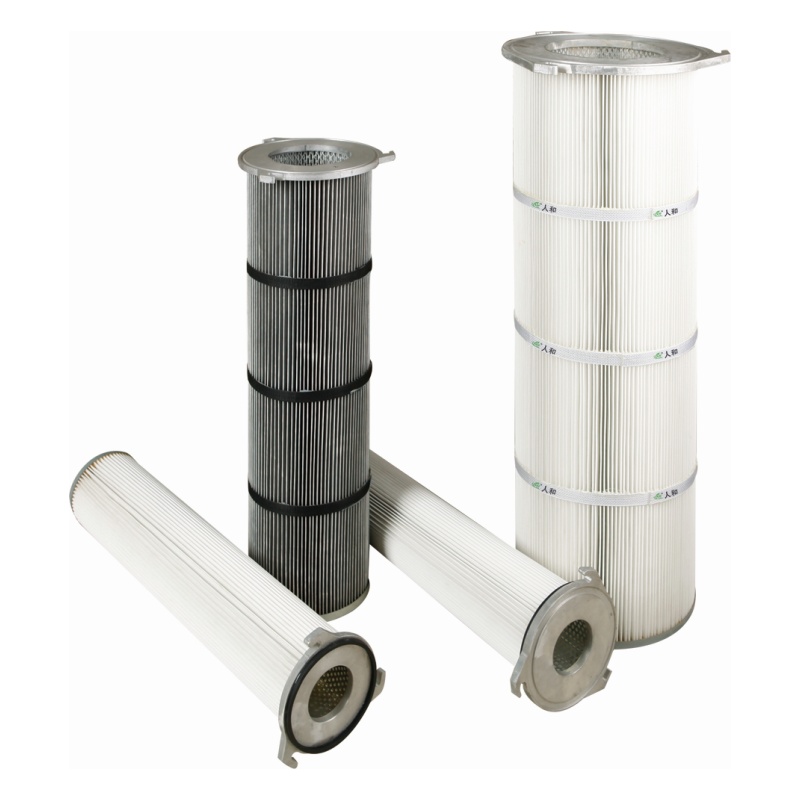
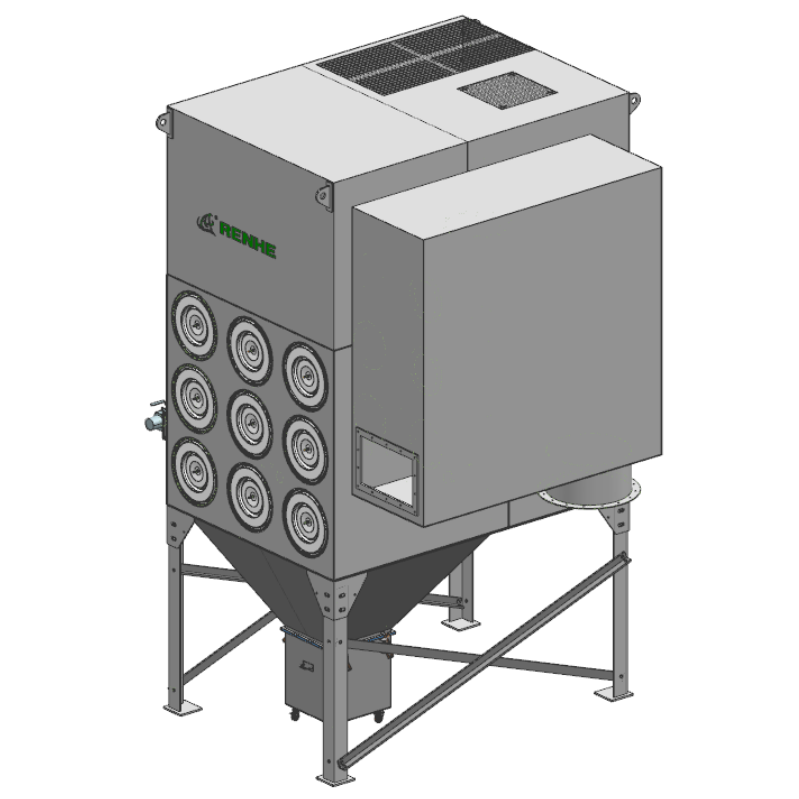
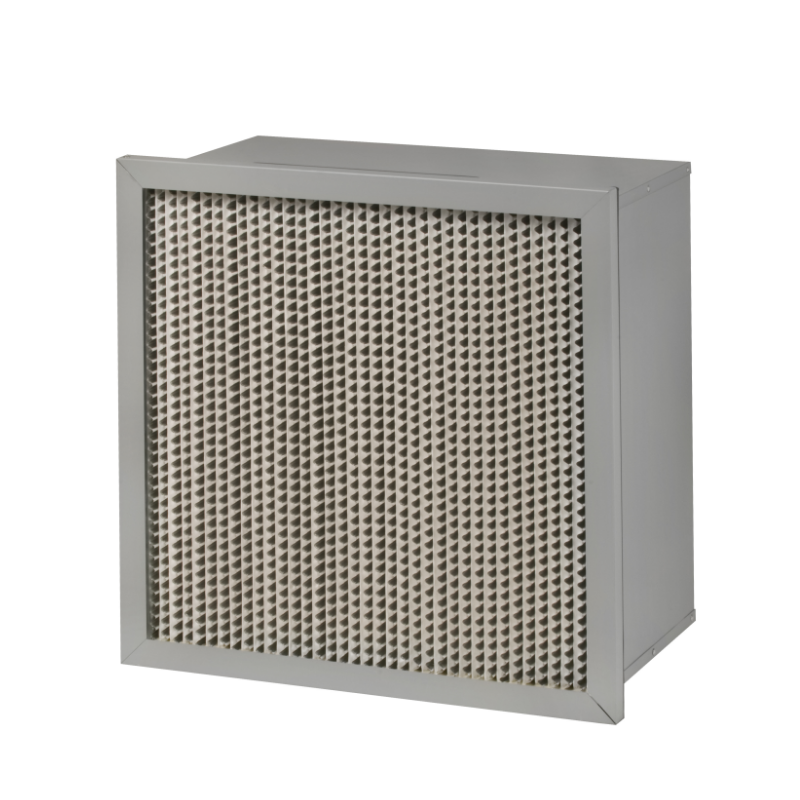
A plant fits a replacement filter cartridge, expects the outlet to clean up, and instead finds dust where it should not be. The first suspicion usually falls on the media, but the more likely culprit is the seal. In a cartridge collector the dirty plenum and the clean plenum are divided by the end cap and the gasket seated against the tube sheet. If that interface is imperfect, unfiltered air takes the short path around the replacement filter cartridge and travels straight to the outlet. Buyers who judge a cartridge only by its efficiency rating miss this entirely. An airtight seal on a replacement filter cartridge is what makes a rated filtration figure mean anything once the unit is running. Treating the gasket as an afterthought is a costly habit.
The gasket on a replacement filter cartridge is compressed between the end cap and the sealing surface, and it must fill microscopic irregularities in that surface. It has to stay resilient through temperature changes and the vibration of pulse cleaning, and it has to resist the dust it contacts without swelling or hardening. Because the pressure differential across a replacement filter cartridge pushes air continuously toward the clean side, even a small gap becomes a leak path. A properly chosen seal material recovers after compression, while a poor one takes a permanent indentation. The result is clean side leakage that no downstream device can correct.
Rather than declare one gasket material correct for every collector, suppliers choose the seal material according to the operating conditions. Elastomeric gaskets are widely used where repeated compression and flexing occur, because rubber-like compounds recover their shape after each cycle. Foam and sponge gasket material suits uneven sealing faces where only a low closing force is available. Hot duties call for a compound that keeps its elasticity when warm, while service around oils or solvents needs one that resists swelling. The right answer depends on temperature, chemical exposure, dust abrasiveness and the geometry of the sealing face. No single gasket material is universal. Ask for material guidance tied to your own duty rather than accepting a generic recommendation.
A seal is only as good as the surface that presses against it. The end cap of a replacement filter cartridge must be flat, rigid and free of burrs, and the closure must apply even force around the whole circumference. Tube sheets that are warped, or latches that load one side more heavily, open a gap on the light side. Operators typically check that the gasket sits squarely in its groove and that the clamping mechanism compresses it uniformly. During fitting, a replacement filter cartridge that is cocked or only hand tightened will leak from the start. Good installation practice seats the end cap seal evenly before the closure is locked, then confirms the tube sheet is clean of old gasket residue.
An application example comes from a welding fume control project at a multinational heavy industry enterprise producing tower and crawler cranes. The distributed collection arrangement used many filter elements, and the maintenance team found that after each replacement filter cartridge change-out a few positions showed visible emissions. The cause was traced to clean side leakage from reused gaskets that had taken a compression set and to uneven latch tension on those housings. Replacing the gasket with a fresh seal material matched to the duty, and retraining the crew to seat each end cap seal squarely, cleared the problem. A supplier such as Jiangsu Renhe could document the gasket compound and the compression requirement. Review specifications and verify test documents before repeating the change-out.
The practical test for an airtight replacement filter cartridge is simple. After installation, inspect the clean side during operation for any sign of dust that did not pass through the media, and watch whether emissions change when the collector pulses. A rise in outlet dust that tracks the cleaning cycle often points to clean side leakage through the seal rather than the media itself. Record pressure drop and emission readings for each replacement filter cartridge at commissioning so that later drift is easy to spot. When clean side leakage appears, check the gasket material, the sealing face and the closure together, since a fault in any one of the three defeats the others. Request a written sealing specification and compare product options before the next purchase.
Question one: Can a new cartridge leak even with good media?
Answer: Yes. If the gasket is hardened, reused or compressed unevenly, unfiltered air bypasses the replacement filter cartridge and reaches the clean side. The media may be sound while the seal is the actual failure point.
Question two: Is there one best gasket material for all collectors?
Answer: No. The seal material is chosen by temperature, chemical exposure and sealing-face geometry. An elastomer may suit one duty and a foam seal another, so match the compound to the real operating conditions.
Question three: How do I know the end cap seal is fitted correctly?
Answer: The gasket should sit squarely in its groove, the tube sheet should be clean, and the closure should apply even force around the end cap seal. Uneven latch tension is a common source of clean side leakage.
 Hot News
2026-11-25
2026-11-25
2026-11-25
2026-11-25
2026-11-25
2026-11-25
Renhe focuses on air filter cartridge, gas turbine air filter, Pleated Filter Media, industrial dust, Our main products have been recognized as high-tech products in Jiangsu Province, famous trademarks in Wuxi City, and CE certification.
NO. 31 Xingyuan Road, Jiefang Industrial Park, Gushan Town, Jiangyin City, Jiangsu Province, China (214414)
Copyright © 2024 Jiangsu Renhe Environmental Equipments Co., Ltd Privacy Policy
 EN