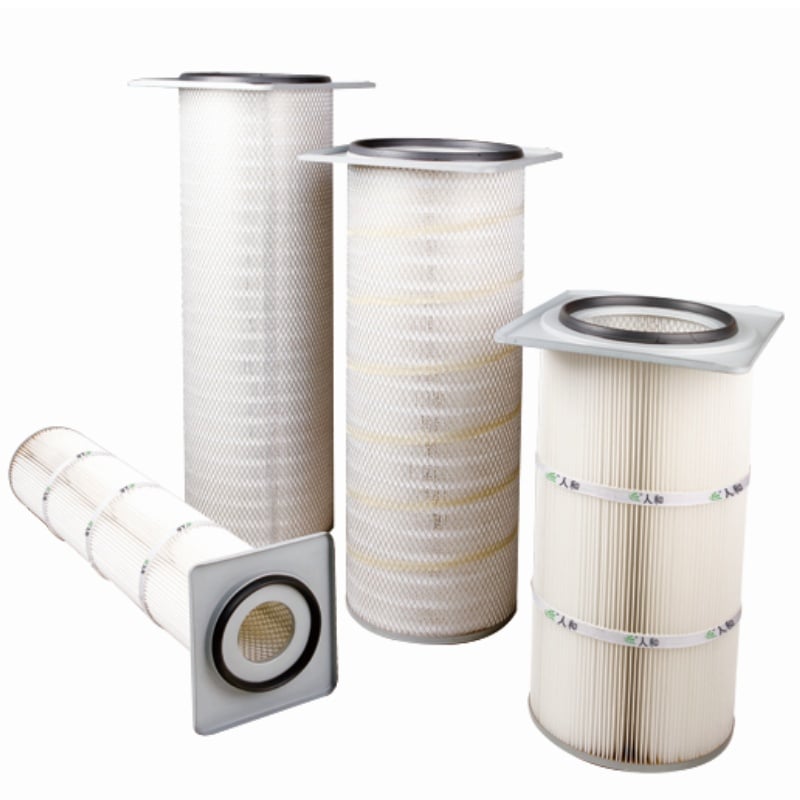
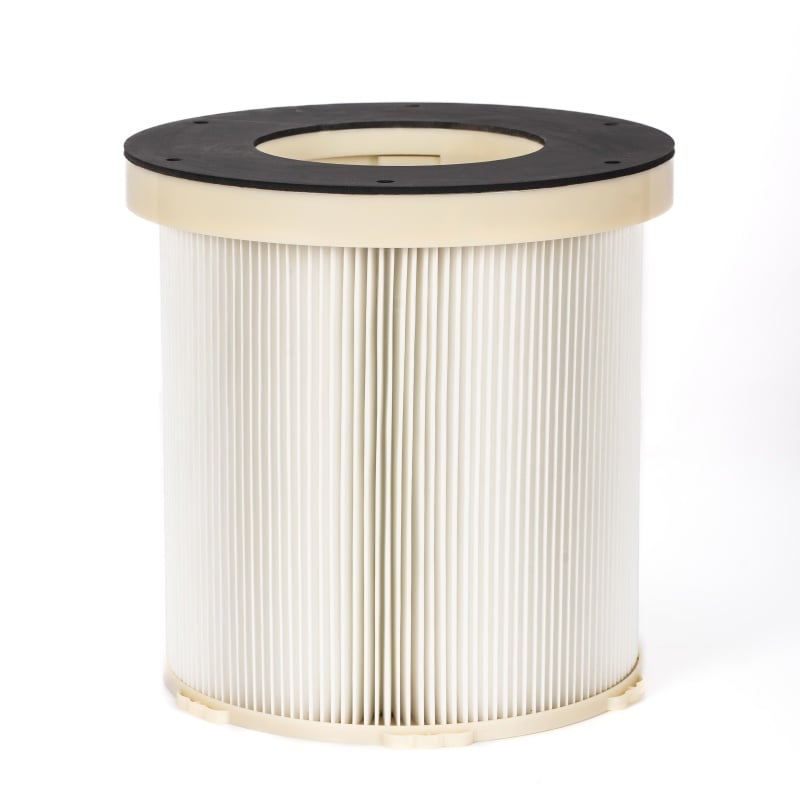
Ask maintenance teams why an industrial filter cartridge was replaced and the answer is rarely a single dramatic failure. More often the element slowly stops recovering after pulse jet cleaning, then begins leaking fine dust, and is finally pulled during a planned stop. The underlying cause is cumulative fatigue: each shock is small, but a pulsed duty repeats it many times a day. A durable industrial filter cartridge is designed for that repetition, not merely for a clean baseline on the day it is installed. Buyers who specify for cleaning frequency as well as for the dust get far more consistent service life from the installation.
In pulse jet cleaning, a brief discharge of compressed air flexes the media and sends a reverse wave down the pleats. That flex is the point of the exercise, but it is also a mechanical load. Each cycle stretches the fibres a little, presses the pleat shoulders against the support structure and tugs at the bond between media and end cap. Over time these small movements accumulate. An industrial filter cartridge that has not been built for the duty will show loose pleats, a softening seal line and a gradual loss of pressure recovery. The shock is not a defect in the cleaning system; it is a design condition the element must absorb.
The media carries the first burden. Fibre selection, resin bonding and the way the sheet is folded all influence how well it tolerates repeated flexing. pleat fatigue appears as cracks near the fold lines and as media that has lost its spring, leaving the pleats partly collapsed. A well-constructed industrial filter cartridge keeps the pleats separated so each one can move freely and return to shape. pleat fatigue is slowed when the media is supported at intervals without blocking the surface, which is why spacer techniques and support weaves matter. Buyers should ask how the supplier tests media after repeated cleaning rather than relying on a single initial efficiency figure.
The second burden falls on the assembly. End cap adhesive must stay flexible enough to absorb repeated movement while holding a firm seal against the tube sheet. An end cap adhesive that cures too brittle will crack around the media line after many pulses, creating a bypass that no cleaning can fix. The support cage, whether an inner liner or a perforated outer shell, limits how far the media can travel during a shock. A support cage that is too loose allows pleat migration; one that is too aggressive rubs the media at the shoulders. In a durable industrial filter cartridge these are balanced, with the support cage holding geometry without cutting into the media. Inspect both areas when an industrial filter cartridge is returned during a shutdown.
Start with the cleaning regime, not just the dust. How often will the bank be pulsed, and what is the expected service interval? A continuous line with frequent pulse jet cleaning needs an industrial filter cartridge built for fatigue resistance, while an intermittent batch operation may prioritise other properties. Ask the supplier what construction features address pleat fatigue, how the end cap adhesive is qualified and what evidence exists for the support cage arrangement. Compare product options on those points rather than on nominal area alone. Request material guidance and verify test documents that reflect repeated cleaning, not only new-element performance.
A welding fume comprehensive control project at a multinational heavy-industry enterprise producing tower and crawler cranes offers a practical example. Large carbon-steel boom sections were welded at moving points using gas-shielded and tungsten-arc processes, generating fine metal oxide fume that required frequent pulse jet cleaning to keep the industrial filter cartridge array online. The team tracked pressure recovery and, during planned stops, examined returned elements for pleat fatigue and bond condition at the end cap. Where an industrial filter cartridge showed early fatigue, the support cage geometry and the cleaning interval were reviewed together rather than treating the element as a routine consumable fault. A supplier such as Jiangsu Renhe could provide construction details and test documents. Review specifications before committing.
Question one: What is pleat fatigue in an industrial filter cartridge?
Answer: It is the gradual loss of pleat shape after repeated pulse jet cleaning. Fold lines crack, the media stops springing back and resistance no longer recovers. A proper support cage slows it.
Question two: Why does end cap adhesive matter so much?
Answer: Because it holds the seal while flexing thousands of times. A brittle end cap adhesive cracks at the media line and lets dust bypass the filter, which no amount of cleaning will repair.
Question three: How do I compare industrial filter cartridge options for a pulsed line?
Answer: Ask about media testing after repeated cleaning, end cap adhesive qualification and support cage design. Compare product options on those points, then verify against your pulse frequency.
 Hot News
2026-11-25
2026-11-25
2026-11-25
2026-11-25
2026-11-25
2026-11-25
Renhe focuses on air filter cartridge, gas turbine air filter, Pleated Filter Media, industrial dust, Our main products have been recognized as high-tech products in Jiangsu Province, famous trademarks in Wuxi City, and CE certification.
NO. 31 Xingyuan Road, Jiefang Industrial Park, Gushan Town, Jiangyin City, Jiangsu Province, China (214414)
Copyright © 2024 Jiangsu Renhe Environmental Equipments Co., Ltd Privacy Policy
 EN