Buyers often ask for a single intake velocity that suits every self-cleaning air filter, but the honest answer is a range derived from the media, the dust and the housing. Velocity here means the air speed presented to the filtering surface, not the speed in the inlet duct. A self-cleaning air filter is expected to run for long periods without manual attention, so the chosen value must balance capacity against how often cleaning is needed. Set it too high and the element loads and cleans almost continuously; set it too low and the housing becomes large for the duty. The right figure is a design decision made with the supplier, then checked in operation.
Two speeds are often confused. Intake velocity describes the air moving in the inlet duct, while face velocity is the flow divided by the media area actually presented to that flow. It is the face velocity that governs how hard the media works. A self-cleaning air filter with a large pleated area can keep face velocity modest even when intake velocity in the duct is relatively high. Converting between the two requires the net media area, which is why a supplier should state it. Buyers who compare housings on duct size alone miss the variable that matters most to pressure drop and filtration efficiency.
A high face velocity buys a smaller housing, but the bill arrives in operation. Pressure drop rises, which the fan must overcome, and filtration efficiency can fall as particles are driven toward and through the media. Dust tends to pack into the surface rather than form a loose layer, so the pulse has less to grab. In a self-cleaning air filter this shortens the interval between cleaning events and can leave a residual layer that never fully clears. Over a season the energy used by the fan and the wear on the cleaning system can outweigh the saving in equipment size. High intake velocity in the duct can also spread flow unevenly across the elements.
Going to the other extreme is not free. A low face velocity reduces pressure drop and is gentle on the media, often improving filtration efficiency, but it demands more media area and a larger housing for the same flow in a self-cleaning air filter. That may be acceptable where space is cheap, yet it can be impractical on a retrofit. There is also a practical floor: if the air moves too slowly through the ductwork, dust can settle before reaching the elements, and cleaning pulses may not sweep loosened material out effectively. The aim is a value that keeps dust moving without overloading the media.
Self-cleaning designs add a constraint that ordinary filters do not have. The pulse must be strong enough to release dust, yet the airflow must carry that dust away rather than dropping it back onto neighbouring elements. At a high face velocity, re-entrainment becomes likely; at a very low one, the pulse may lack the transport needed to clear the pleats. This is why the cleanable window is narrower than the range that would suit a static filter. Operators of a self-cleaning air filter usually find the working value by watching how far pressure drop recovers after each pulse, then adjusting the fan or damper within the limits the supplier gives. The goal is stable recovery, not the lowest possible reading.
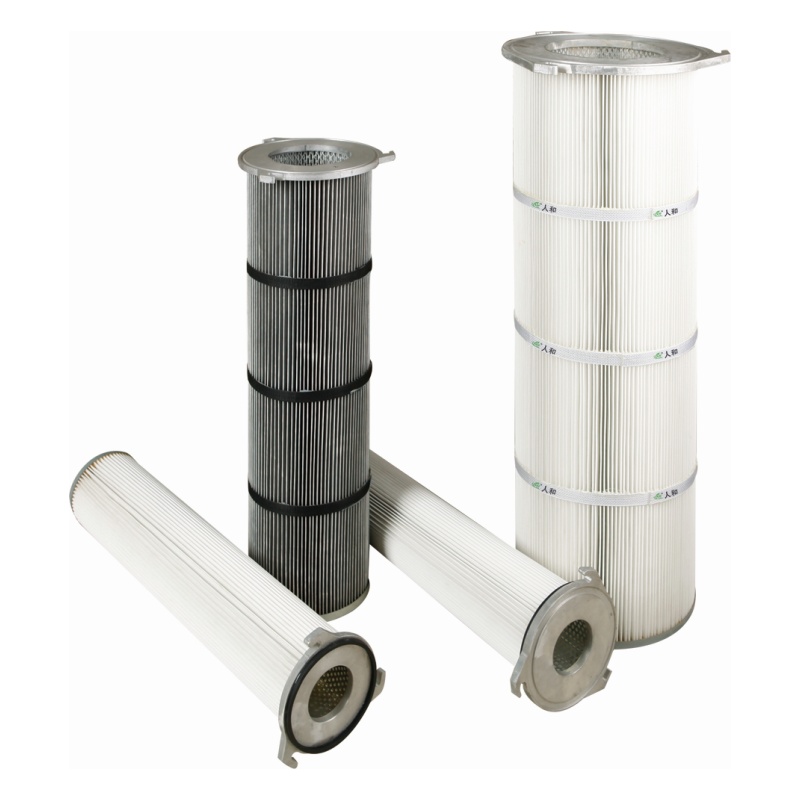
An application example comes from the self-cleaning intake filter family used for compressor inlet duties. An air station drawing dusty ambient air had been specified with a compact housing, and the team noticed that the self-cleaning air filter was pulsing far more often than expected while filtration efficiency appeared to slip. Review showed the face velocity was higher than the media wanted, and that intake velocity in the inlet duct was distributing flow unevenly. After the housing was resized to bring face velocity down, pressure drop stabilised and cleaning intervals lengthened. A supplier such as Jiangsu Renhe could provide the media area and test documents needed for that check. Review specifications and compare product options against the real flow and dust.
Start with the required flow and the media area a self-cleaning air filter supplier can offer, then calculate face velocity and compare it with the recommended range for that media. Check that intake velocity in the duct keeps dust suspended and distributes air evenly across the elements. Confirm that the cleaning system can operate across the expected range of pressure drop, and request material guidance before finalising. Verify test documents that describe performance at the proposed velocity rather than at an idealised laboratory condition.
Question one: Is face velocity the same as intake velocity?
Answer: No. Intake velocity is the speed in the duct; face velocity is flow divided by media area. It is face velocity that drives pressure drop and filtration efficiency in a self-cleaning air filter.
Question two: Does a lower face velocity always improve performance?
Answer: Up to a point. It lowers pressure drop and can help filtration efficiency, but too low a value in a self-cleaning air filter increases housing size and can let dust settle in the duct. Balance it against the cleaning method.
Question three: How do I know if the velocity is wrong?
Answer: Watch pressure drop recovery after each pulse and how often the self-cleaning air filter cleans. Frequent pulses with incomplete recovery usually mean the face velocity is too high for the media.
 Hot News
2026-11-25
2026-11-25
2026-11-25
2026-11-25
2026-11-25
2026-11-25
Renhe focuses on air filter cartridge, gas turbine air filter, Pleated Filter Media, industrial dust, Our main products have been recognized as high-tech products in Jiangsu Province, famous trademarks in Wuxi City, and CE certification.
NO. 31 Xingyuan Road, Jiefang Industrial Park, Gushan Town, Jiangyin City, Jiangsu Province, China (214414)
Copyright © 2024 Jiangsu Renhe Environmental Equipments Co., Ltd Privacy Policy
 EN