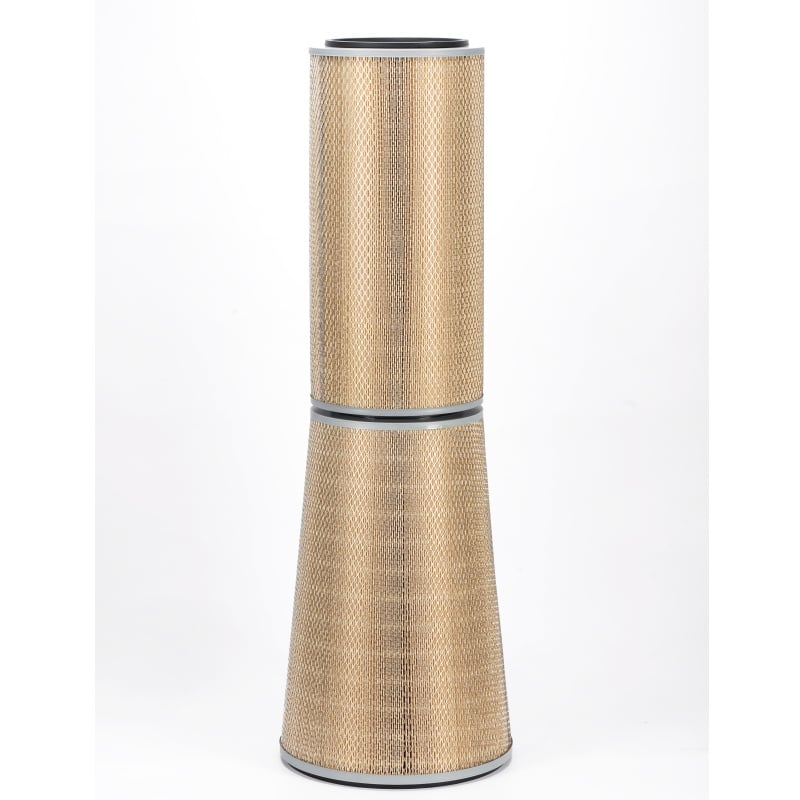
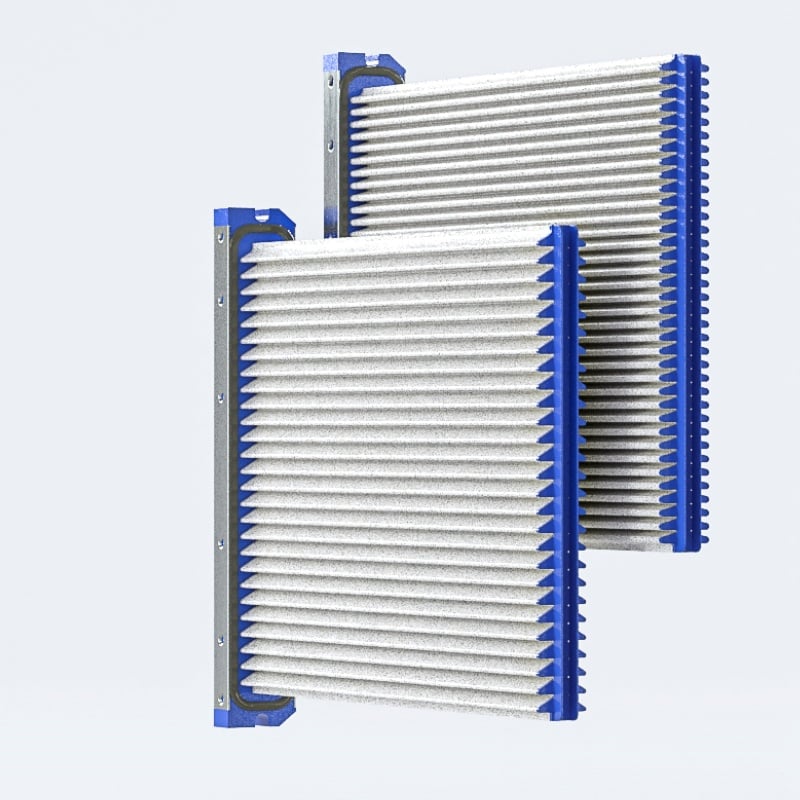
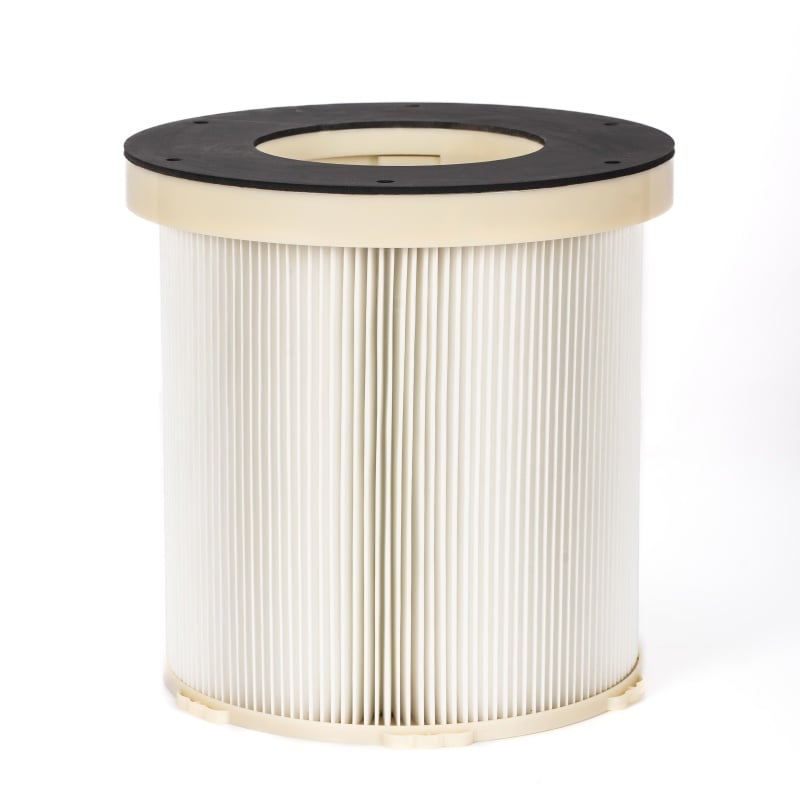
When buyers compare a pleated filter cartridge, the frame and the end caps are easy to see, but the media is what actually determines service life. A pleated filter cartridge is folded into tight pleats and then cleaned repeatedly with pulses of compressed air, so its media is asked to do a demanding job. It must capture fine dust, survive constant flexing, and keep its shape while pressure pushes on it. Spunbond polyester is widely used for this duty because its structure meets those demands together. Understanding why helps buyers judge a media choice on evidence rather than on appearance.
Spunbond is a way of making a nonwoven fabric from continuous filaments that are laid into a web and bonded, rather than woven from yarn. The result is a uniform sheet with strength in many directions and no loose fibres to work free. For a pleated filter cartridge, that structure matters because the media is folded sharply and held under tension along every pleat. Polyester brings useful resistance to moisture and to many common industrial dusts, and it keeps its properties across normal operating temperatures. The combination is a practical, general purpose medium rather than a specialist material for one narrow duty.
Pleating stretches the media around each fold and presses the pleat tips together. A weak or brittle sheet would crack at the folds or tear where the pleat is sharpest. Spunbond polyester has the tensile strength to tolerate this forming process and the flex resistance to recover each time a cleaning pulse moves the pleats. Media strength is therefore not just about resisting a burst; it is about tolerating thousands of small movements without the folds opening. In a pleated filter cartridge, a medium that holds together at the pleat keeps its filtration path intact and continues to capture fine particles. That is why media strength is checked against the real cleaning regime rather than assumed.
Filtration media sees a pressure difference across it throughout service, and that load tries to deform the pleats. A medium with poor dimensional stability can sag, close some pleats and leave others working harder, which raises resistance and makes cleaning uneven. Spunbond polyester holds its geometry well, so the pleat spacing stays even and airflow is distributed across the full area. This stability also helps the media sit correctly against its support cage without shifting. When dimensional stability is good, a pleated filter cartridge keeps a predictable pressure drop through its life rather than drifting as the pleats collapse.
No medium is chosen on performance alone. Buyers also weigh cost, availability and how the media behaves in the real dust. Spunbond polyester is a common choice partly because it offers a balanced set of properties at a reasonable cost, which makes it suitable for many general industrial applications. That does not make it universal: where dust is highly abrasive, sticky or chemically aggressive, a coated or specialist medium may be justified. The right decision compares the medium against the actual dust, temperature and cleaning method. Request material guidance and verify test documents before settling on a specification for a pleated filter cartridge.
An application example comes from an enterprise dismantling waste electrical and electronic equipment, where breakdown of screens and housings released mixed particulate. The ventilation needed a medium that could handle variable dust without frequent media failure, so the plant used a pleated filter cartridge built on spunbond polyester. The flex resistance of the media helped it withstand repeated cleaning, and its dimensional stability kept pressure drop predictable across the shift. A supplier such as Jiangsu Renhe could document the media construction and the test basis for the choice. Review specifications before committing to a media change.
The sensible way to assess a spunbond polyester medium is to ask what is being claimed and under which conditions it was observed. General statements about strength mean little without the dust and cleaning regime behind them. Watch how pressure drop develops in service and whether a pleated filter cartridge holds its performance between cleanings, because those observations reveal whether the media is behaving as expected. Compare product options on documented properties rather than on appearance alone. When the duty changes, revisit the media choice, since a medium that suited dry dust may not suit a moist or sticky one. Verify test documents with the supplier.
Question one: What is spunbond polyester media?
Answer: It is a nonwoven fabric made from continuous filaments laid into a web and bonded, not woven from yarn. It gives a pleated filter cartridge strength, flex resistance and even pleat geometry without loose fibres.
Question two: Why does flex resistance matter in a pleated filter cartridge?
Answer: Each cleaning pulse flexes the pleats slightly. A medium with good flex resistance recovers from that movement thousands of times, so the folds stay intact and the pleated filter cartridge keeps capturing fine dust.
Question three: Is spunbond polyester suitable for every dust?
Answer: No. It is a balanced general purpose medium valued for strength, dimensional stability and cost. For highly abrasive, sticky or chemically aggressive dust, a coated or specialist medium may be needed, so match the choice to the real conditions.
 Hot News
2026-11-25
2026-11-25
2026-11-25
2026-11-25
2026-11-25
2026-11-25
Renhe focuses on air filter cartridge, gas turbine air filter, Pleated Filter Media, industrial dust, Our main products have been recognized as high-tech products in Jiangsu Province, famous trademarks in Wuxi City, and CE certification.
NO. 31 Xingyuan Road, Jiefang Industrial Park, Gushan Town, Jiangyin City, Jiangsu Province, China (214414)
Copyright © 2024 Jiangsu Renhe Environmental Equipments Co., Ltd Privacy Policy
 EN