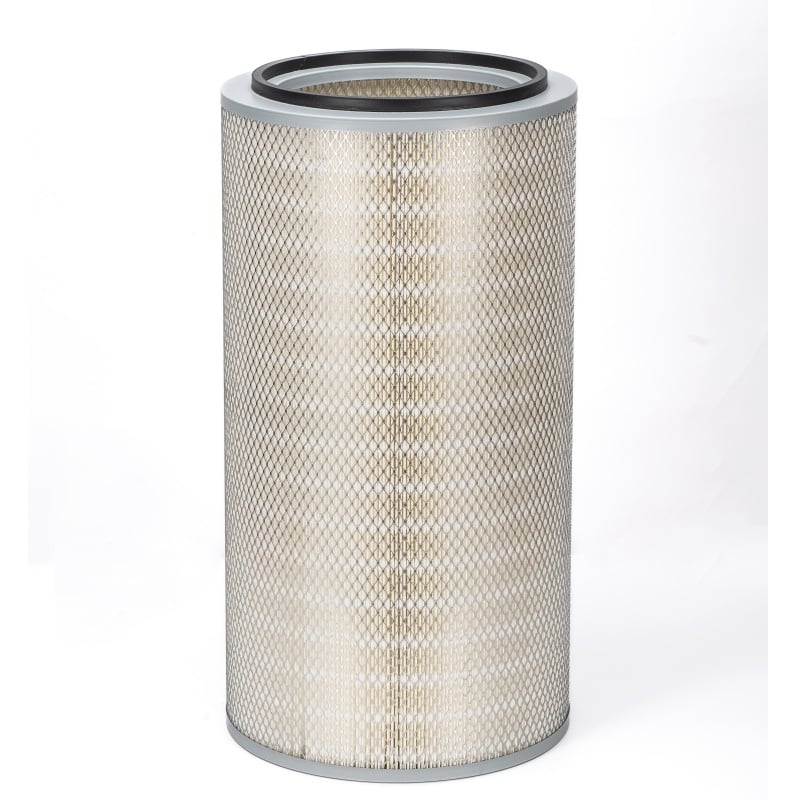
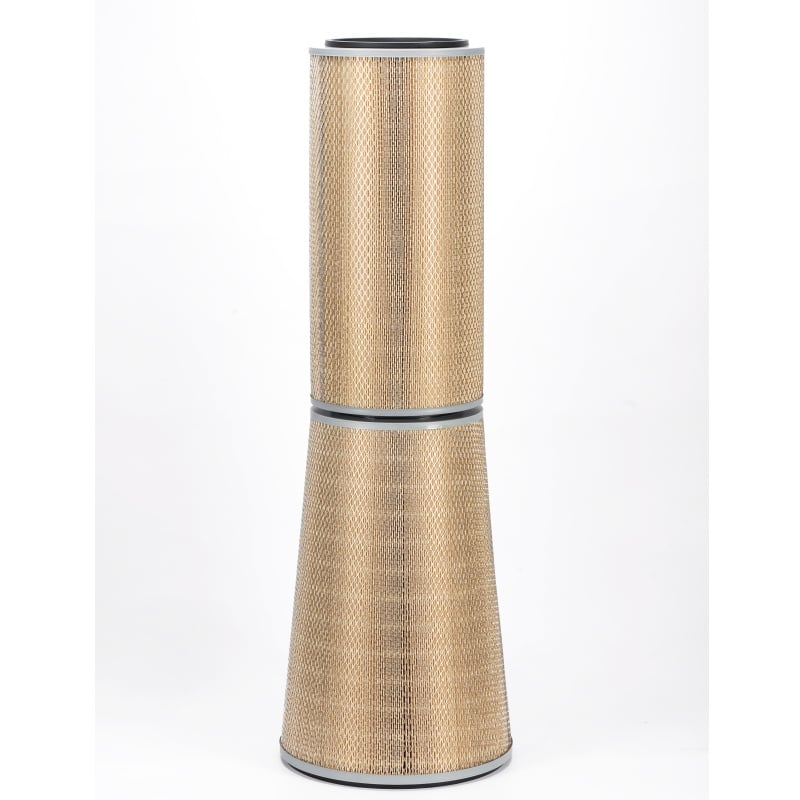
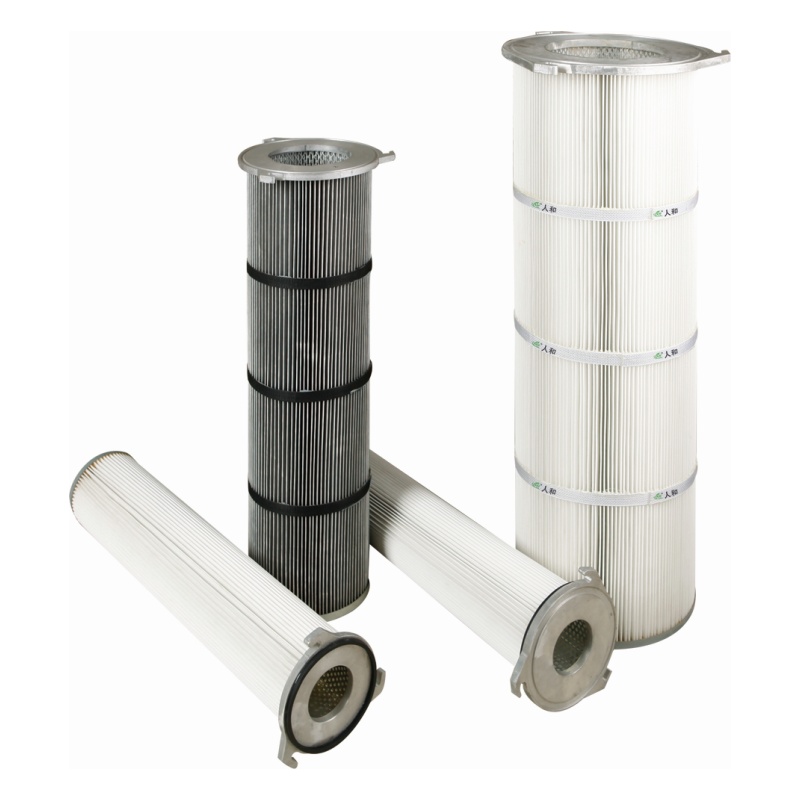
A collector can keep running while delivering less clean air than it did when new. The fan draws the same power, yet pressure drop creeps upward and the outlet looks dirtier. Operators often suspect the fan or the ductwork first. In many cases the real cause is that the filter elements have reached the end of their useful life and no longer release dust when pulsed. A well matched replacement filter cartridge can return the unit toward its original collector performance without changing the housing, the fan or the control settings. Knowing what a change-out can realistically achieve helps buyers justify the spend and plan the shutdown.
Original collector performance is a combination of three things: the pressure drop at which the unit runs, the airflow it delivers, and the efficiency with which it captures dust. As a cartridge ages, dust becomes embedded in the media and each cleaning pulse lifts less of it away. Pressure drop rises, airflow falls because the fan works against higher resistance, and filtration efficiency can drift as the media structure changes. A quality replacement filter cartridge addresses all three by presenting clean media with the designed pleat geometry and the intended resistance. Any comparison should be made against the unit's commissioning baseline, not against a rough guess.
Pressure drop is the most useful indicator for timing a change-out. When the differential pressure at a given airflow no longer settles after a cleaning cycle, the media is holding dust that it should have released. Installing a replacement filter cartridge typically brings the baseline back toward the level recorded when the collector was new. Buyers should ask which initial resistance to expect and under which conditions that figure applies. Such figures are meaningful only when dust load, airflow and cleaning settings match those conditions. Request material guidance and compare product options against the real duty rather than a catalogue ideal.
Airflow follows pressure drop, because a fan delivers less air at higher resistance. Restoring a lower resistance with a replacement filter cartridge lets the system move air closer to its design volume again, which improves capture at the hood. Efficiency recovery depends on the media matching the original specification, meaning the same filtration class and a comparable construction. A cartridge that looks similar but uses a different medium may restore airflow while leaving filtration efficiency short. That is why a premium replacement filter cartridge should be selected by specification rather than by appearance. Verify test documents so that the claimed class is genuine and not simply asserted.
Buyers comparing a replacement filter cartridge should look past the outer dimensions and read the media specification carefully. Two cartridges of the same size can deliver very different filtration efficiency, because the fibre structure and any surface treatment are not alike. Restoring original performance therefore means matching the filtration efficiency class of the element that came out, not simply filling the housing. Where the dust is fine or the outlet limit is strict, a higher class may be justified, but it can alter resistance. Discuss the trade-off with the supplier and verify test documents. Compare product options on published data, then confirm the choice under real operating conditions before placing the order.
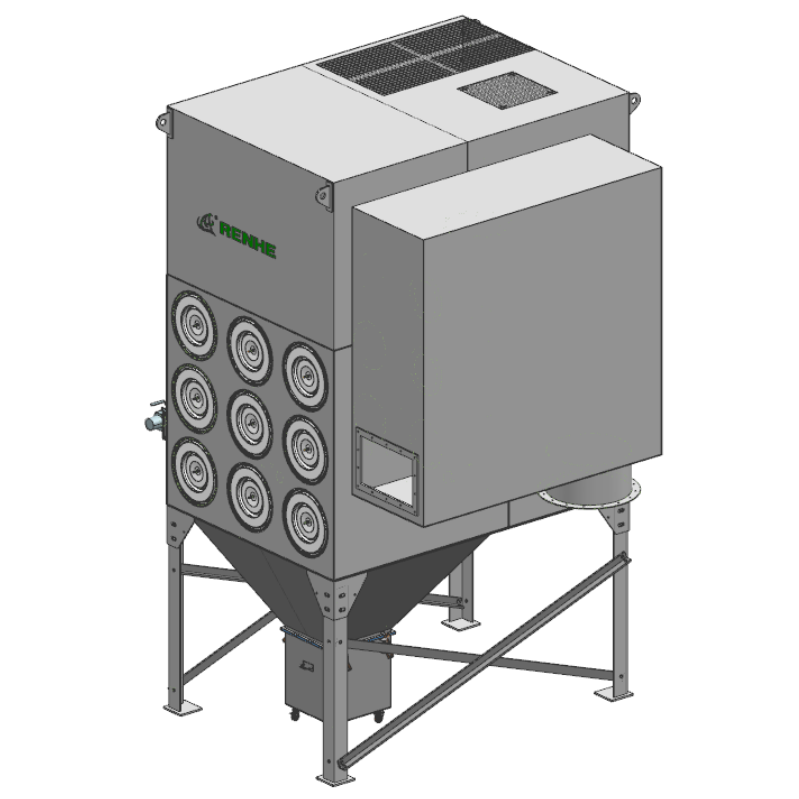
An application example comes from an automatic sand drenching dust control project in a constant temperature and humidity casting workshop. The line used a cartridge collector feeding a clean room, and over time the team noticed rising resistance and reduced return airflow. After a change-out with a replacement filter cartridge matched to the original specification, pressure drop returned toward the commissioning baseline and the cleaned air was once again returned to the workshop. The exercise showed that collector performance could be recovered without modifying the fan or the ducts. A supplier such as Jiangsu Renhe could document the media class and the resistance figures. Review specifications and verify test documents before committing to the order.
A replacement filter cartridge restores performance only if it is fitted correctly and the rest of the system is sound. Before fitting a replacement filter cartridge, inspect the tube sheet, the gasket and the pulse cleaning hardware, because a worn diaphragm valve or a blocked blow pipe will keep a fresh element from performing. After installation, record pressure drop and airflow at the same points used during commissioning. Track those readings for a period to confirm that collector performance has settled where expected. If it has not, look for a system fault rather than blaming the new element. This targeted approach avoids repeated purchases and short change-out intervals.
Question one: How do I know when a replacement filter cartridge is needed?
Answer: Watch differential pressure at a fixed airflow. If it no longer falls after a cleaning cycle and remains above the commissioning baseline, the media is loaded and a change-out is due.
Question two: Will any replacement filter cartridge restore original performance?
Answer: Only one matched to the original specification. The filtration class, media construction and resistance should correspond to the element being replaced, or airflow may recover while filtration efficiency does not.
Question three: Can a premium replacement filter cartridge beat the original collector performance?
Answer: It can match or, where the duty allows, exceed the original collector performance, but only if the media and resistance are chosen for the real dust and airflow. Verify test documents rather than relying on the word premium alone.
 Hot News
2026-11-25
2026-11-25
2026-11-25
2026-11-25
2026-11-25
2026-11-25
Renhe focuses on air filter cartridge, gas turbine air filter, Pleated Filter Media, industrial dust, Our main products have been recognized as high-tech products in Jiangsu Province, famous trademarks in Wuxi City, and CE certification.
NO. 31 Xingyuan Road, Jiefang Industrial Park, Gushan Town, Jiangyin City, Jiangsu Province, China (214414)
Copyright © 2024 Jiangsu Renhe Environmental Equipments Co., Ltd Privacy Policy
 EN