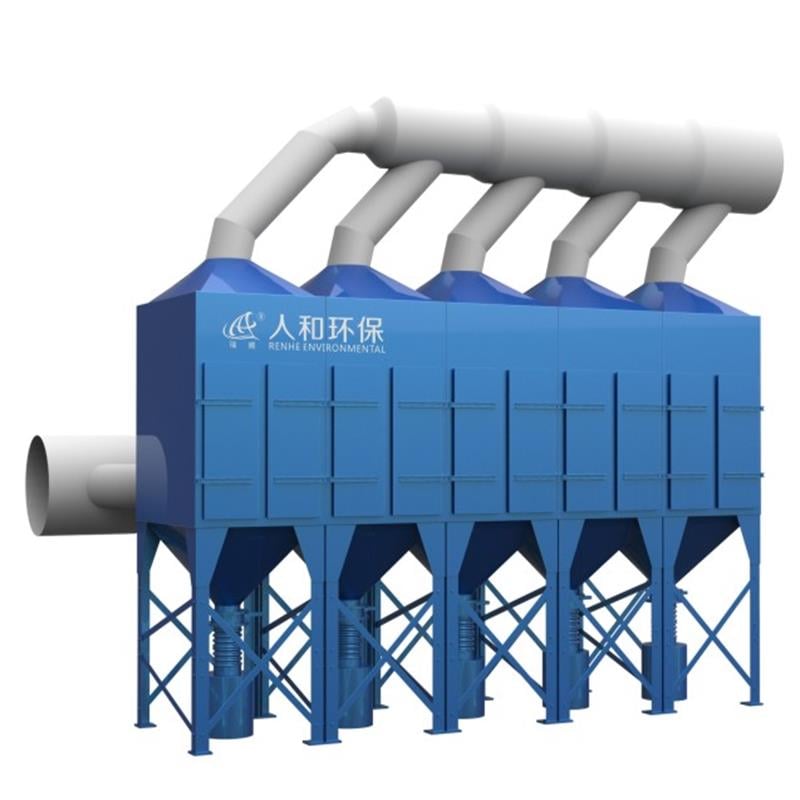
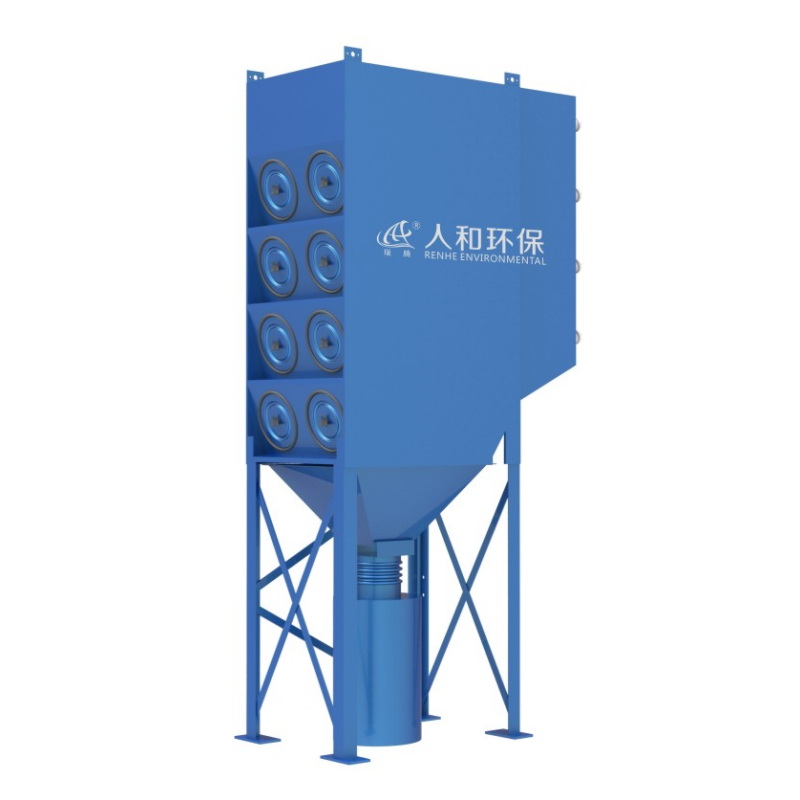
The ductwork around a fume dust collector is expected to do two things that pull in different directions. It must move enough air at the hood to capture the plume, and it must carry the dust all the way to the collector without letting it settle. Air velocity is the link between those jobs. Set it too low and particles drop out inside the duct; set it far higher than needed and the fan works harder, noise rises and elbows wear out faster. Buyers often focus on the collector and leave the ducts to the installer, but a good fume dust collector joined to poor ductwork will still cause trouble. Velocity deserves attention at the design stage.
When air velocity falls below what the dust requires, particles begin to deposit on the floor of the duct. Fine particles may stay suspended for a while, but heavier ones settle first, especially in horizontal runs. The deposit reduces the open area, which further lowers velocity and encourages more deposition, until the duct can become partly blocked. The fume dust collector then receives less airflow at the hood and capture suffers. Dust deposition is also a housekeeping and safety concern where the dust is combustible. Designers typically choose a duct velocity that keeps the specific dust moving for the whole length of the run.
Velocity is not uniform through the system. Near the hood a duct may carry the air captured at one point, while further downstream several branches merge and the total volume grows. A designer checks both the velocity needed at the capture point and the velocity needed to transport dust in the main run. If a branch is too small, it may capture well but create excessive resistance; if it is too large, velocity falls and dust settles. A fume dust collector is only as effective as the weakest part of this path. Balancing branches so that each hood receives its share is part of getting velocity right.
There is no single transport velocity that suits every system. The figure is chosen according to the dust, its particle size and density, the concentration in the air, and the layout of the duct. Dry, light dust stays suspended more easily than heavy or moist dust, so it can be carried at a lower velocity. Horizontal stretches generally need more attention than vertical ones because gravity works against the air stream. The shape of the route matters too: sharp turns and sudden expansions create pockets where deposition begins. A supplier should explain the basis of the velocity chosen for the fume dust collector rather than quoting a generic number.
In a branched system the transport velocity must be held in every leg, not only in the main duct. Adequate transport velocity is easier to keep in a short straight run than in one with several bends. A branch feeding one hood may be sized for local capture, but if its duct velocity falls too low the collected dust settles before it reaches the main run. Designers therefore check the transport velocity at the outlet of each branch as well as after the branches merge, and confirm the duct velocity in each leg. When commissioning a fume dust collector, verify that each branch holds enough transport velocity to carry its dust. A fume dust collector with uneven branches will show dust deposition during operation even when the main run looks correct.
An application example comes from a multinational heavy industry enterprise producing tower and crawler cranes. On the boom line, welding points moved across large carbon steel components, and a distributed blow and suction arrangement was used. Supply outlets and collection inlets were placed high on opposite sides so that the two air streams met and formed a local downward circulating flow carrying fume away from the work zone. Duct velocity had to be high enough to move metal dust to the filtration equipment yet not so high as to waste fan power. A fume dust collector working with such a layout depends on the ducts as much as on the filter. A supplier such as Jiangsu Renhe could document the arrangement. Review specifications before committing.
After installation, duct velocity should be confirmed by measurement rather than assumed from the drawing. Readings at representative branches show whether each hood draws its share and whether the main run is fast enough to prevent deposition. If dust collects in a horizontal stretch, the cause may be a velocity that is too low there, even when the fan is powerful. Balancing dampers can redistribute flow, but they cannot correct an undersized duct. Re-check after changes to the process, because a new dust or a higher airflow alters the requirement. Request material guidance and verify test documents when commissioning the fume dust collector.
Question one: Why does duct air velocity matter in a fume dust collector system?
Answer: It has to be high enough to carry dust to the collector without settling, yet not so high that it wastes fan power and wears the duct. Capture and transport both depend on it.
Question two: What happens if duct velocity is too low?
Answer: Dust deposition in the duct reduces open area and lowers velocity further, which can lead to blockage and weaker capture at the hood. Combustible deposits also raise a safety concern.
Question three: Is one air velocity suitable for every fume dust collector?
Answer: No. The transport velocity depends on dust size and density, concentration and duct layout. Dry light dust needs less velocity than heavy or moist dust, and horizontal runs need more care than vertical ones.
 Hot News
2026-11-25
2026-11-25
2026-11-25
2026-11-25
2026-11-25
2026-11-25
Renhe focuses on air filter cartridge, gas turbine air filter, Pleated Filter Media, industrial dust, Our main products have been recognized as high-tech products in Jiangsu Province, famous trademarks in Wuxi City, and CE certification.
NO. 31 Xingyuan Road, Jiefang Industrial Park, Gushan Town, Jiangyin City, Jiangsu Province, China (214414)
Copyright © 2024 Jiangsu Renhe Environmental Equipments Co., Ltd Privacy Policy
 EN